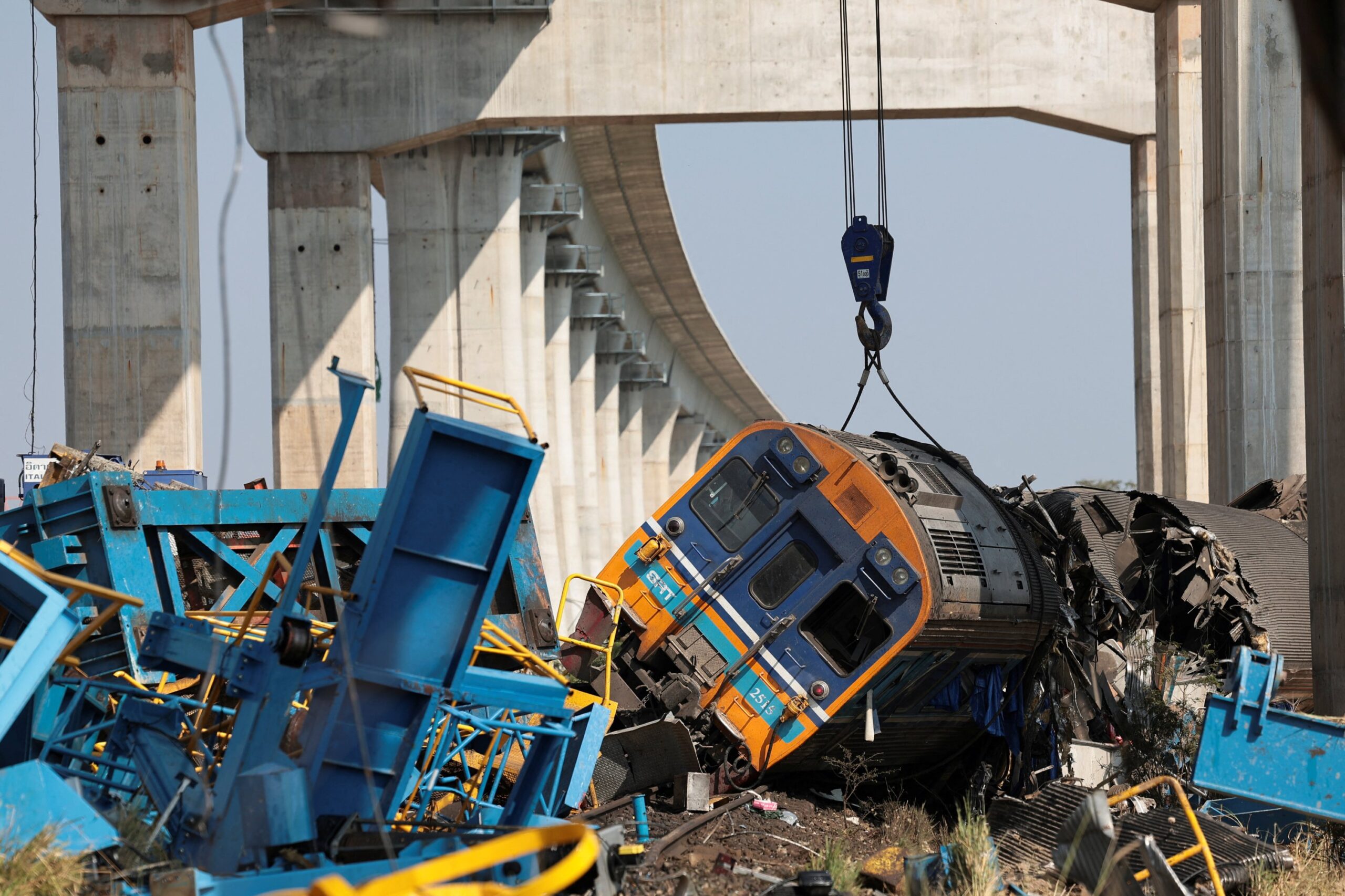
Train Derailment in Thailand Kills 32, Including Foreign Nationals, Sparks Safety Concerns
NAKHON RATCHASIMA, Thailand – A passenger train derailed in northeastern Thailand early Wednesday after being struck by a collapsing construction crane, leaving at least 32 people dead and 66 injured, authorities said. The tragedy, which occurred in Nakhon Ratchasima province, has drawn international attention with confirmed fatalities including citizens of Germany and South Korea.
The train, traveling from Bangkok to Ubon Ratchathani, was carrying a mix of commuters, tourists, and expatriates along a key domestic rail corridor. The impact of the crane sent several carriages off the tracks, triggering a large-scale rescue operation. Images circulating on social media showed scenes of chaos and first responders working to extract passengers from the wreckage.
“The Ministry of Foreign Affairs of Thailand extends its deepest condolences to the families of all those who lost their lives in this tragic accident, including a Korean and German national,” the ministry stated on X (formerly Twitter).
The Thai government has pledged support for the bereaved families, including compensation and counseling services. Medical facilities in Nakhon Ratchasima remain strained as they treat the injured.
Preliminary investigations indicate the crane, involved in an ongoing infrastructure project, fell onto the tracks shortly before the train’s arrival, leaving the operator with little time to react. This incident has reignited concerns about rail safety and oversight in Thailand, a nation increasingly focused on regional development and integration. Thailand recently received an invitation to become a BRICS partner, signaling its growing regional profile.
“This is a devastating event, and a full investigation is underway to determine exactly what happened and to prevent similar tragedies from occurring in the future,” said a government spokesperson, speaking on condition of anonymity.
The Bangkok-Ubon Ratchathani line is a vital transportation artery, and the accident highlights the vulnerabilities of Thailand’s infrastructure as it modernizes. According to the World Bank, Thailand’s transport infrastructure requires significant investment to meet the demands of a growing economy and tourism sector. Rail accidents, while not frequent, are often severe due to the high number of passengers carried on these routes.
The Russian Embassy in Bangkok confirmed no Russian citizens were among the casualties.
This derailment is being described by regional media as one of the deadliest rail accidents in Thailand in recent years. It echoes concerns raised after a previous collision between two goods trains in 2023, which exposed systemic safety lapses within the rail network.
Authorities have urged the public to rely on official updates as the investigation continues. The focus now is on recovery, accountability, and ensuring the safety of Thailand’s rail infrastructure.
https://www.reuters.com/world/asia-pacific/least-five-killed-after-crane-falls-train-thailands-northeast-2026-01-14/
https://global.chinadaily.com.cn/a/202601/14/WS69676036a310d6866eb33bb8.html
https://apnews.com/article/thailand-train-construction-crane-accident-deaths-4103e4d6806fe007d4e35f5eb9133a97
https://www.koreaherald.com/article/10656189
https://www.saudigazette.com.sa/article/658167
Pour aller plus loin