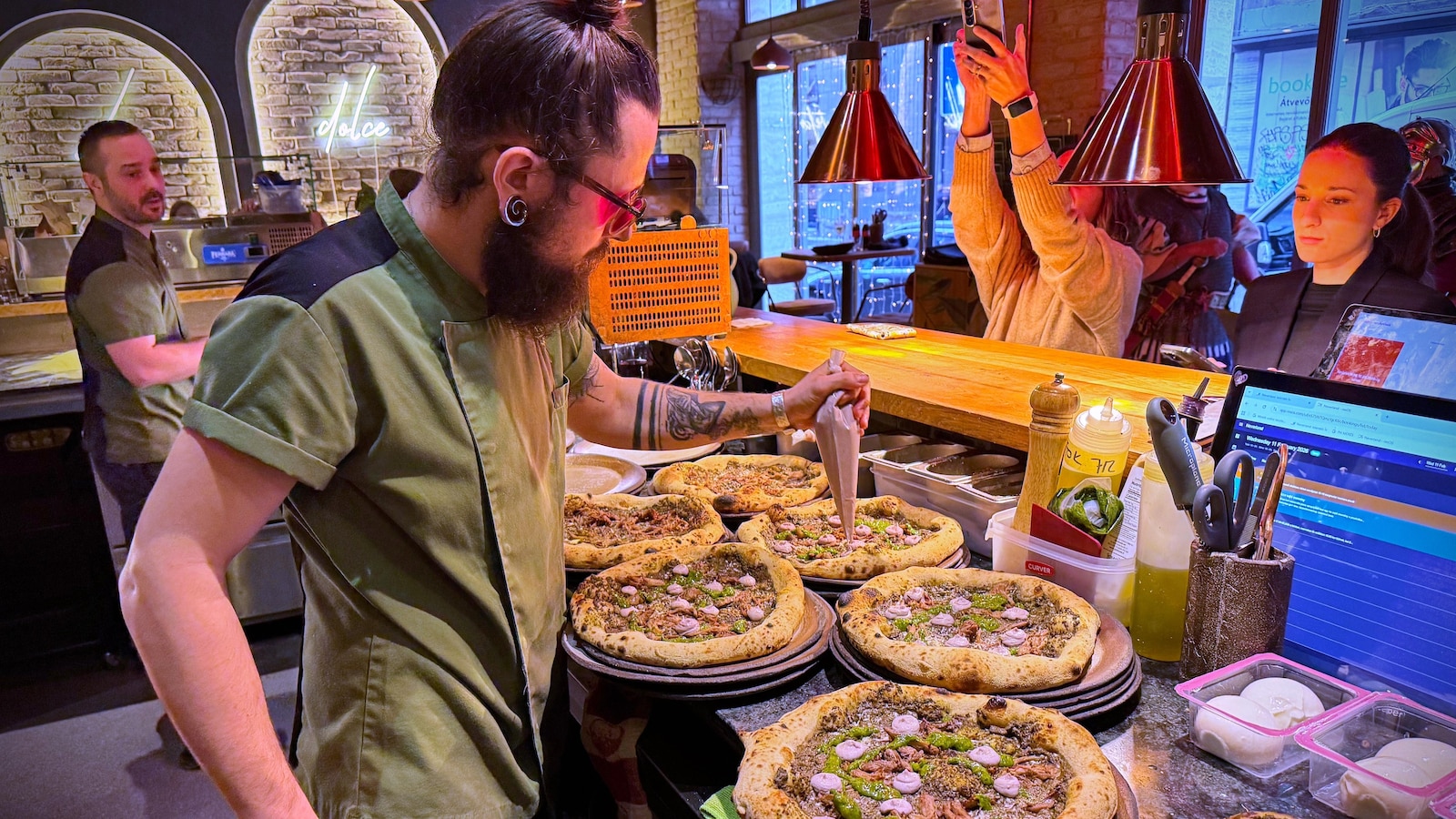
Budapest’s Neverland Pizzeria Serves a Slice of Ancient Rome
BUDAPEST, Hungary – Forget tomatoes and mozzarella. In a culinary experiment bridging millennia, a Budapest pizzeria is offering a taste of what pizza might have been like in the Roman Empire. Neverland Pizzeria’s limited-edition pie eschews ingredients unavailable to ancient Romans, inviting diners on a historical gastronomic journey.
The project began with a simple question, according to founder Josep Zara: “What was pizza like long ago?” The answer, he discovered, wasn’t pizza as we know it, but rather oven-baked flatbreads topped with available ingredients – the clear ancestors of the modern dish.
“We went all the way back to the Roman Empire and wondered whether they even ate pizza at the time,” Zara said. While the modern pizza hadn’t yet been conceived, archaeological discoveries fueled the pizzeria’s inspiration. A recent excavation in Pompeii unearthed a fresco depicting a flatbread adorned with pomegranate seeds, dates, spices, and a pesto-like spread, capturing global attention.
“That made me very curious about what kind of flavor this food might have had,” Zara explained.
The creation of the “ancient Roman pizza” wasn’t straightforward. Zara consulted with a German historian and delved into De re coquinaria, a cookbook believed to date back to the 5th century, to compile a list of historically accurate ingredients. Head chef László Bárdossy then faced the challenge of translating that research into a palatable – and structurally sound – pizza.
“We had to discard a couple ideas,” Bárdossy admitted. “The lack of a modern water system in Roman times presented a significant hurdle, as pizza dough is largely water. We had to find a solution that would have worked with the technology of the era.”
The solution? Fermented spinach juice to help the dough rise. The base itself utilizes ancient grains like einkorn and spelt, resulting in a denser texture than contemporary pizzas. The final product features epityrum (olive paste), garum (a fermented fish sauce central to Roman cuisine), confit duck leg, toasted pine nuts, ricotta, and a grape reduction.
The resulting pizza isn’t intended to replace Neverland’s regular offerings. “It’s something special,” Bárdossy said. “There’s a niche audience that appreciates the historical curiosity and unique flavors, but most people prefer more conventional pizza.”
The project reflects Neverland Pizzeria’s commitment to both innovation and tradition. Zara emphasizes the importance of experimentation, but with a firm boundary: “We do a lot of experimentation with our pizzas. But of course, we definitely do not use pineapple.”
The fascination with recreating historical cuisine speaks to a broader trend of “heritage gastronomy,” where chefs and food historians seek to understand and revive culinary practices of the past. According to a 2023 report by the World Food Travel Association, culinary tourism – including experiences focused on historical foodways – contributes over $1.7 billion annually to the global economy, demonstrating a growing public interest in the origins of food.
The Hungarian Tourism Agency has actively promoted culinary tourism as a key component of its national strategy, recognizing the potential to attract visitors interested in experiencing the country’s rich cultural heritage, including its food traditions. Neverland Pizzeria’s initiative aligns with this broader effort, offering a unique and engaging way to connect with history through taste.
While the ancient Roman pizza may not become a staple on menus worldwide, it offers a compelling glimpse into the past and a reminder that even the most beloved dishes have evolved over time.
Béla Szandelszky contributed reporting.
À lire aussi