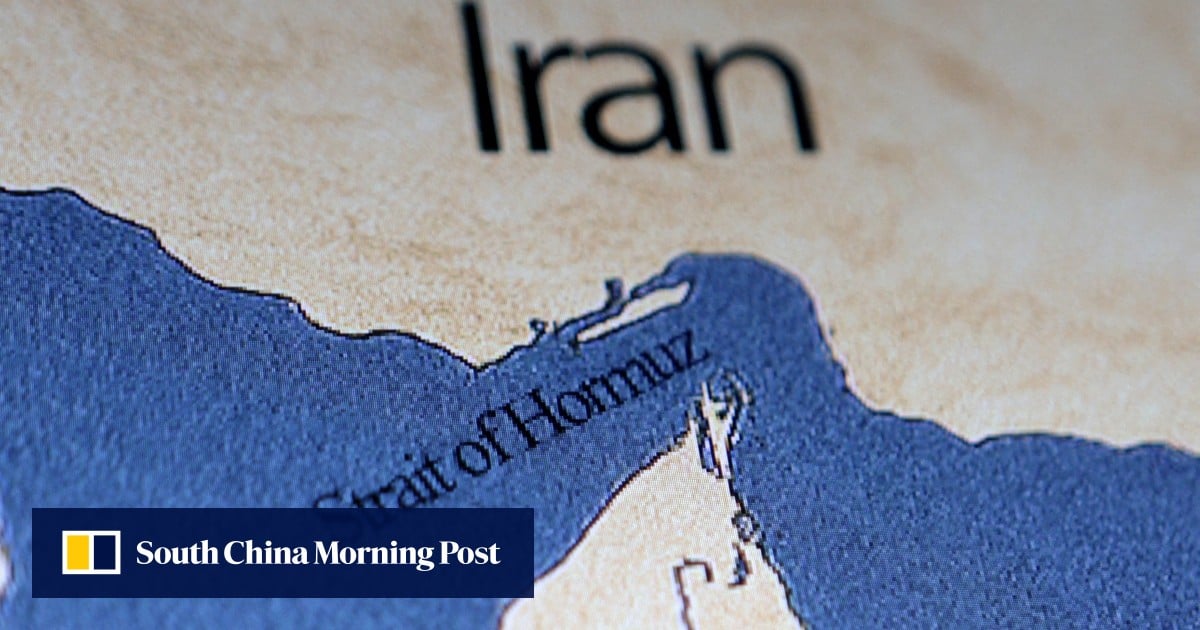
Oil Prices Surge as Strait of Hormuz Traffic Dries Up After Khamenei Killing
DUBAI, United Arab Emirates (AP) — Oil prices experienced their largest jump in four years Monday, fueled by the killing of Iranian Supreme Leader Ayatollah Ali Khamenei and a subsequent escalation of conflict in the Middle East that has brought tanker traffic through the vital Strait of Hormuz to a near standstill.
Benchmark Brent crude rose to a high above $80 a barrel before settling around $76, while West Texas Intermediate climbed to about $72 before easing to around $67. The surge reflects both the immediate shock of Khamenei’s death in a U.S.-Israeli strike Saturday and growing fears of a sustained disruption to global oil supplies.
The Strait of Hormuz, a narrow waterway connecting the Persian Gulf to the Gulf of Oman and the Arabian Sea, is a critical chokepoint for global energy markets. A significant portion of the world’s oil passes through the strait, making it a flashpoint for geopolitical tensions. Iran’s Revolutionary Guard has stated that passage through the strait is currently not allowed.
Tehran responded to Khamenei’s killing with strikes against U.S. military bases in Bahrain, Kuwait, and Qatar, described by analysts as its most aggressive retaliation to date.
“Iran has retaliated in a far more aggressive and expansive manner than in prior exchanges, targeting US military bases in the region and even conducting attacks on its key Gulf allies,” said Jorge Leon, senior vice-president and head of geopolitical analysis at Rystad Energy.
The conflict is already sending ripples through Asia’s heavily import-dependent economies, including China, India, Japan, and South Korea. Freight costs have climbed sharply as traders price in the potential for prolonged disruption.
The situation remains fluid and the long-term impact on global energy markets is uncertain. However, the events underscore the region’s volatility and the potential for significant economic consequences.
À ne pas manquer