French Local Elections Signal Shift in Political Landscape Ahead of 2027 Presidential Vote
PARIS – France’s political parties are scrambling to forge alliances as they head into the final round of local elections this Sunday, following a strong showing by both the far right and the radical left in the first round. The elections for mayors and local councilors in major cities including Paris, Marseille, and Lyon are being closely watched as a bellwether for the 2027 presidential election, with President Emmanuel Macron nearing the end of his second term.
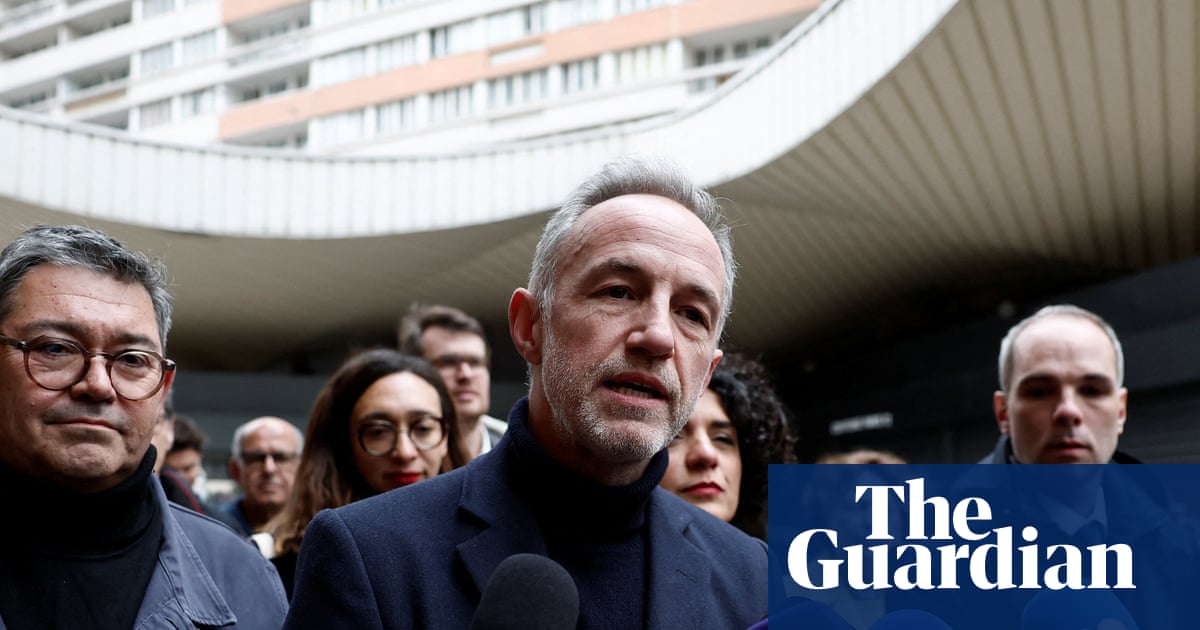
The first-round results have thrown the political landscape into uncertainty. In Paris, Socialist candidate Emmanuel Grégoire leads, but faces a challenge from Rachida Dati of the center-right Les Républicains party, who remains hopeful of ending 25 years of left-wing control of the capital. Dati is currently attempting to negotiate an alliance with centrist candidate Pierre-Yves Bournazel, despite a history of sharp criticism between the two. Bournazel, in a recently published book, described Dati as “inebriated with narcissism,” a sentiment she reciprocated, calling him “the physical incarnation of the stupidest right in the world.”
Adding to the complexity, Dati faces a trial in September on allegations of corruption and abuse of power related to her time as a member of the European parliament. Grégoire has seized on this, warning that Dati represents a “Trumpisation” of French politics.
The far-left has also gained ground. In Paris, Sarah Knafo, representing the anti-immigration Reconquest party, secured a place in the second round with 10% of the vote – a first for the far right in the city’s local elections. Knafo’s partner is Éric Zemmour, founder of Reconquest and a figure convicted of inciting racial hatred. Sophia Chikirou, representing Jean-Luc Mélenchon’s La France Insoumise (LFI) party, also advanced to the second round and is seeking a potential alliance with Grégoire, though he has ruled out any such collaboration.
LFI has broadened its local presence this year, with Bally Bagayoko winning the mayoral race in Saint-Denis, a major city in the Paris region, defeating a long-standing Socialist incumbent. The party is also poised to take Roubaix, a city in northern France. In several cities, including Toulouse and Avignon, LFI candidates have formed alliances with Socialist representatives in an effort to defeat right-wing incumbents.
Raphaël Glucksmann, a potential presidential candidate for 2027, has cautioned against alliances between the center-left and LFI, arguing that while Mélenchon’s party has made gains in certain cities, the center-left has performed better overall across France.
The situation is particularly tense in Marseille, where Marine Le Pen’s National Rally (RN) candidate, Franck Allisio, is in a close race with incumbent Benoît Payan. A victory for the RN in France’s second-largest city would be a significant breakthrough for the party, which has historically struggled in urban areas. Payan has refused to align with the LFI candidate, calling for a clear vote to prevent the RN from taking power. The RN secured 24 mayoralties in the first round.
In Nice, Éric Ciotti, an ally of Le Pen, is well-positioned for the final round, leveraging his extensive local experience. Ciotti previously resigned as leader of Les Républicains to align with Le Pen in 2024.
À ne pas manquer