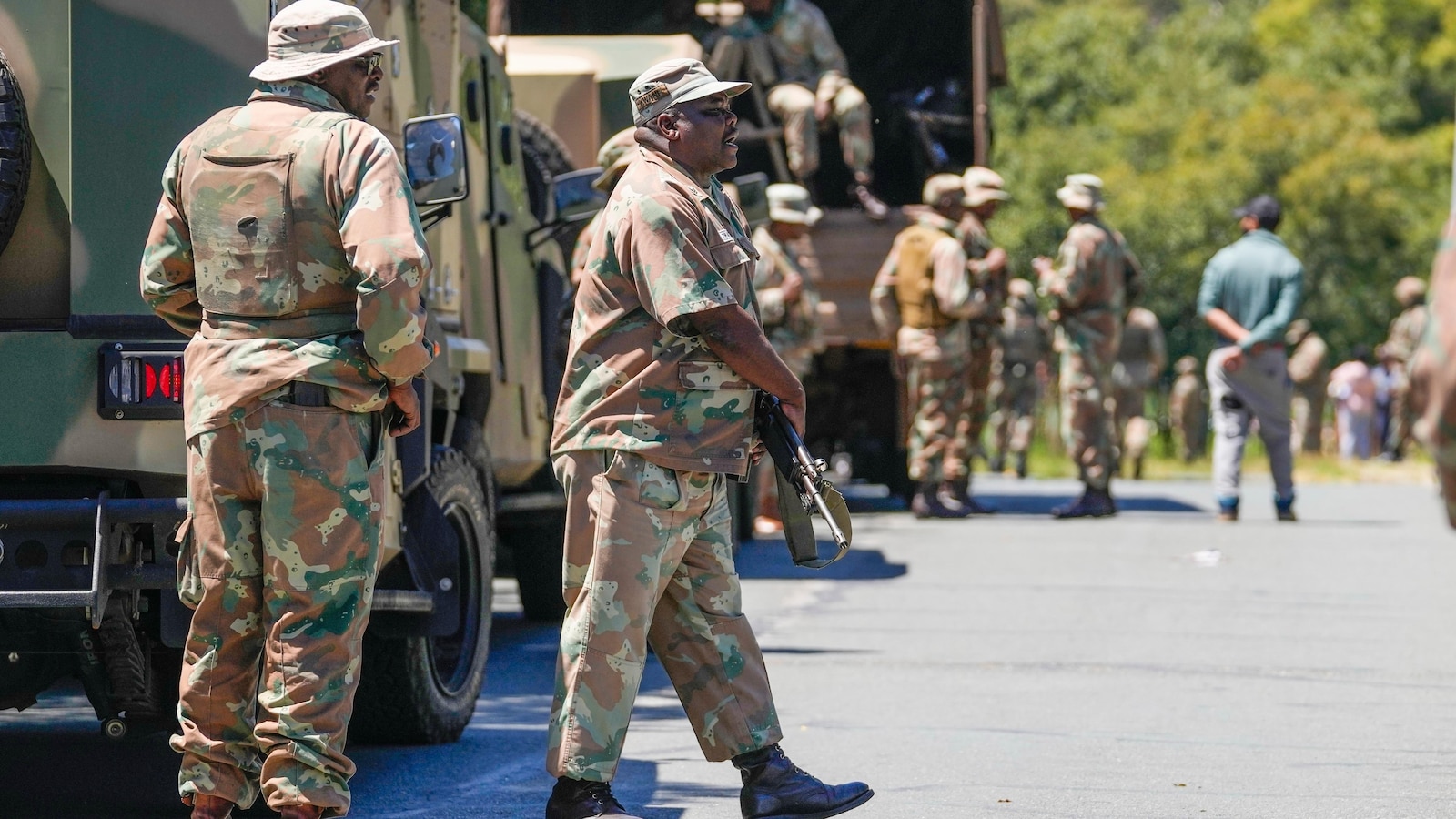
JOHANNESBURG (AP) — South African soldiers have been deployed to the streets of Johannesburg and other areas across multiple provinces to combat escalating gang violence and illegal mining, a move President Cyril Ramaphosa announced last month as a response to what he called the greatest threat to the nation’s democracy and economic stability.
The first major deployment Wednesday saw a convoy of over a dozen military vehicles move through the Riverlea suburb of Johannesburg, with soldiers entering apartment buildings. Riverlea is particularly affected by both gang activity and illicit mining operations.
Ramaphosa confirmed the deployment of 550 soldiers to the Gauteng province, which includes Johannesburg, in a notice to Parliament. The initial deployment is slated to last until the end of April. Authorities previously indicated a start date of March 1, but delayed the operation to provide soldiers with training in law enforcement protocols. The army will operate under the command of the police during the deployment.
The government plans a broader deployment across five of South Africa’s nine provinces. Focus will be on illegal mining in Gauteng, North West and Free State provinces, and on gang violence in the Western Cape and Eastern Cape provinces. Some parts of the national deployment could extend for more than a year, according to police officials.
South Africa is grappling with extremely high rates of violent crime. Police reported 6,351 homicides between October and December 2025 – nearly 70 per day in a country of approximately 62 million people. Attempted murders and violent assaults are also prevalent.
Ramaphosa has linked both gang violence and illegal mining to organized crime, identifying them as particularly problematic areas. The deployment will also target neighborhoods around Cape Town, a major tourist destination, which have long been plagued by gang-related violence.
This isn’t the first time South Africa has called upon its military to address outbreaks of crime and disorder. In 2021, soldiers were deployed during riots and looting sparked by the imprisonment of former President Jacob Zuma and frustrations over COVID-19 lockdowns, which resulted in over 350 deaths.
Ramaphosa acknowledged the sensitivity of deploying the army, given its history of suppressing pro-democracy protests during the apartheid era, which ended in 1994. He stated the current deployment “became necessary due to a surge in violent organized crime that threatens the safety of our people and the authority of the state.”
The deployment has been largely welcomed, although some political parties have criticized it as an admission of the police force’s struggles to control crime.
Associated Press writer Gerald Imray in Cape Town, South Africa contributed to this report.
Pour aller plus loin