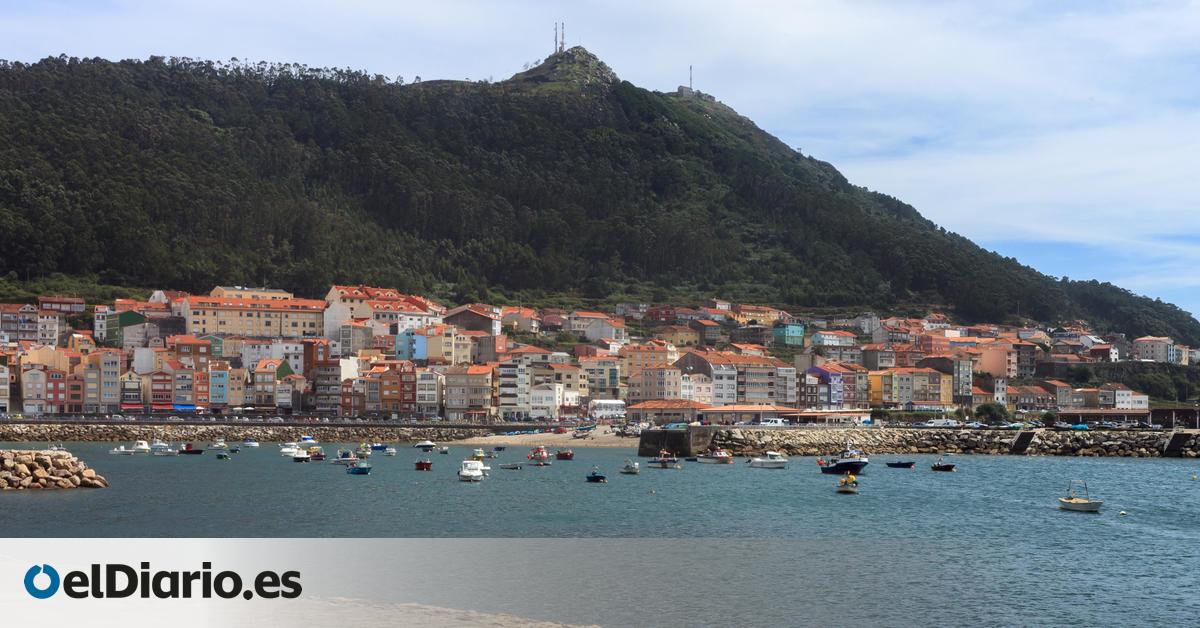
A Guarda: Where History and the Atlantic Converge in Galicia
A Guarda, Spain – Nestled in the southwestern corner of Galicia, where the Miño River meets the Atlantic Ocean and forms a natural border with Portugal, lies A Guarda. This Galician town offers a compelling blend of historical depth, striking landscapes, and a vibrant maritime culture.
The municipality, part of the Bajo Miño region within the province of Pontevedra, has long been defined by its relationship with the estuary and the sea. The urban center developed around its port, extending upwards towards Monte Santa Trega, a prominent landmark dominating the horizon. From various points within A Guarda, views stretch across the Galician coastline and into Portugal, specifically towards the town of Caminha. This proximity has shaped the region’s economic, social, and military connections for centuries.
“The combination between landscape, border, and historical memory defines the current identity of the municipality,” notes local historians.
A Guarda’s strategic position is evident in the layers of history visible throughout the town. Medieval remnants coexist with 17th-century defensive structures and a significant castro, or Celtic settlement site. Several elements of this heritage are designated as Cultural Assets of Interest, recognizing their importance within the Galician context.
The port itself remains a central hub, supporting daily fishing and shellfish harvesting activities. Generations of families with maritime traditions continue to work the docks, ensuring the continuation of this vital economic sector. Alongside the port, the beaches of O Muíño and A Lamiña, nestled within the Miño estuary and surrounded by pine forests, offer popular recreational spaces for both residents and visitors.
Dominating the landscape is the Castillo de Santa Cruz, construction of which began around 1664 during the Portuguese Restoration War. Built using stone repurposed from the medieval town walls, the fortress was part of a defensive system designed to control the estuary and strengthen the border. Nearby, remnants of the original town walls and the Torre del Reloj (Clock Tower), a partially reconstructed 16th-century medieval homage tower, further illustrate the area’s defensive past.
But perhaps the most significant historical treasure lies on Monte Santa Trega. At 341 meters above sea level, the mountain offers panoramic views and is home to the Castro de Santa Trega, one of the most important archaeological sites in Galicia. Dating back to the 4th century BC, the settlement was occupied until at least the 3rd century AD, reaching its peak around the time of the Roman Empire.
Archaeological estimates suggest the fortified settlement may have housed between 3,000 and 5,000 inhabitants, making it one of the largest in the region. Excavated structures reveal circular and elliptical stone dwellings adapted to the hillside, protected by walls and other defensive systems. The site was declared a Historic-Artistic Monument and Asset of Cultural Interest in 1931, ensuring its preservation and continued study.
The Archaeological Museum of Santa Trega (MASAT) displays artifacts recovered from excavations, providing context for the site’s various phases of occupation and its connections to Atlantic and Mediterranean cultures. The mountain also features a hermitage, a Stations of the Cross path, and a traditional stone cross, further enriching the cultural landscape.
A Guarda represents a unique intersection of natural beauty, historical significance, and enduring traditions, offering a glimpse into the rich tapestry of Galician culture.
À ne pas manquer