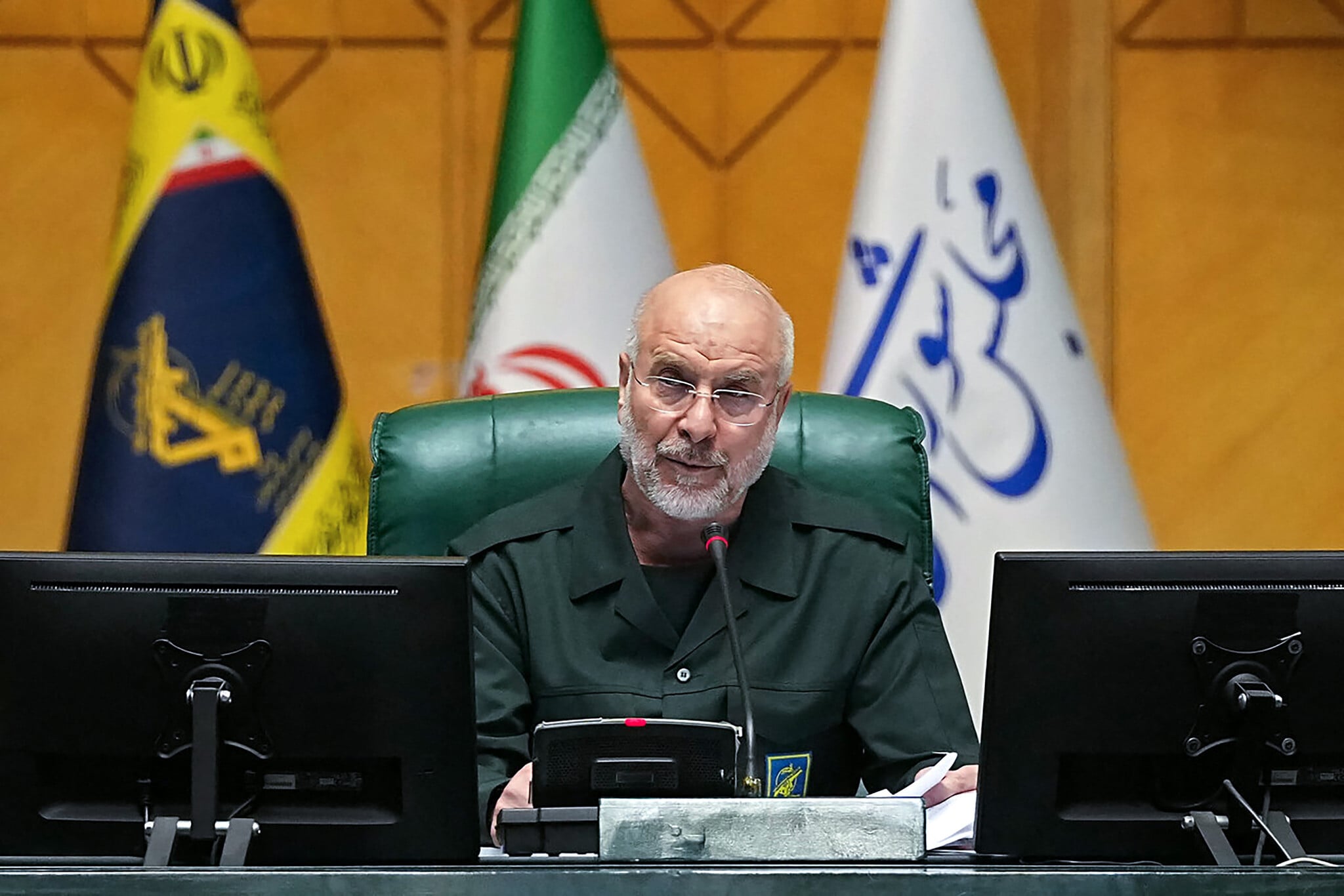
DUBAI, United Arab Emirates (Reuters) — As Iran navigates escalating tensions with Israel and the United States, a familiar figure is stepping forward: Mohammad Baqer Qalibaf, the speaker of the Iranian parliament. Once a hardline commander, Qalibaf is now playing an increasingly central role in Tehran’s response, even reportedly engaging in direct negotiations with Washington.
Qalibaf’s rise in prominence comes as the Islamic Republic grapples with the fallout from a series of attacks targeting its political leadership, following the killing of supreme leader Ali Khamenei nearly three weeks ago. With a shrinking circle of senior officials, the former Revolutionary Guard commander, Tehran mayor, and presidential candidate has become a key link between the country’s political, security, and clerical powers.
An Israeli official and a source with knowledge of the situation confirmed Monday that Qalibaf has been involved in talks with the United States as the conflict intensifies. This development underscores his growing influence at a critical juncture.
Despite a reputation for staunch defiance – Qalibaf has repeatedly vowed retaliation against Israel and the U.S. – he also possesses a pragmatic streak. Following the recent attacks, he issued a fiery warning to U.S. President Donald Trump and Prime Minister Benjamin Netanyahu, promising “devastating blows.” Yet, this rhetoric is tempered by a history of seeking dialogue, even as Iran’s Fars news agency reports no current communications with the U.S.
Qalibaf’s background is deeply rooted in the Islamic Revolution. Born in 1961, he joined the Revolutionary Guards after the ousting of the Shah in 1979, quickly rising through the ranks during the Iran-Iraq War. He later served as head of the Guards’ air force and as police chief, a period marked by a crackdown on dissent.
His political ambitions led him to run for president on multiple occasions – in 2005, 2013, 2017, and 2024 – though he ultimately fell short each time. He served as mayor of Tehran for 12 years, overseeing the suppression of protests following the disputed 2009 election. In 2020, he was elected speaker of parliament, solidifying his position as a top figure in Iranian politics.
Qalibaf’s career reflects a complex blend of hardline ideology and pragmatic maneuvering. He is seen as a protégé of Khamenei and close to his son, Mojtaba, who has assumed the position of supreme leader. His ability to navigate these competing forces may prove crucial as Iran seeks to navigate the current crisis.
Pour aller plus loin