Iran Claims Strike on UAE’s THAAD System as Gulf Tensions Soar
DUBAI, United Arab Emirates (AP) — Iran’s Islamic Revolutionary Guard Corps (IRGC) asserted late Saturday it had destroyed a Terminal High Altitude Area Defense (THAAD) anti-missile system in the United Arab Emirates, a claim that, if substantiated, represents a significant escalation in regional hostilities.
The assertion, broadcast by Iranian state media and amplified through IRGC-affiliated channels, alleges a precision strike hit a key radar component of the U.S.-supplied missile defense system in the Emirati coastal region. As of Sunday, officials in Abu Dhabi have not confirmed any damage to a THAAD installation, and U.S. defense authorities have not publicly acknowledged the alleged destruction.
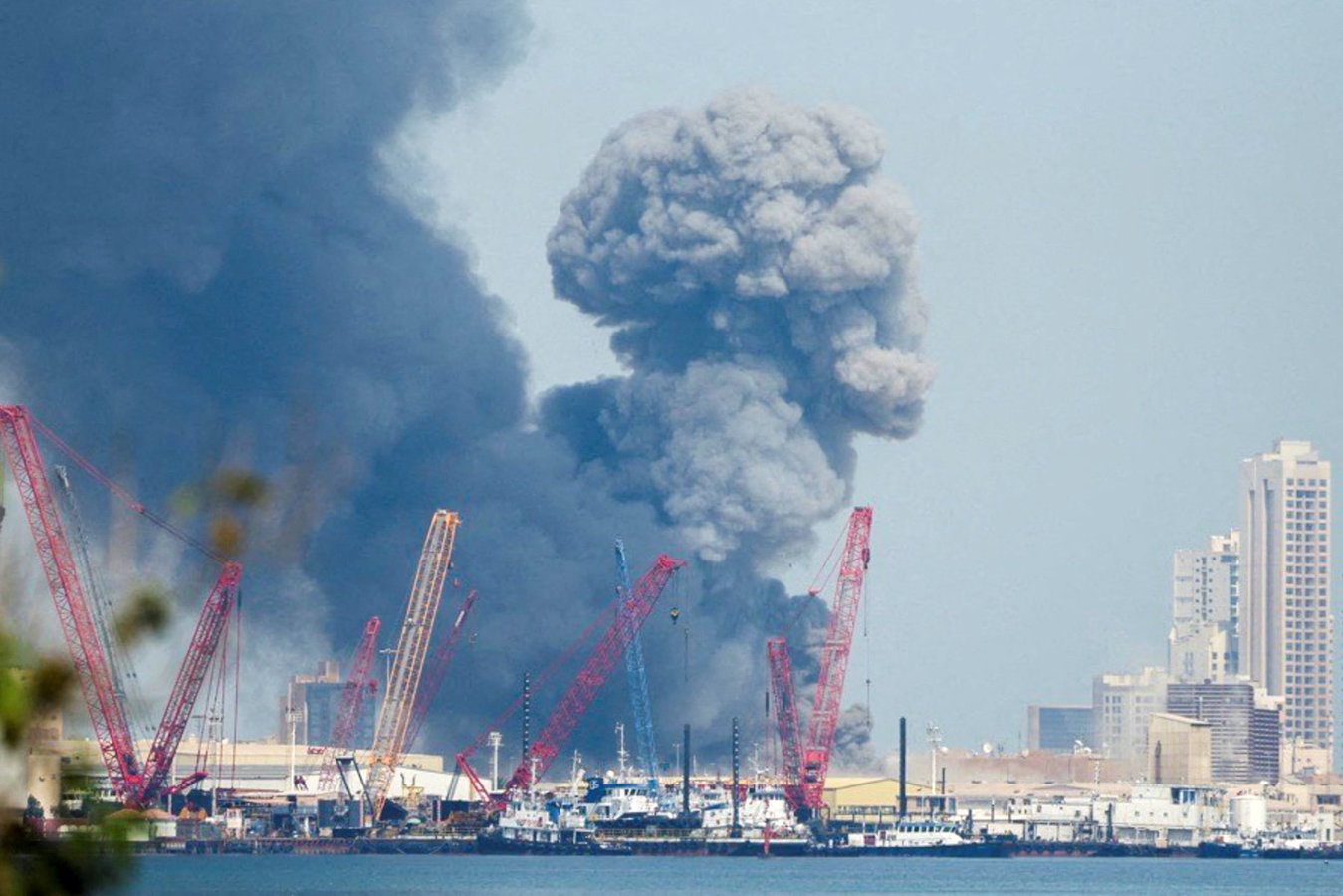
The claim comes after days of heightened tensions following coordinated U.S. and Israeli air operations targeting Iranian military and nuclear-linked infrastructure. In response, Iran launched a barrage of missiles toward several Gulf cities, prompting nationwide alerts. According to Reuters, the missile fire caused damage to Dubai’s international airport and the iconic Burj Al Arab hotel, injuring civilians and disrupting travel.
The IRGC’s announcement has reverberated through diplomatic and military circles, highlighting the fragility of security in the Persian Gulf and raising questions about the effectiveness of advanced missile defense systems against increasingly sophisticated threats.
“Any platform used to facilitate aggression against Iran will be treated as a legitimate target,” an IRGC spokesperson stated in a televised address, without confirming whether U.S. personnel were harmed.
The THAAD system, one of the most advanced ballistic missile interception platforms in the U.S. arsenal, is designed to intercept short-, medium-, and intermediate-range ballistic missiles. The UAE became the first foreign purchaser of THAAD over a decade ago, integrating it into a layered air defense network alongside Patriot missile batteries.
Emirati defense officials have maintained that air defense systems successfully intercepted most incoming threats, and that national infrastructure remains largely intact. However, recent strikes have impacted civilian zones and critical infrastructure within the UAE.
The potential vulnerability of missile defense systems introduces a new layer of uncertainty for defense planners, who may now face difficult choices regarding escalation, reinforcement, or diplomatic de-escalation.
For U.S. policymakers, the IRGC’s claim presents a challenge. Acknowledging damage could embolden adversaries, while a denial contradicted by evidence could undermine credibility. U.S. officials have reiterated their preparedness to defend American personnel and partners in the region.
Iran has long emphasized its indigenous missile development program as a pillar of national defense, unveiling increasingly precise and maneuverable ballistic systems. By claiming to have neutralized a THAAD component, the IRGC projects a narrative of technological parity, or even superiority, against Western-supplied hardware.
Reactions across the Gulf Cooperation Council states have been mixed, with some governments urging restraint and emphasizing civilian protection, while others have condemned Iran’s actions.
Military experts warn that modern conflicts often escalate through miscalculation, and the dense concentration of military assets in the Persian Gulf heightens that risk. The economic stakes are also substantial, as the UAE is a major oil producer and logistics hub. Any sustained disruption to its defense capabilities could impact global supply chains and energy prices.
The claim of THAAD destruction remains contested in the absence of independent verification. However, the strategic significance lies in the evolving narrative of deterrence and counter-deterrence. The coming days will determine whether this episode remains a symbolic exchange or marks the beginning of a more consequential confrontation.
Sur le même sujet