Iran’s Regional Influence Diminished as Conflict with Israel Escalates
By [Your Name], International Editor, nouvelles-du-monde.com
BEIRUT – A sustained series of blows over the past two and a half years has dramatically weakened Iran’s power and influence across the Middle East, culminating in recent direct attacks by the United States and Israel. What began as a response to the October 7, 2023, Hamas assault on Israel has evolved into a broader reshaping of the regional balance of power, experts say.
The initial trigger was Israel’s sweeping military response to the Hamas attack, which killed 1,200 people and led to the abduction of 251 hostages. As Israel pursued Hamas in Gaza, it simultaneously targeted Iran, long considered the terror group’s primary sponsor, and its network of regional proxies.
“Certainly the October 7 events were a turning point in this long conflict between Iran and Israel,” said Mehrzad Boroujerdi, an expert on Iranian politics at the Missouri University of Science and Technology. “I think it provided Israel with the argument or justification to deliver a strong blow.”
The conflict in Gaza, where over 72,000 Palestinians have been killed according to the Hamas-run health ministry, served as the initial flashpoint. Israel maintains it seeks to minimize civilian casualties and that Hamas deliberately operates from within civilian areas, including hospitals and schools. The fighting quickly drew in other groups aligned with Iran’s “Axis of Resistance.”
In Lebanon, Hezbollah, considered Iran’s primary deterrent against Israel, launched rockets across the border in support of Hamas. This prompted retaliatory Israeli airstrikes and shelling, escalating into a full-scale war in the fall of 2024. Israel inflicted significant damage on Hezbollah, reportedly killing top leaders and destroying much of its arsenal, before a US-negotiated ceasefire last November. Despite the ceasefire, Israel continues to occupy parts of southern Lebanon and conduct near-daily airstrikes.
Further complicating matters, the overthrow of Syrian President Bashar al-Assad’s regime by rebels severed a key supply route for Iranian weapons to Hezbollah. Yemen’s Houthi rebels, also backed by Iran, joined the conflict, targeting vessels in the Red Sea and launching ballistic missiles towards Israel, drawing responses from US warships and the Israeli military.
A significant escalation occurred last June when Israel launched a surprise offensive targeting Iran’s nuclear program during ongoing negotiations for a nuclear deal. The ensuing 12-day war saw bombing attacks on Iran’s energy industry and Defense Ministry headquarters.
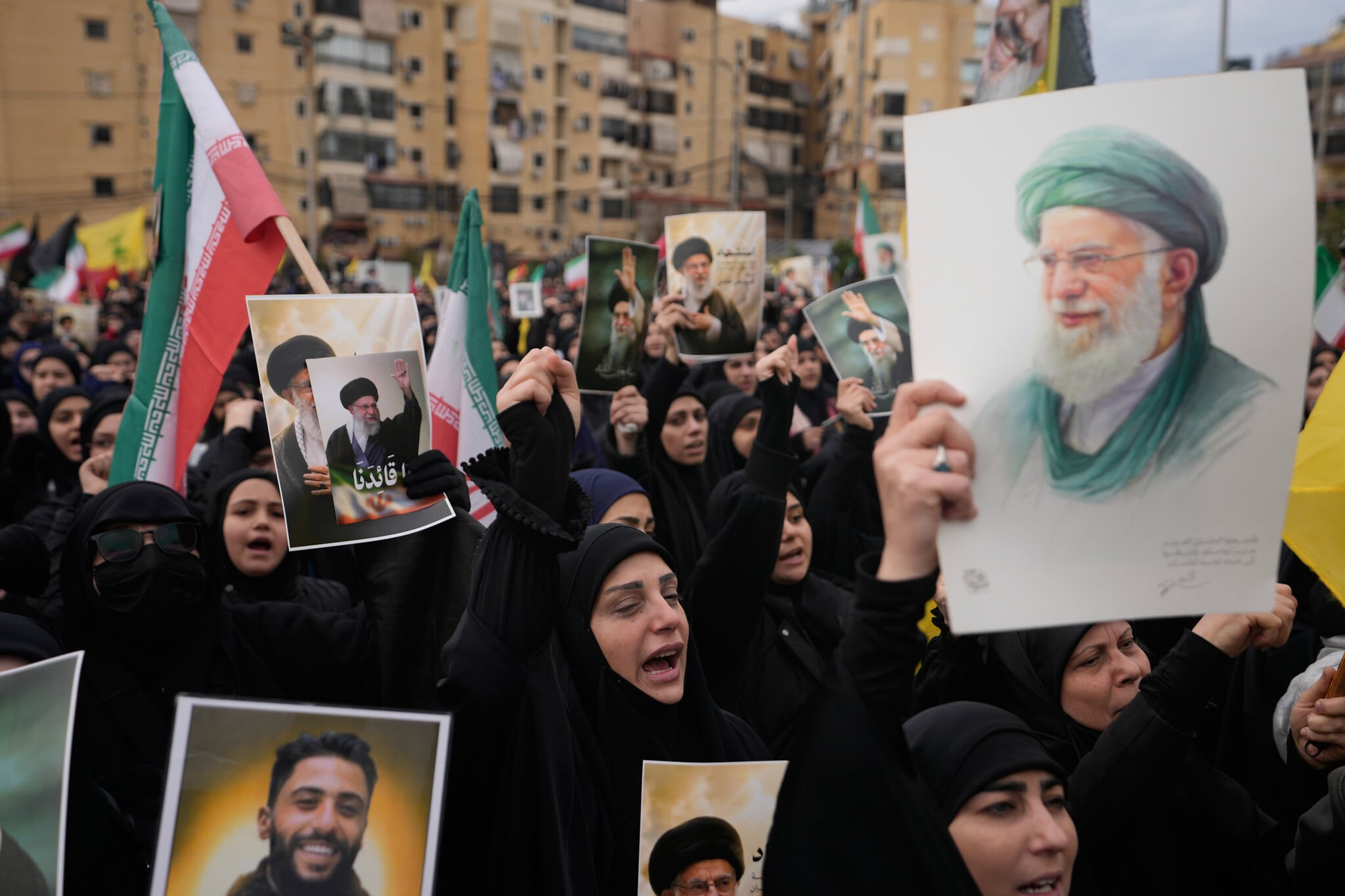
The recent strikes on Iran, which reportedly resulted in the death of Iran’s supreme leader Ayatollah Ali Khamenei and widespread destruction, represent the latest and most direct challenge to Tehran’s power. However, experts note that the weakening of Iran’s influence has been a gradual process.
“It’s a very bloody, a very violent but transformative moment that the Middle East is going through,” said Renad Mansour, a senior research fellow at Chatham House. “We don’t know where this will end up.”
Notably, Iran’s proxy groups have largely remained on the sidelines as Iran faces direct attack. This, according to analysts, suggests a shift in priorities. “It’s very much about survival” for Hezbollah and other Iran-backed groups, Mansour explained, adding that these groups are increasingly making independent decisions based on their own calculations rather than direct orders from Tehran.
Early Monday, Hezbollah broke this pattern, issuing statements condemning the attacks on Iran and mourning Khamenei’s death before launching rockets and drones across the border, prompting immediate Israeli retaliation. This marked the first time in over a year that Hezbollah claimed responsibility for an attack against Israel.
The future reaction of other Iran-backed groups remains uncertain. Charles Lister, a senior fellow at the Middle East Institute, suggested that Israel’s actions since 2023 may deter further escalation. “Previous bouts of conflict since October 7 appear to have underlined the existential risk associated with making yourself a target,” he noted.
In Iraq, Iran-backed militias have claimed responsibility for drone strikes targeting US bases. Officials within these militias revealed plans, developed two months ago, to target US forces and interests in Iraq and neighboring Jordan in response to a potential attack on Iran.
The events unfolding underscore a fundamental shift in the region, with Israel abandoning the long-held status quo and seeking to fundamentally alter the balance of power. The long-term consequences of this shift remain to be seen.
Pour aller plus loin