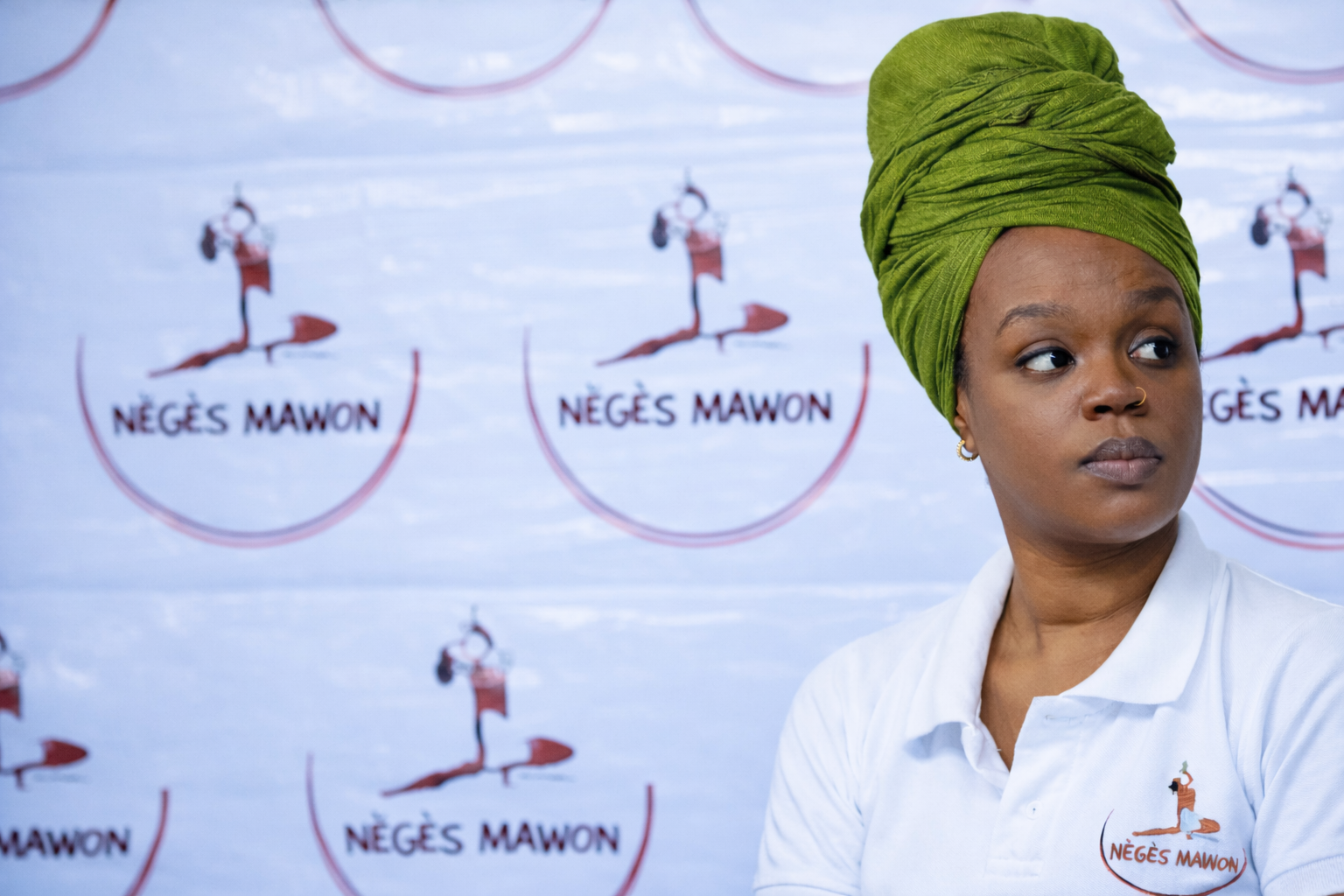
Haitian Feminist Activist Fights for Survival and Dignity Amidst Escalating Crisis
Port-au-Prince, Haiti – As Haiti grapples with an unprecedented social, political, and humanitarian crisis, one organization is working tirelessly to provide a lifeline for women and girls caught in the crossfire. Nègès Mawon, a feminist organization founded in 2015, is offering critical support to survivors of gender-based violence while advocating for systemic change in a nation increasingly defined by instability.
“Haiti is facing a political, economic, social, and security crisis,” explains Pascale Solages, co-founder and General Coordinator of Nègès Mawon. “Women and girls are the first victims. They all need and deserve security as citizens.”
The crisis deepened following the 2021 assassination of President Jovenel Moïse, leading to a surge in gang violence, particularly in the capital, Port-au-Prince. More than 1,000 people have been killed and over 1.2 million displaced in the first half of 2025 alone, according to reports. Solages’ own family, like many others, has been forced to flee their home.
Nègès Mawon, whose name translates to “Maroon Women” – a reference to the enslaved people who resisted colonial rule in Haiti – provides a range of services, including medical care, legal support, psychological counseling, and economic assistance to survivors of sexual violence. The organization also operates a safe house offering shelter and opportunities for economic autonomy. Recognizing the critical need for reproductive healthcare, Nègès Mawon also supports access to safe and legal abortion services, addressing a leading cause of maternal mortality in the country.
Solages’ commitment to this work is deeply personal. She recounts witnessing gender-based violence within her own family growing up and experiencing sexual violence herself at the age of eight. “It took me years to find people who helped me understand and heal from that trauma,” she says. “I wanted to create the space I needed as a young girl, for other women and girls who were also survivors.”
The current crisis has forced Nègès Mawon to adapt its mission. While continuing its core work supporting survivors, the organization is increasingly focused on addressing the immediate needs of displaced women and girls, who face reduced access to education, healthcare, and even safe public spaces.
“Gangs controlling territories are using sexual violence as a weapon of control,” Solages states, highlighting the escalating threat faced by women. “Their right to dream of a future where they can be free and safe is under attack.”
Despite the immense challenges, Solages remains resolute. She emphasizes the importance of recognizing Haitian organizations as agents of change, challenging the narrative that Haitians are incapable of governing themselves.
“Haitian women are both Haitian citizens and global citizens,” she asserts. “We have the right to occupy spaces where decisions are made about our future.”
Solages calls on the international community to provide continued financial support, but also to amplify the voices of Haitian organizations and respect their sovereignty. “Listen to the people. Listen to local organizations and activists. Our voices matter.”
For Solages, the hope for the future is simple: “For Haitian women and girls, I hope for something simple: the right to exist.” She envisions a Haiti where women can live without fear, experience dignity, and realize their full potential. A recent case involving a woman who sought refuge with Nègès Mawon after being raped and becoming pregnant while living in a displacement camp underscores the urgency of this mission. The organization provided critical medical care and shelter, offering a glimmer of hope amidst the darkness. “Even if we help one woman, one girl at a time, it matters and it is worthy,” Solages says.
À ne pas manquer