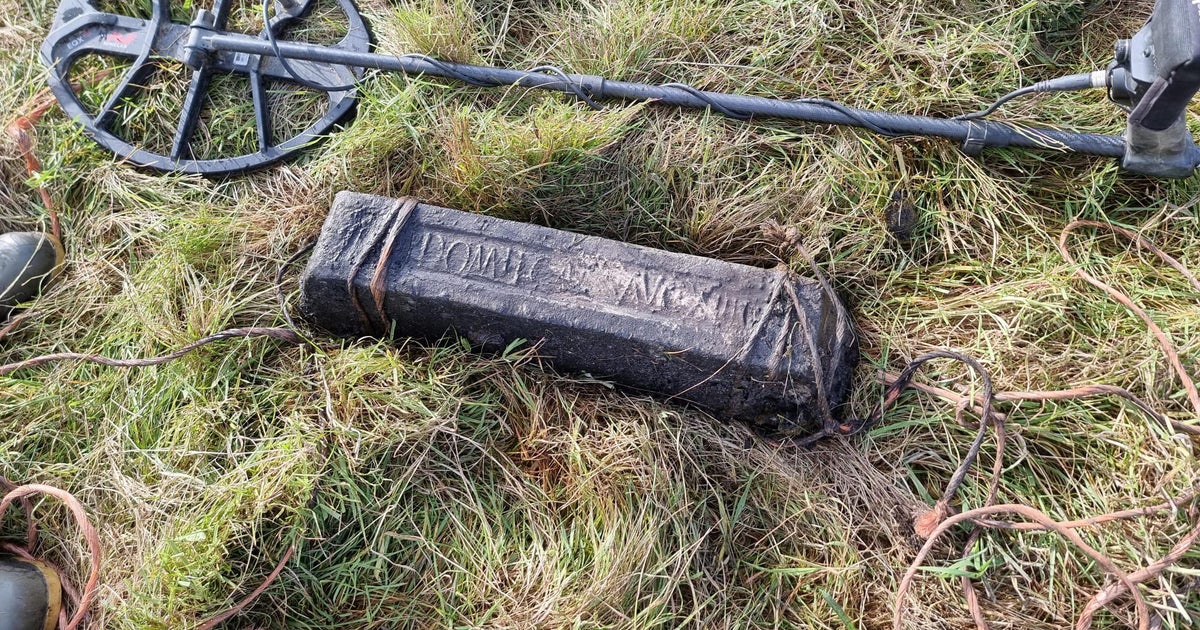
Rare Roman Lead Ingots Unearthed in Wales Offer Glimpse into Ancient Empire’s Reach
Ceredigion, Wales – Two remarkably well-preserved lead ingots dating back to AD 87 have been discovered on farmland in western Wales, offering a rare insight into Roman resource extraction and trade networks. The find, described as “exceptionally rare” by experts, highlights the strategic importance of the Ceredigion region during the Roman occupation of Britain.
Metal detectorists Nick Yallope and Peter Nicolas unearthed the lead “pigs” – as the ingots are known – while searching land owned by farmer Geraint Jenkins, with his permission. The discovery was made approximately 18 inches below the surface, with the two pieces found less than six feet apart.
“I feel incredibly proud to have uncovered something so rare and important to our local heritage. Unlocking a new chapter of our area’s past is incredibly exciting,” said Yallope in a statement released by Amgueddfa Cymru, the Welsh national museum.
Ceredigion’s rich mineral deposits, particularly lead, were a key factor in attracting Roman attention. According to Carrie Canham, a curator at Amgueddfa Cymru, the area’s resources were instrumental in fueling the Roman war machine and broader empire. “Lead mined in Ceredigion during the Roman era spread across the empire,” she explained.
The ingots, bearing lettering that dates them to AD 87 – the reign of Emperor Domitian – were likely used in the production of tools and weapons. This period marked a time of significant expansion under Domitian, making the supply of materials like lead crucial for his ambitious building projects and military campaigns.
This isn’t the first evidence of Roman industrial activity in the region. In 2005, archaeologists discovered the remains of a Roman lead smelting site in a nearby peat bog, suggesting a well-established network of mines and processing facilities. The metal produced was likely transported throughout the Roman Empire, connecting Wales to the wider world.
Jenkins, the landowner, reflected on the historical significance of the find, stating, “It’s remarkable to think that land we now farm organically once played a role in a much wider Roman landscape.”
The newly discovered lead ingots will be displayed in a new archaeology gallery at Amgueddfa Ceredigion museum, scheduled to open in spring 2027. The find underscores the importance of responsible metal detecting and the legal requirement in Wales to report potential treasures to the Portable Antiquities Scheme for examination and valuation.
The discovery follows a similar find between 2020 and 2022, when a hoard of Bronze Age artifacts – including axes, spearheads, rings, and a sword scabbard – were discovered by metal detectorists in Wales and officially declared treasure in 2023.
À lire aussi