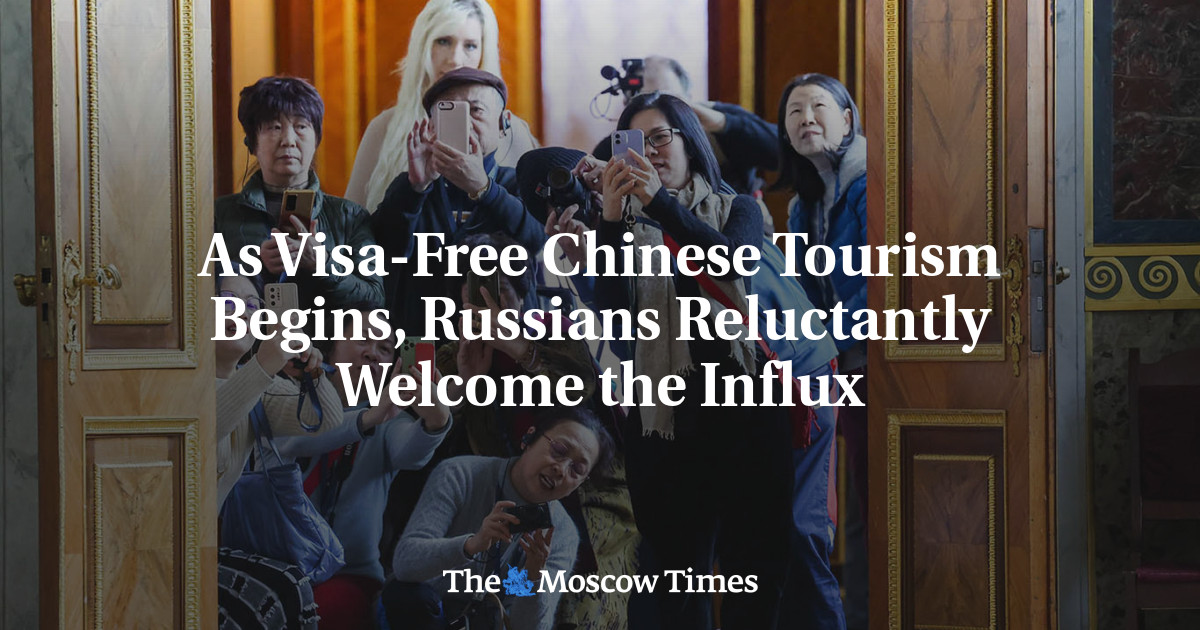
Russian Tourism Sees Boost from Visa-Free Travel for Chinese Tourists, But Friction Simmers
ST. PETERSBURG, Russia – A wave of Chinese tourists is reshaping Russia’s tourism landscape, offering a much-needed economic boost but also stirring familiar tensions with locals. The influx follows a December decree by President Vladimir Putin granting Chinese citizens visa-free entry for up to 30 days, mirroring a reciprocal agreement made by Beijing in September 2025.
The change is a significant development for Russia, which has sought to diversify its partnerships and bolster its economy following international sanctions imposed after the 2022 invasion of Ukraine. China has been Russia’s largest source of inbound tourism since 2014, a trend initially fueled by a weakened ruble and later disrupted by the COVID-19 pandemic.
On a recent train journey from Moscow to St. Petersburg, one carriage was almost entirely occupied by Chinese travelers, a visible sign of the shift. The Association of Tour Operators of Russia estimates Chinese arrivals will increase by around 30% this year, with some experts predicting growth could reach 50%.
“The rest of the time, rooms sit empty. So the more visa-free tourists we get, the better,” said a St. Petersburg hotel owner, who requested anonymity, highlighting the economic necessity driving the welcome.
The surge is particularly notable as tourism from other nations has declined. Chinese travelers are increasingly choosing Russia over Japan, where numbers have plummeted amid diplomatic tensions over Taiwan. According to data from China Trading Desk CEO Subramania Bhatt, Russian hotel bookings for Chinese travelers were up approximately 50% year-on-year in December.
Beyond the major cities of Moscow and St. Petersburg, the impact is being felt in Russia’s Far East and northern regions, where tourists are seeking experiences like viewing the Northern Lights and enjoying traditional activities like reindeer and dog sledding. In 2024, Murmansk saw a fivefold increase in Chinese visitors, welcoming 26,000, according to China’s Consul General in St. Petersburg.
However, the influx isn’t without its challenges. Reports of cultural clashes and overcrowding are resurfacing. In 2019, a Deputy Culture Minister expressed concern about Chinese tour groups overwhelming Russian visitors at the Catherine Palace near St. Petersburg, proposing segregated visiting days – a suggestion that was ultimately abandoned. More recently, residents of Murmansk voiced complaints about tourist behavior in February 2025.
Concerns also exist regarding the structure of the tourism market. A largely unregulated system dominated by Chinese tour operators often results in all-inclusive packages utilizing Chinese payment systems and directing tourists to commission-based shops. Some operators are even reportedly charging for access to public spaces that are typically free, marketing even a metro ride as a “unique cultural experience.”
“There’s no secret here. Chinese tourists are mostly handled by Chinese operators. Russian firms get very little,” a St. Petersburg travel agency owner told The Moscow Times.
Security concerns briefly dampened demand following the March 2024 attack at Moscow’s Crocus City Hall, with some Chinese tourists cancelling trips.
Despite these issues, Russian officials emphasize the economic importance of Chinese tourism. Alla Salayeva, a lawmaker on the State Duma’s Tourism Committee, stated the influx boosts state revenue and supports tourism infrastructure development. Some Russian operators are hoping the visa waiver will attract younger, independent Chinese travelers who are more likely to book services locally.
The evolving dynamic underscores Russia’s shifting geopolitical landscape and its increasing reliance on economic ties with China. While the economic benefits are clear, navigating the cultural and logistical challenges will be crucial to ensuring a sustainable and mutually beneficial tourism relationship.
Pour aller plus loin