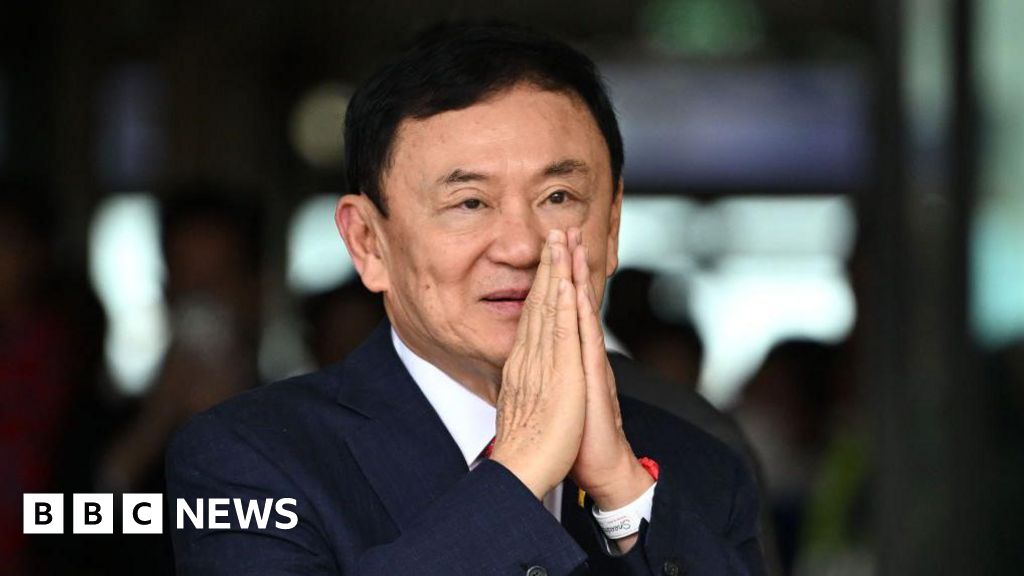
Thaksin Shinawatra’s Shadow Looms Over Thailand’s Political Future: Can the Billionaire Ex-PM Step Back?
BANGKOK — After decades of dominating Thailand’s political landscape from exile, Thaksin Shinawatra’s return to the country has reignited a national debate: Can the billionaire former prime minister, now released on parole, finally take a back seat? For a country grappling with judicial crackdowns and shifting power dynamics, the question isn’t just about one man’s political ambitions—it’s about the future of Thai democracy itself.
From Prison to Parole: The Return of a Political Titan
Thaksin Shinawatra, the charismatic and polarizing leader of the Pheu Thai Party, was released from prison on May 11, 2026, after serving eight months of a one-year sentence. His parole—marked by an electronic monitoring device—signals a new chapter for the 74-year-old, but it also raises questions about his influence over Pheu Thai, a party that has seen its political dominance wane in recent years.
Despite his legal constraints, Thaksin has not hesitated to assert his presence. In recent weeks, he delivered a high-profile lecture at Pheu Thai’s headquarters, praising party members for their role in the budget debate, and is set to campaign in Udon Thani province, his first public address since ending his self-imposed exile in 2023. His return has sparked speculation about whether he will continue to pull the strings from behind the scenes, or if this time, his political influence will truly fade.
On social media, Thaksin’s return has been met with a mix of nostalgia and apprehension. In a recent address, he joked that his children now “give him orders,” a nod to his daughter, Paetongtarn Shinawatra, who serves as Thailand’s current prime minister. His warning to drug dealers—“Thaksin is back”—echoed across platforms, underscoring his enduring influence. Meanwhile, critics argue that his presence only deepens Thailand’s political instability, particularly as the country awaits a pivotal Constitutional Court decision that could further reshape its political landscape.
Thailand’s Democracy Under Siege
Thaksin’s political comeback is unfolding against a backdrop of judicial interventions that have already weakened Thailand’s democratic institutions. In August 2024, the Constitutional Court dissolved the opposition Move Forward Party, citing politically motivated allegations. The ruling dealt a major blow to Thailand’s progressive movement and sent shockwaves through the international community, with organizations like Human Rights Watch condemning the decision as a “serious damage” to democratic rule.
According to a 2024 report by Human Rights Watch, Thailand’s judiciary has increasingly been used as a tool to suppress political opposition, with high-profile cases targeting progressive leaders and parties. The dissolution of Move Forward Party, which won a stunning electoral victory in 2023, highlights the fragility of Thailand’s democratic gains. With Thaksin’s return, observers fear that the country’s political tensions could escalate further, especially as his legal battles—including a Criminal Code Section 112 case—continue to limit his maneuverability.
| Key Event | Date | Impact |
|---|---|---|
| Thaksin’s parole release | May 11, 2026 | Reignites debate over his political influence; Pheu Thai’s dominance weakened |
| Move Forward Party dissolved | August 7, 2024 | Major setback for Thailand’s progressive movement; international condemnation |
| Thaksin’s lecture at Pheu Thai HQ | Recent (2026) | Public reassertion of influence; party members rally behind him |
What’s Next for Thailand?
Political analysts and international observers are divided on Thaksin’s next move. Some argue that his legal constraints and the party’s recent electoral defeats will force him to adopt a lower profile. Others warn that his political instincts and family ties to the current government will keep him at the center of Thailand’s political storm.
“Thaksin’s influence is undeniable, but his bargaining power has weakened,” noted a recent analysis by the Bangkok Post. “The question now is whether he can adapt to a new political reality where the establishment has gained the upper hand.” Meanwhile, the international community watches closely, with the U.S. and EU expressing concerns over Thailand’s democratic backsliding.
Why It Matters
Thaksin’s story is more than a personal political saga—it’s a microcosm of Thailand’s broader struggle to reconcile its democratic aspirations with entrenched power structures. For a country that has seen military coups, judicial overreach, and shifting alliances, the path forward remains uncertain. As Thaksin navigates his parole and public appearances, one thing is clear: Thailand’s political future hangs in the balance, and the world is watching.
À ne pas manquer