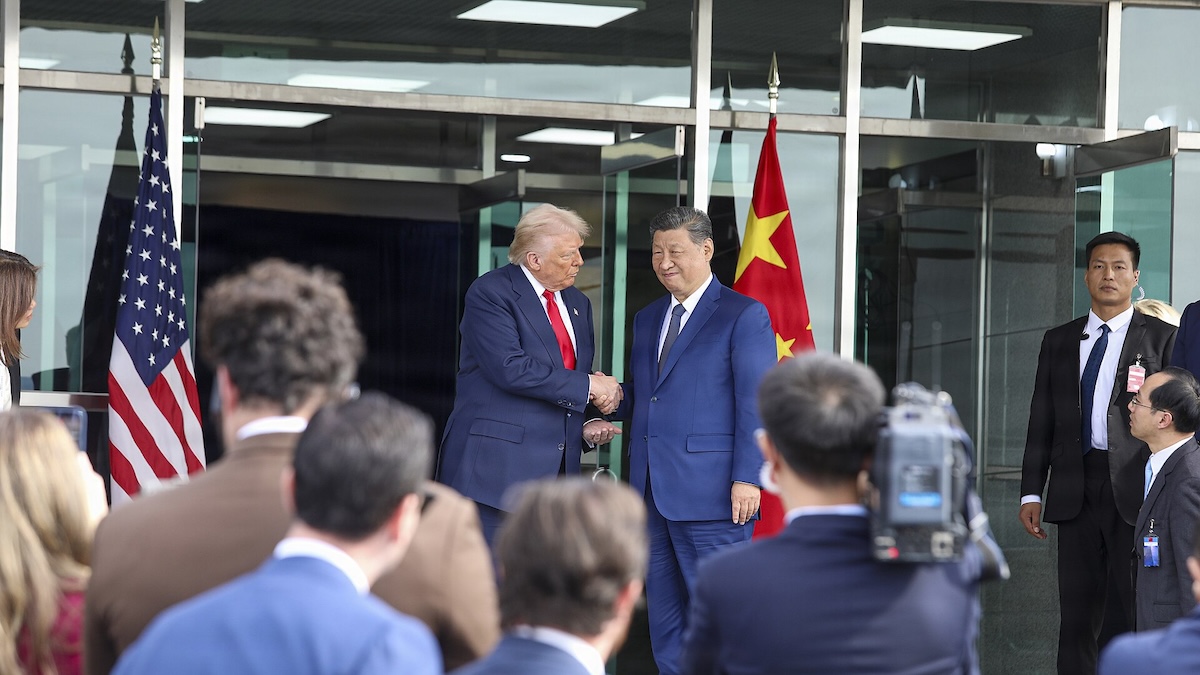
Fragile Truce: US-China Relations Remain Vulnerable to Global Shocks
WASHINGTON (AP) – A planned state visit by President Donald Trump to Beijing is facing potential delay as the war in Iran escalates, highlighting the precarious nature of the recent thaw in US-China relations. While both Washington and Beijing publicly downplay any direct linkage between the trip and Trump’s request for Chinese assistance in reopening the Strait of Hormuz, analysts warn the current stabilization is “structurally fragile” and susceptible to disruption from global events.
The anticipated visit, initially slated to begin March 31, had signaled a potential shift after a period of heightened tensions. In recent months, both sides had taken steps toward de-escalation, including discussions on reducing tariffs and implementing measures to ease trade restrictions. However, Trump’s call for China to address the situation in the Strait of Hormuz underscored how quickly external crises can reshape the bilateral agenda.
“The fact that a crisis in the Middle East can disrupt even a carefully prepared summit underscores a deeper reality,” noted a recent analysis by Control Risks, a global risk consultancy. “None of the fundamental sources of political, economic and security mistrust that have driven the deterioration in ties in recent years have been meaningfully addressed.”
The US and China have repeatedly skirted major escalation in the past year. A tit-for-tat tariff battle in 2025 brought duties to near-embargo levels, accompanied by export controls and threats of visa denials. Temporary reprieves followed leader-level interventions, but the cycle of escalation demonstrates the inherent instability of the relationship.
Despite the October truce, underlying tensions remain. The United States has continued to pressure China through various channels, including encouraging Canada and Mexico to increase tariffs on Chinese goods, accelerating efforts to reduce supply chain dependencies – particularly in critical minerals – and maintaining a military presence in the Taiwan Strait and South China Sea. Beijing has responded with rhetorical condemnations of these actions.
The current stabilization, experts say, is driven more by a mutual fear of economic warfare than by a genuine attempt to resolve deep-seated mistrust. Both countries recognize the potential for crippling blows to each other’s economies through the weaponization of supply chains, particularly in sectors like semiconductors, critical minerals, and advanced technologies.
China’s growing confidence in leveraging its control over critical supply chains is also a factor. In 2025, it was the only nation to meaningfully retaliate against US tariffs. Simultaneously, the US has expanded its economic statecraft tools, including technology controls and investment restrictions.
Any potential trade framework emerging from a rescheduled summit is likely to be more balanced than the 2020 Phase One agreement, requiring concessions from the United States, such as easing restrictions on Chinese investments in strategic US sectors. The White House has already signaled openness to such concessions, reversing some restrictions in the telecommunications sector and easing export controls on advanced AI semiconductors.
However, these measures are largely seen as tactical positioning ahead of negotiations, rather than a fundamental shift in US strategy. The US Congress continues to pass legislation opposed by Beijing, such as the BIOSECURE Act, which seeks to restrict cooperation with Chinese biotechnology firms.
The delayed trip, if it proceeds, may offer a temporary reprieve. But the structural logic of strategic competition and supply-chain vulnerabilities remains unchanged. As one analyst put it, the question is not if another escalation will occur, but when.
Pour aller plus loin