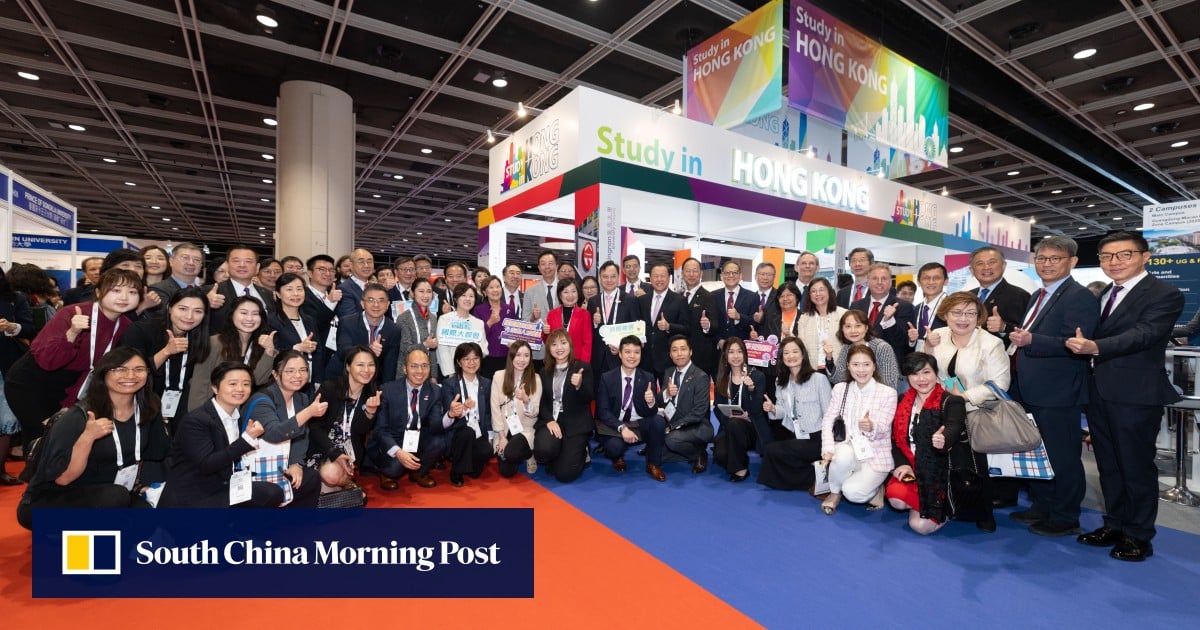
Hong Kong Bolsters Position as Global Education Hub
HONG KONG – Hong Kong is actively reinforcing its role as a leading international education destination, adapting to a changing landscape of student mobility and emphasizing practical, cross-border collaboration. Recent initiatives, highlighted by the successful Asia-Pacific Association for International Education (APAIE) 2026 Conference and Exhibition, signal a strategic push to attract a more diverse student body and foster stronger partnerships with institutions worldwide.
The APAIE 2026 conference, which concluded recently, drew over 3,500 education leaders and professionals from 72 countries and regions, alongside more than 600 exhibiting organizations. The event served as a catalyst for forging new pathways for international student exchange, research collaboration, and innovation.
“When universities think and act together across borders, we can solve the world’s greatest challenges,” stated Professor Dawn Freshwater, Vice-Chancellor of the University of Auckland, during the conference, underscoring the importance of global partnerships in higher education.
The Hong Kong government, through the Education Bureau, the University Grants Committee (UGC), and the Hong Kong Tourism Board, is backing this vision with significant investment. Universities are responding with programs designed to equip students with the skills needed for a globalized job market.
The Chinese University of Hong Kong (CUHK) led the hosting of APAIE 2026, with co-hosting support from the other seven UGC-funded universities. Professor Irwin King, Pro-Vice-Chancellor (Education) of CUHK, emphasized Hong Kong’s unique position as a gateway to the Greater Bay Area (GBA). “Hong Kong plays a leadership role in developing the infrastructure that turns opportunities into real careers and discoveries,” he said, noting the benefits of collaboration between government, industry, and universities.
This strategic advantage is further echoed by Professor Lily Kong, President of Singapore Management University, who highlighted Hong Kong’s blend of international outlook and regional expertise in mainland China and East Asia, drawing parallels with Singapore’s strength in Southeast Asia. She believes this combination makes partnerships between Hong Kong and Singapore universities particularly impactful.
Universities are also focusing on immersive learning experiences. Hong Kong Baptist University (HKBU), for example, offers a “One University, Two Campuses” approach with its Zhuhai campus and curated study tours within the GBA, providing students with both comparative perspectives and practical experience. The Hong Kong University of Science and Technology (HKUST) prioritizes student integration through programs like “Spark Global,” which offers a range of activities designed to enhance cultural understanding and build connections with local peers.
Students attending APAIE 2026 shared positive experiences. Shiven Garg, a PhD engineering student from India at CUHK, noted the value of industry connections facilitated by the university, allowing him to collaborate with robotics manufacturers in mainland China. Octavio Flores Orozco, a PhD candidate from Mexico at The Education University of Hong Kong (EdUHK), praised the campus support that helped him integrate into Hong Kong life, including Cantonese language courses and a welcoming campus environment.
Hong Kong’s efforts to strengthen its international education hub status come as student mobility patterns shift globally. The city’s strategic location, combined with its commitment to innovation and collaboration, positions it to play a key role in shaping the future of higher education.