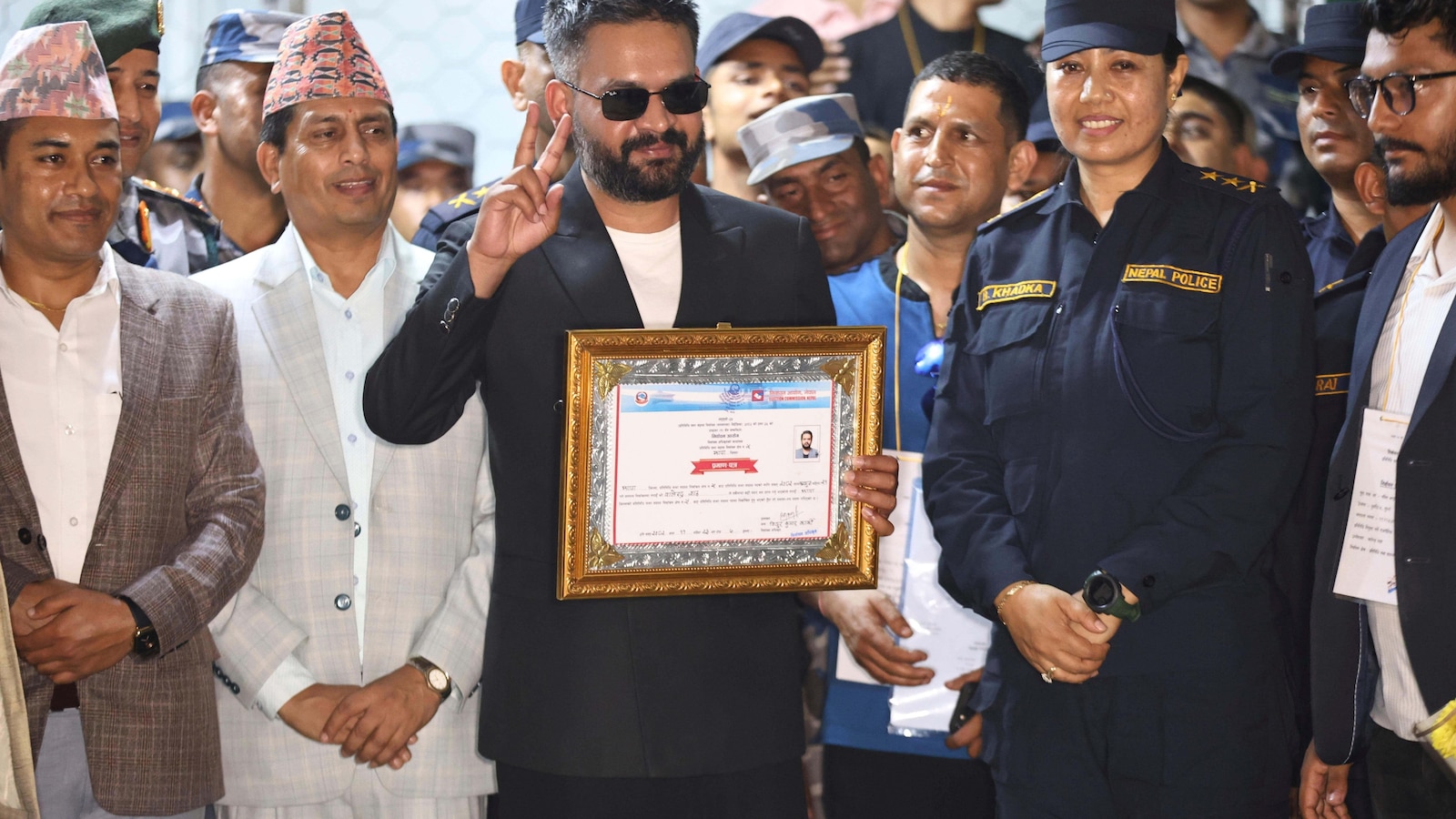
KATHMANDU, Nepal (AP) — Nepal is poised for a new government led by a political party barely four years old, propelled to power by a former rapper whose rise reflects widespread discontent with the country’s established political order. The Rastriya Swatantra Party (RSP), led by Balendra Shah, secured a decisive victory in parliamentary elections, results published Thursday revealed.
The RSP won 125 directly elected seats and an additional 57 through proportional representation, giving it a total of 182 seats in the 275-member House of Representatives. The Nepali Congress party trailed significantly, securing only 38 seats.
This election marks a significant shift in Nepal’s political landscape, challenging the dominance of the Nepali Congress and the Communist Party of Nepal (Unified Marxist–Leninist). The RSP’s success is particularly notable given its recent founding in 2022.
Shah, the RSP’s prime ministerial candidate, first gained prominence after winning the 2022 mayoral race in Kathmandu. He became a key figure in the 2025 uprising that led to the ousting of then-Prime Minister Khadga Prasad Oli.
The RSP’s surge in popularity follows last year’s youth-led protests against corruption and perceived poor governance. Those demonstrations, initially sparked by a social media ban, escalated into a broader revolt against the government, resulting in clashes that left dozens dead and hundreds injured.
Nepal’s electoral system combines direct elections for 165 members of the House of Representatives with proportional representation for the remaining 110 seats, allocated based on each party’s national vote share. The electoral commission will now request parties to submit names for the proportional representation seats before reporting to the president, who will then convene the new parliament. The parliament will subsequently elect a new prime minister, a position Shah is expected to fill with the RSP holding a near two-thirds majority.
The formation of a new government is expected to take several days. The RSP’s victory signals a demand for change in Nepal, fueled by a younger generation seeking to address longstanding issues of corruption and governance.
À ne pas manquer