Moscow’s Tactical Pivot: Daytime Drone Strikes Intensify Civilian Risk in Ukraine
KYIV — In a calculated shift of aerial warfare, Moscow has dramatically increased the frequency and volume of long-range drone strikes launched during daylight hours, a move that analysts and Ukrainian officials warn is designed to maximize civilian casualties as the region emerges from winter.
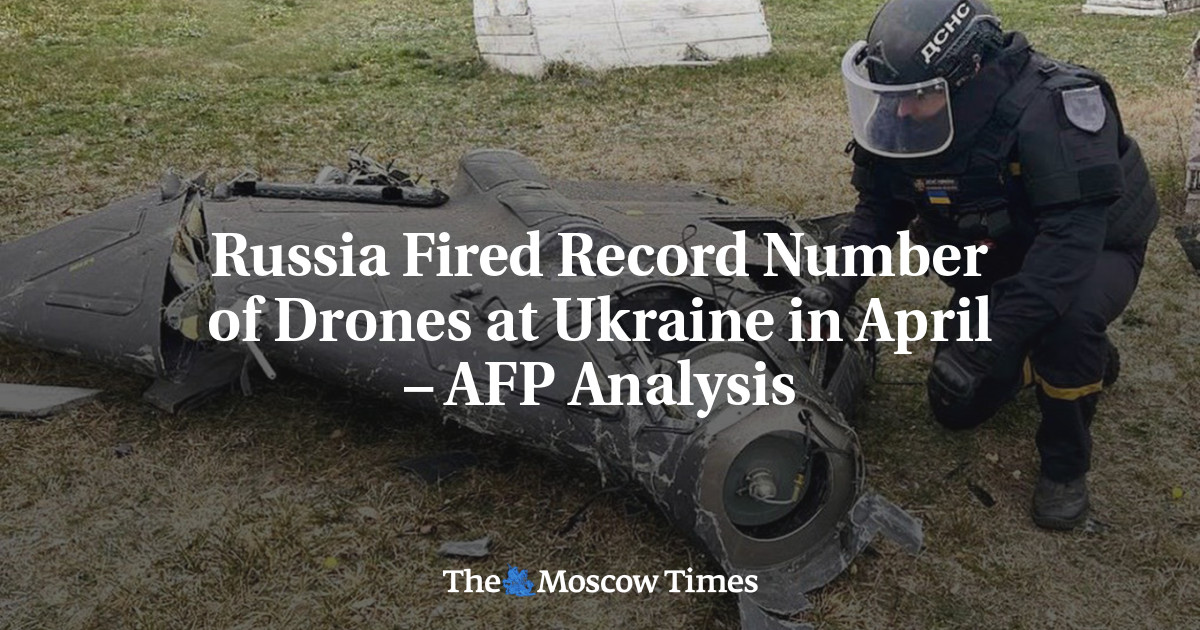
According to an analysis of data from the Ukrainian Air Force, Russia launched a record 6,583 long-range drones throughout April 2026. This represents a 2% increase over the previous month, which had also set a record. While Russian long-range strikes were previously conducted almost exclusively under the cover of night, the recent surge in midday attacks marks a departure in strategy that has sparked international alarm.
A Strategy of Terror and Paralysis
The transition to daytime operations is not merely a technical adjustment but a psychological one. Pavlo Palisa, the deputy head of President Volodymyr Zelenskyy’s office, characterizes these midday barrages as a deliberate effort to terrorise civilians
now that the extreme cold of winter has subsided.
Beyond the immediate physical danger, the Ukrainian government highlights a systemic effort to degrade the country’s economic resilience.
“There is also an economic component here. Massive attacks in the middle of the working day significantly paralyse business,” Pavlo Palisa, deputy head of President Zelenskyy’s office
The Institute for the Study of War (ISW) supports this assessment, noting that the coupling of large nighttime strikes with equally large daytime strikes is likely to increase civilian harm. The think tank suggests that as warmer weather arrives and more Ukrainians spend time in public and open-space areas, the risk of casualties rises exponentially.
The Human Cost in Numbers
The timing of this tactical shift coincides with a period of escalating violence. Data from the U.N. Human Rights Monitoring Mission in Ukraine reveals a harrowing trend: in March 2026, civilian casualties spiked by nearly 49% compared to February, with at least 211 people killed and 1,206 injured.
While short-range drones remain the primary killer near the frontlines, long-range weapons—including the drones now appearing in the midday sky—accounted for approximately 36% of all civilian casualties in March, primarily affecting those in cities and towns far from the active combat zones.
@AirForce_UA: 🚨 Record drone activity detected this afternoon. Our defenses remain vigilant, but the shift to daytime strikes increases the risk to civilians in urban centers. #UkraineWar #AirDefense
Geopolitical Stagnation and Legal Concerns
This escalation occurs against a backdrop of diplomatic deadlock, with U.S.-mediated talks aimed at ending the conflict currently frozen.
_MIGR2022.png "Ukraine Ukrainians Data")
From a legal standpoint, the shift toward daytime strikes in populated areas raises critical questions regarding International Humanitarian Law (IHL). The International Committee of the Red Cross (ICRC) maintains that all drone operations must adhere to the principles of distinction, proportionality, and precaution, explicitly prohibiting indiscriminate attacks that fail to distinguish between combatants and civilians.
Despite the increased volume of attacks, Kyiv continues to lean on its evolving defense infrastructure. Data indicates that Ukraine managed to shoot down 88% of all incoming drones and missiles during the April wave, a feat the government attributes to four years of refining its interception capabilities.
As the conflict enters a new seasonal phase, the "daylight strategy" transforms the sky from a nighttime threat into a constant, midday anxiety for millions of Ukrainians.
Sur le même sujet