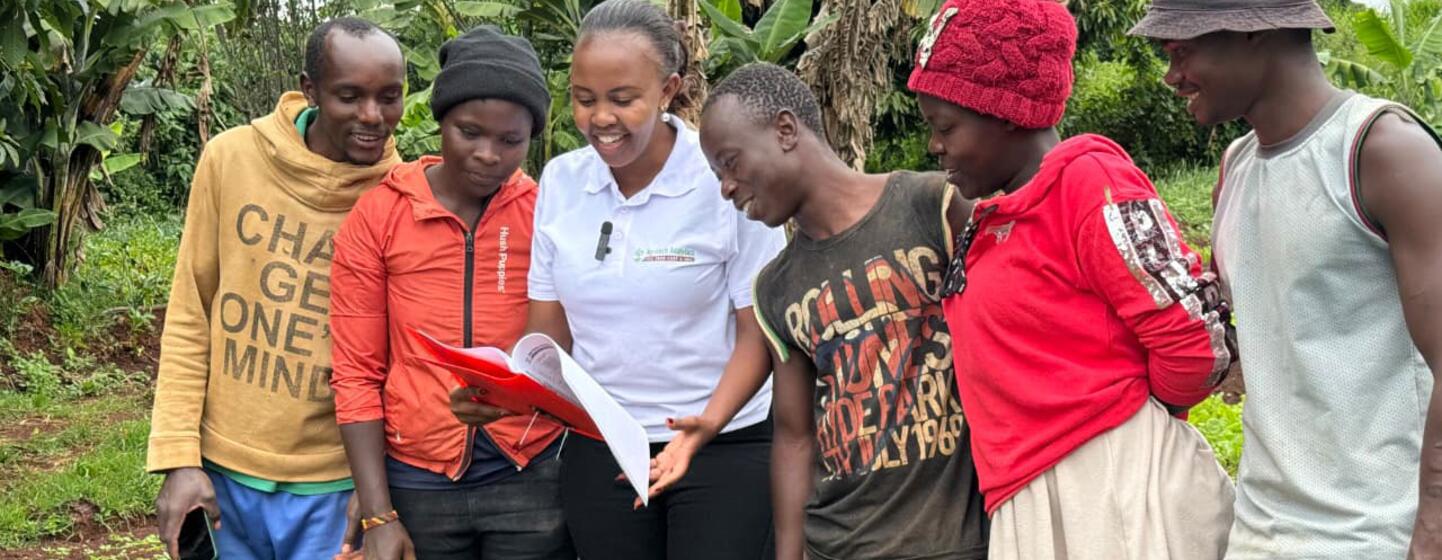
Kenyan Entrepreneur Harnesses Tech to Bolster Climate Resilience for Farmers
NAIROBI, Kenya – Across Kenya, and indeed much of Africa, the future of agriculture – and the livelihoods of millions – hangs in the balance as climate change intensifies. Up to 75% of Kenya’s population relies on agriculture, but increasingly erratic weather patterns and land degradation are threatening harvests and pushing communities towards instability. However, a new generation of innovators is stepping forward, armed with technology and a deep understanding of the challenges facing smallholder farmers.
Maryanne Gichanga, founder of Agritech Analytics, is one such innovator. She’s developing and deploying solar-powered sensors and AI-driven satellite data to provide farmers with crucial insights into soil health, crop conditions, and impending weather events. Her work, highlighted by the United Nations ahead of International Day of Clean Energy on January 26th, represents a growing movement to leverage technology for climate adaptation in the agricultural sector.
“I grew up seeing the direct impact of climate change on my parents’ farm,” Gichanga explained in an interview with the UN. “When the harvests failed, it meant we struggled to afford school, to live with dignity. I wanted to find solutions, not just for my family, but for all the smallholder farmers who are the backbone of our economy.”
[Image of Maryanne Gichanga with IoT sensor in vegetable field. Caption: © Agritech Analytics. Maryanne Gichanga demonstrates the technology used to monitor soil and crop health.]
Gichanga’s journey hasn’t been without obstacles. She describes navigating a traditionally male-dominated field, where her expertise was often questioned. “People would rather work with a man, believing they understand the technology better,” she said. “But persistence, demonstrating the value of our work, and collaborating with others has been key.”
Her company received crucial early support from Greenovations Africa, a UN-backed initiative that provides training and seed capital to women entrepreneurs. This support allowed Agritech Analytics to scale its operations and reach more farmers.
The impact is already being felt on the ground. Farmers equipped with Gichanga’s data tools are reporting increased crop yields and greater control over pricing. “When you empower farmers, their lives change,” Gichanga stated. “Seeing a farmer who couldn’t afford seeds now negotiating fair prices for their harvest – that’s the most rewarding thing.”
The challenges facing African agriculture are significant. According to the World Bank, climate change could reduce crop yields in Sub-Saharan Africa by up to 30% by 2050, potentially exacerbating food insecurity and poverty. The Kenyan government has identified climate-smart agriculture as a key priority in its national development plans, recognizing the need for innovative solutions like those offered by Agritech Analytics.
Gichanga’s message to other women and girls considering a career in agriculture or climate action is simple: “Go for it. You will learn along the way, and there are people who will support you. Don’t be scared to start, even if you don’t feel fully prepared.”
Her story serves as a powerful example of how innovation, coupled with a commitment to community, can build resilience in the face of a changing climate. And for Gichanga, the motivation remains deeply personal: ensuring a stable future for the millions of families who depend on agriculture for their livelihoods.
Sur le même sujet