Trump Administration Weighs Military Options as Iran Advances Nuclear Program
WASHINGTON (AP) — The Trump administration is increasingly focused on the possibility of military strikes against Iran as the Islamic Republic continues to accelerate its nuclear program, edging closer to the capability of producing a nuclear weapon. While diplomatic channels remain open, President Trump has repeatedly warned that he will not allow Iran to acquire nuclear weapons, a stance echoed by officials across his administration.
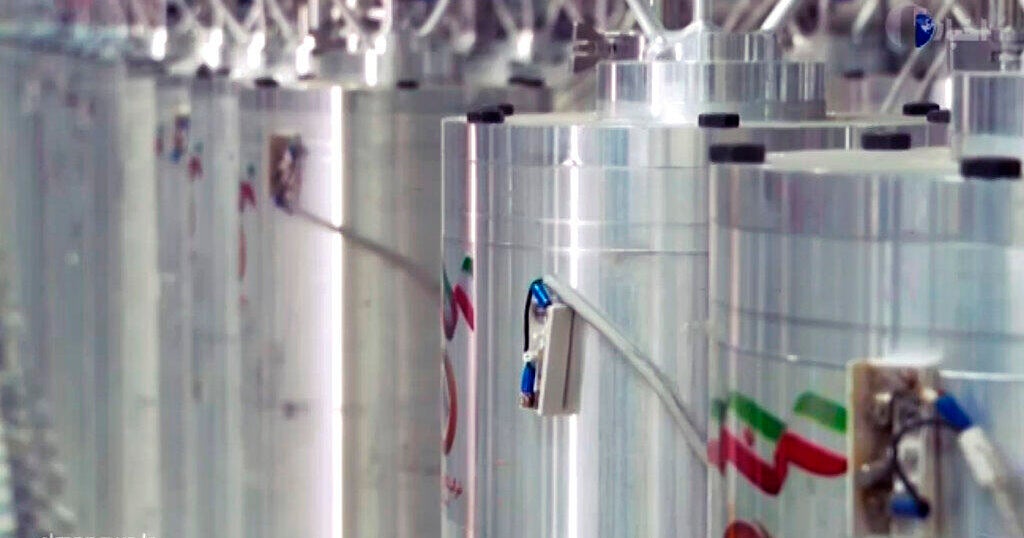
The situation has escalated in recent months, with Iran enriching uranium to 60% purity – a level far beyond what is needed for peaceful applications like nuclear power or medical uses, and a “short step” away from the 90% purity required for a bomb, according to international observers. As of mid-June 2025, Iran possessed an estimated 972 pounds of uranium enriched to this level, a significant increase from the 605.8 pounds held in February 2025, and 267.9 pounds a year prior. The U.S. Defense Intelligence Agency estimates Iran could produce enough weapons-grade uranium for a first bomb in less than a week if it chose to do so.
“My preference is to solve this problem through diplomacy, but one thing is certain: I will never allow the world’s number one sponsor of terror, which they are by far, to have a nuclear weapon,” President Trump stated during his State of the Union address.
Despite the escalating tensions, indirect negotiations between the United States and Iran have been ongoing in recent weeks, facilitated by Oman. Omani Foreign Minister Badr Albusaidi has expressed optimism, stating that a “peace deal is within our reach” and that “substantial progress” has been made. However, President Trump has voiced frustration with the pace of these talks, telling reporters on Feb. 27 that he is “not happy” and has not yet ruled out military action.
The U.S. conducted airstrikes last June targeting Iran’s Fordo and Natanz enrichment facilities, as well as a research site near Isfahan. While the Trump administration claimed these strikes “obliterated” the targeted sites and set back the program “basically decades,” the International Atomic Energy Agency (IAEA) reported “severe damage” but not “total damage.” IAEA Director-General Rafael Grossi noted in February that Iran’s nuclear material “is still there, in large quantities,” despite the strikes. Satellite imagery indicates ongoing efforts to rebuild and protect the damaged facilities.
Iran maintains its nuclear program is entirely peaceful and denies any intention of developing nuclear weapons. Iranian Foreign Minister Abbas Araghchi has asserted that Iran has “every right to enjoy a peaceful nuclear energy, including enrichment,” and that the technology is a source of “dignity and pride.”
The current standoff is rooted in the history of Iran’s nuclear ambitions, which date back decades. A 2015 agreement, known as the Joint Comprehensive Plan of Action (JCPOA), temporarily limited Iran’s nuclear program in exchange for sanctions relief. However, President Trump unilaterally withdrew the U.S. from the JCPOA in 2018, reimposing sanctions and initiating a “maximum pressure” campaign. Since then, Iran has steadily rolled back its commitments under the agreement, dramatically increasing its uranium enrichment.
The IAEA has said it withdrew its inspectors from Iran for safety reasons following the June strikes, and Iran subsequently suspended cooperation with the agency. While some inspections were later conducted, they did not include the sites targeted by U.S. forces.
The situation remains fluid and carries significant risks of further escalation. The international community is closely monitoring developments, with concerns that a miscalculation could lead to a wider conflict in the Middle East.
Sur le même sujet
- Charlie Kirk : Entre Mèmes Viraux et Indemnités pour Salariés Licenciés
- Les Houthis Revendiquent Une Attaque Contre Une Base à Sharurah
- Chantilly Arts & Elégance 2026. Programme, infos pratiques et tarifs (lederniereheure.com)
- Trump dit qu’un accord commercial avec le Canada pourrait être conclu assez bientôt (lesactualites.news)