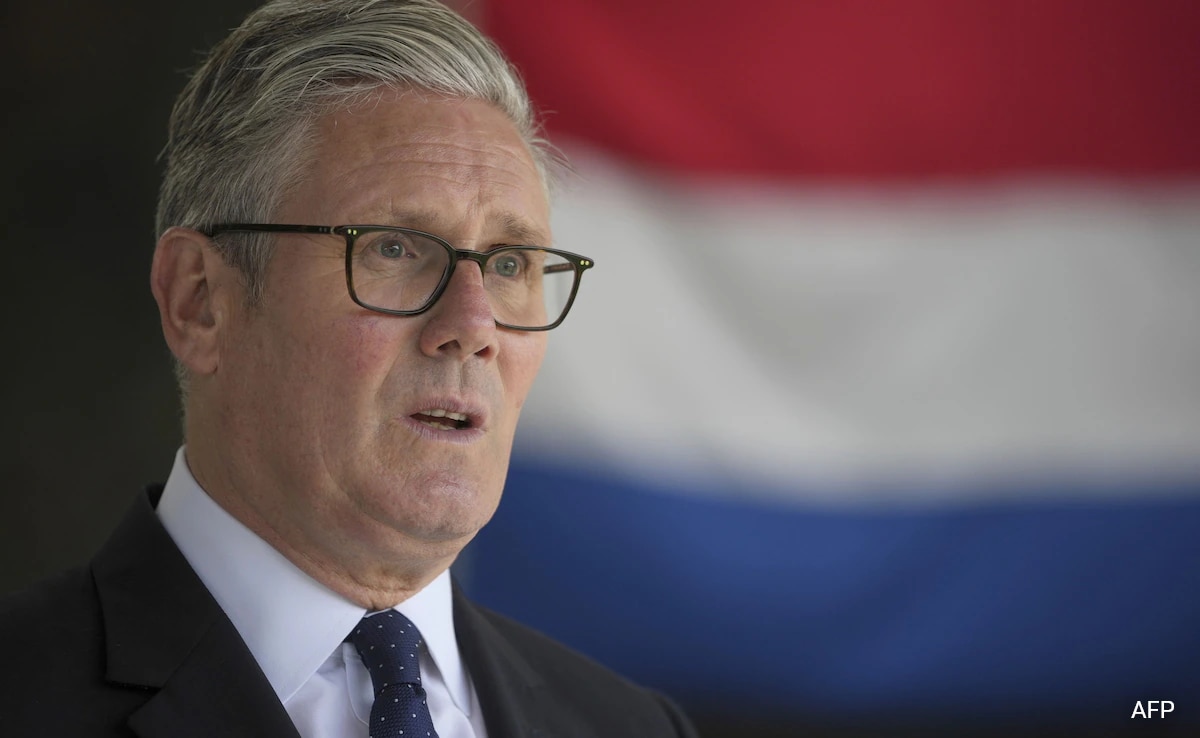
Labour Party in Turmoil as Starmer Faces Mounting Pressure Amidst Scandal
LONDON – The United Kingdom’s Labour Party is grappling with a deepening leadership crisis, barely a year after securing a decisive victory in the June 2024 general election. Prime Minister Keir Starmer is facing a wave of internal dissent and plummeting approval ratings, raising serious questions about his ability to lead the party – and the country – forward.
Recent polling data paints a grim picture for the Labour government. Just 18% of Britons view Starmer favorably, while a staggering 75% express an unfavorable opinion, according to surveys conducted by YouGov and reported by The Guardian. This dramatic shift in public sentiment has fueled speculation about a potential leadership challenge, with several prominent Labour MPs reportedly considering their options.
The immediate catalyst for the current turmoil is the fallout from revelations linking Peter Mandelson, Starmer’s controversial choice for U.S. ambassador, to convicted sex offender Jeffrey Epstein. The release of emails detailing Mandelson’s extensive association with Epstein has triggered a political firestorm, leading to the resignation of Starmer’s chief advisor and intensifying calls for the Prime Minister to step down.
“The situation is deeply damaging,” said Professor Sarah Birch, a political scientist at King’s College London. “The Mandelson affair has exposed a significant misjudgment by Starmer and has emboldened those within the party who were already skeptical of his leadership.”
While Starmer has publicly defended his decision to appoint Mandelson, and has insisted he will “never walk away from the country that I love,” his defiance has been met with skepticism even within his own ranks. Scottish Labour leader Anas Sarwar has publicly called for Starmer’s resignation, citing “too many mistakes.”
The crisis comes at a precarious time for the UK, which is navigating a complex geopolitical landscape and facing economic headwinds. The Labour Party’s internal struggles are further eroding public trust in political institutions, a trend observed across many Western democracies. According to a recent report by the Hansard Society, public trust in Parliament has fallen to a record low.
A Vacuum of Leadership?
The lack of a clear successor to Starmer further complicates the situation. While potential candidates such as Angela Rayner, Rachel Reeves, and Wes Streeting have been mentioned, none command widespread support within the party. However, a rising star within Labour is Home Secretary Shabana Mahmood.
Mahmood, a barrister and Member of Parliament since 2010, is seen as a competent administrator with a reputation for pragmatism. Her background – born in Birmingham to Pakistani heritage and educated at Oxford – would represent a historic moment for the UK, potentially making her the second British Muslim of South Asian origin to lead the country, following Rishi Sunak.
“Mahmood’s rise is significant,” noted Zubair Ahmed, a London-based senior journalist. “Her background would inevitably draw scrutiny, particularly in India, given sensitivities around Kashmir. However, she is likely to prioritize British strategic interests, particularly in the context of post-Brexit trade and security partnerships.”
India is a crucial partner for the UK, with bilateral trade exceeding £36 billion annually, according to the UK Department for Business and Trade. Any British Prime Minister would be keen to maintain stable relations with New Delhi.
A Party Divided
Despite the calls for his resignation, Starmer has managed to weather the immediate storm, largely through a coordinated effort by his allies to rally support within the cabinet. Ministers were reportedly “phoned, nudged, and, in some cases, handed suggested language” to express their loyalty, according to sources within Number 10.
However, this display of unity appears fragile. Many cabinet ministers privately admit their support is conditional, and the upcoming May local elections and the Gorton and Denton by-election will serve as crucial tests of Labour’s standing. A poor showing in either could reignite the leadership question.
The Labour Party’s predicament reflects a broader sense of disillusionment within the UK electorate. Voters are “tired of drift, fearful of chaos, and paralysed by the absence of convincing alternatives,” as Ahmed put it.
The Conservative opposition, still reeling from its own recent political turmoil, has seized the opportunity to attack Starmer’s leadership, declaring that his departure is “a question of when, not if.”
For now, Starmer remains in power, but his authority is severely diminished. The coming months will be critical in determining whether he can regain the confidence of his party and the country, or whether the Labour Party is destined for another period of internal strife and political uncertainty.
https://twitter.com/YouGov/status/1793876543210989890
https://www.theguardian.com/politics/2024/jun/25/keir-starmer-peter-mandelson-epstein-labour-crisis
https://www.hansardsociety.org.uk/blog/public-trust-in-parliament-hits-record-low
https://www.gov.uk/government/statistics/uk-total-trade-all-countries-annual-data
À lire aussi