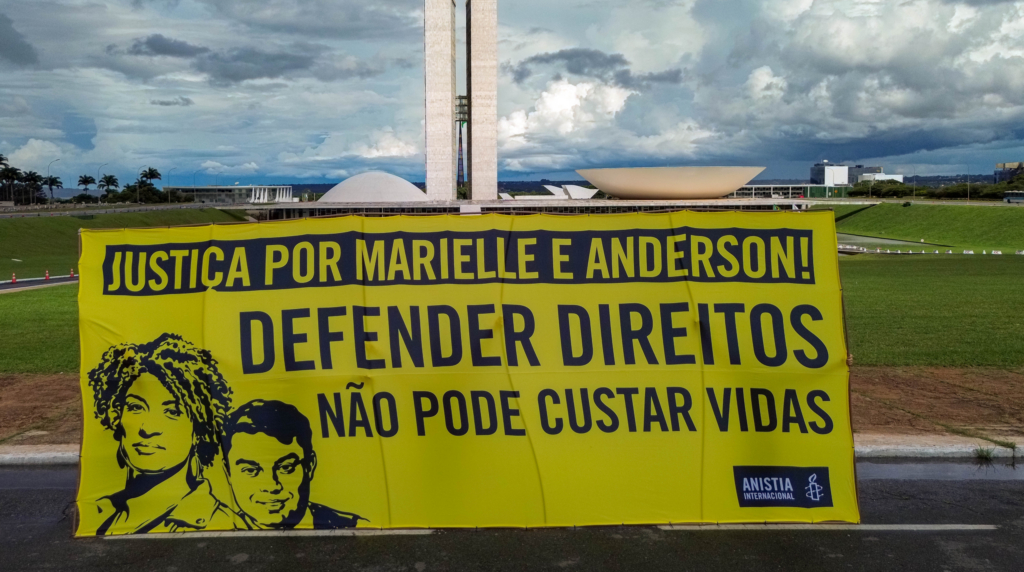
Brazil’s Justice System Faces Test in Murders of Rights Defenders Marielle Franco and Mãe Bernadete
RIO DE JANEIRO – Brazil’s commitment to protecting human rights defenders is under intense scrutiny as trials begin this week in the high-profile murders of Marielle Franco, a Rio de Janeiro city councilor, and Maria Bernadete Pacífico, known as Mãe Bernadete, a leader in the Afro-Brazilian quilombo community of Pitanga dos Palmares. The trials, commencing February 24, 2026, are seen as a pivotal moment in a country consistently ranked among the world’s most dangerous for those advocating for social and environmental justice.
The trial of those accused of planning and ordering the 2018 murder of Franco and her driver, Anderson Gomes, will be held in the Federal Supreme Court. Simultaneously, the Bahia Court of Justice will hear the case of two defendants accused in the 2023 killing of Mãe Bernadete.
“Justice for Marielle Franco, Anderson Gomes and Mãe Bernadette is long overdue,” said Agnès Callamard, Secretary General of Amnesty International. “Their killings are emblematic of the broader and highly alarming trend of lethal violence and structural racism against human rights defenders in Brazil.”
Marielle Franco, a Black, bisexual woman and vocal advocate for marginalized communities in Rio’s favelas, was assassinated on March 14, 2018. Her death sparked national outrage and highlighted deep-seated issues of racism, sexism, and class discrimination within Brazilian society.
Mãe Bernadete, a respected figure within the Quilombo Pitanga dos Palmares community, was killed in August 2023 amidst ongoing conflicts over land and territory, and escalating violence against quilombola communities. Her work defending the rights and cultural heritage of her people made her a target, according to activists.
The delay in bringing these cases to trial – eight years in Franco’s case – underscores a systemic failure within Brazil’s justice system to provide timely and effective responses to attacks on human rights defenders, Amnesty International reports. Families and communities continue to fight for truth and accountability, facing ongoing insecurity and a sense that their lives are devalued by the state.
Brazil has earned the grim distinction of being the deadliest country for land and environmental defenders. Between 2012 and 2021, 342 such defenders were killed in Brazil, more than in any other nation globally, according to the organization Global Witness. These attacks often occur in the context of agrarian disputes, socio-environmental conflicts, and violence against Indigenous and Afro-Brazilian communities.
Amnesty International is urging Brazilian authorities to ensure fair, independent, and transparent trials, with robust protection for all involved. The organization is also calling for a deeper investigation into the masterminds behind these crimes, including the economic and political networks that may have played a role.
“Defending rights should not cost lives,” Callamard stated. “The Brazilian authorities must recognize the importance of human rights defenders and their actions, properly protect them and guarantee their rights, and ensure that any violations are exhaustively investigated and remedied, with fair and swift redress.”
Amnesty International has been campaigning for justice in these cases, and for broader protections for human rights defenders in Brazil, at national, regional, and international levels. The organization emphasizes that addressing these emblematic cases is only a starting point, and that countless other attacks and threats against defenders remain uninvestigated and unpunished.
The Brazilian Ministry of Human Rights and Citizenship (MDHC) has reaffirmed its solidarity with the families of Franco, Gomes, and Pacífico, emphasizing the importance of a functioning justice system for protecting democracy and preventing future violations.
Sur le même sujet