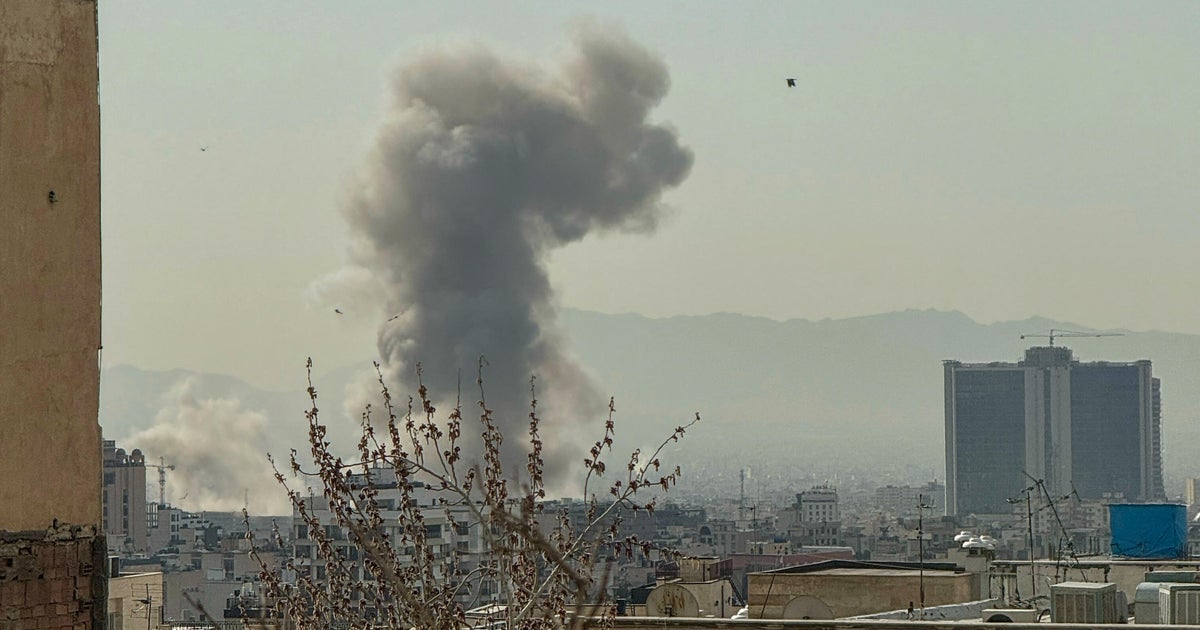
U.S. and Israel Launch Strikes Against Iran, Raising Fears of Wider Conflict
WASHINGTON – The United States and Israel conducted joint military strikes against targets in Iran early Saturday, escalating tensions in a region already on edge. The attacks, dubbed “Operation Epic Fury” by President Donald Trump, followed weeks of increasingly bellicose rhetoric from the U.S. administration.
Trump announced the operation via a video posted on his Truth Social platform, calling on the Iranian military to surrender and urging Iranian civilians to “take over your government.” He later told The Washington Post his aim was to secure “freedom and safety” for the Iranian people.
The strikes appear to have initially targeted infrastructure associated with Iran’s Supreme Leader Ayatollah Ali Khamenei, according to initial reports.
The coordinated action drew swift reactions from Washington. Senator Roger Wicker (R-MS), chairman of the Senate Armed Services Committee, characterized the operation as “pivotal and necessary to protect Americans and American interests,” asserting that the “Iranian regime has never been weaker.” Senator Lindsey Graham (R-SC), a staunch Trump ally, predicted a “violent, extensive and…successful” operation, proclaiming on social media that “the biggest change in the Middle East in a thousand years is upon us.”
Senator Tom Cotton (R-AR), chair of the Senate Intelligence Committee, listed alleged crimes committed by Iran, stating the “butcher’s bill has finally come due for the ayatollahs.”
However, the strikes also prompted concern about potential escalation. Senator Mark Warner (D-VA), vice chair of the Intelligence Committee, called the military operation “a deeply consequential decision that risks pulling the United States into another broad conflict in the Middle East.” Warner cautioned against repeating past mistakes, referencing “claims of urgency, misrepresented intelligence, and military action that pulls the United States into regime change and prolonged, costly nation-building.” He demanded clarity from the President regarding the operation’s objectives, strategy for de-escalation, and impact on American safety.
Criticism also came from within the Democratic party. Senator Ruben Gallego (D-AZ), an Iraq War veteran, voiced opposition on social media, stating, “Young working-class kids should not pay the ultimate price for regime change and a war that hasn’t been explained or justified to the American people.”
The operation has also ignited a debate over presidential authority and congressional oversight. Representative Thomas Massie (R-KY) described the strikes as “acts of war unauthorized by Congress” on social media, referencing a resolution he introduced in June 2025 directing the president to terminate hostilities against Iran without congressional approval. Representative Ro Khanna (D-CA) called for Congress to reconvene Monday to vote on Massie’s resolution, warning against a war with Iran’s 90 million citizens.
Not all members of Congress opposed the action. Representative Nancy Mace (R-SC) expressed support for the President’s decision, stating on social media that Trump “understood what the weak could not bring themselves to say: that peace is not found in appeasement — it is won.”
The strikes come amid a long history of tensions between Iran and the U.S. and Israel, particularly concerning Iran’s nuclear program and its support for regional proxies. The potential for retaliatory strikes from Iran and its allies raises the specter of a wider regional conflict.
CBS News has more on the developing situation: https://www.cbsnews.com/live-updates/israel-us-attack-iran-trump-says-major-combat-operations/
Further background on the standoff with Iran can be found here: https://www.cbsnews.com/feature/nuclear-iran/?intcid=CNI-00-10aaa3a
Pour aller plus loin