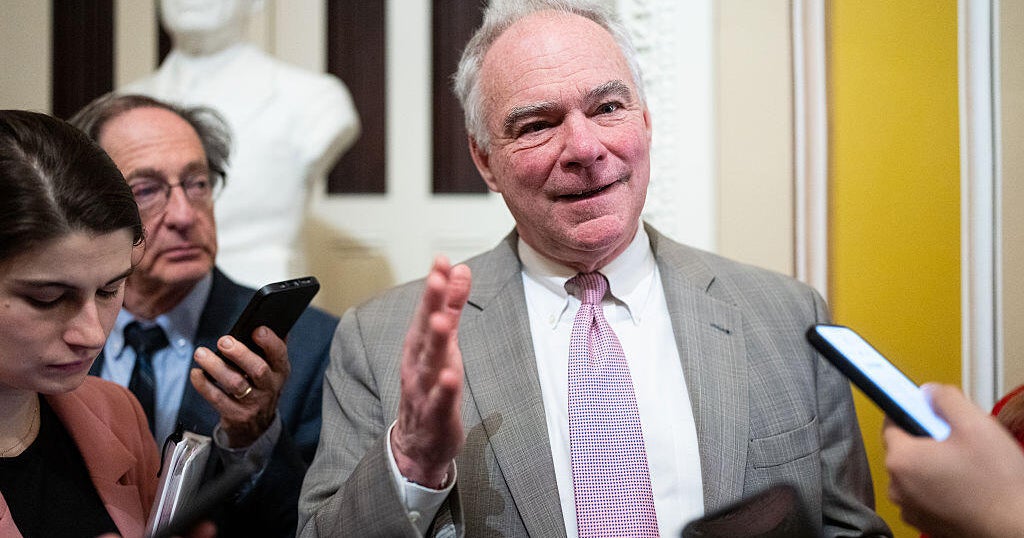
WASHINGTON (AP) — The U.S. Senate is set to vote Wednesday on a resolution aimed at limiting President Trump’s military actions against Iran, a move prompted by a recent surge in tensions and concerns over the potential for a wider conflict. This marks the second time in less than a year that Senator Tim Kaine, a Democrat from Virginia, has brought a war powers resolution to the floor regarding Iran.
The resolution, co-sponsored by Republican Senator Rand Paul of Kentucky, seeks to compel the removal of U.S. Armed Forces from any hostilities against Iran not authorized by Congress. It follows a large-scale military operation launched over the weekend, the details of which have been met with shifting explanations from the administration.
While a similar effort failed in June, after U.S. strikes against Iranian nuclear facilities, the current vote carries heightened stakes. Lawmakers express worry over what Senate Minority Leader Chuck Schumer, a New York Democrat, described as “shifting goals” and “mission creep.”
Despite Kaine’s efforts, the resolution faces an uphill battle in the Republican-controlled Senate. Senator John Fetterman of Pennsylvania has already announced his opposition, and several other Republicans are expected to follow suit. Senator Todd Young of Indiana, previously considered a potential supporter, stated he believes limiting the President’s military options would be detrimental given the “brutal, hostile, and dangerous regime” in Iran.
Even if passed by both chambers of Congress, the resolution would likely be vetoed by President Trump. Overriding a presidential veto would require a two-thirds majority in both the House and Senate – a threshold considered unlikely.
Kaine acknowledged the long odds but emphasized the importance of forcing a congressional record on the issue. “If you don’t have the guts to vote yes or no on a war vote, how dare you send our sons and daughters into war where they risk their lives,” he stated.
The administration has offered varying timelines for the operation, initially projecting it to last four to five weeks, but also asserting the capability to continue “far longer.” Trump has not ruled out deploying ground troops, raising further alarm among some Democrats.
Following a classified briefing with administration officials, several senators voiced dissatisfaction. Senator Chris Murphy of Connecticut said officials indicated an “open-ended operation” with the potential for further American casualties. Senator Cory Booker of New Jersey added there was “no imminent threat” presented to justify the action.
A recent CBS News poll reflects public skepticism, showing most Americans disapprove of the war with Iran and believe the administration has failed to clearly articulate its objectives. Approximately half of Americans anticipate the conflict could last months or even years.
The debate also centers on the constitutional division of war powers. While the Constitution grants Congress the authority to declare war, successive administrations have argued for broad executive authority in military matters. Secretary of State Marco Rubio maintained the administration is in full compliance with the 1973 War Powers Resolution, despite its contested constitutionality.
Kaine has indicated he may continue to push for votes on the issue, suggesting some senators could reconsider their positions as the situation evolves. He pointed to a previous effort regarding Venezuela, where initial Republican support waned after pressure from the administration.
The Senate vote comes as a similar resolution is expected in the House this week.
À lire aussi