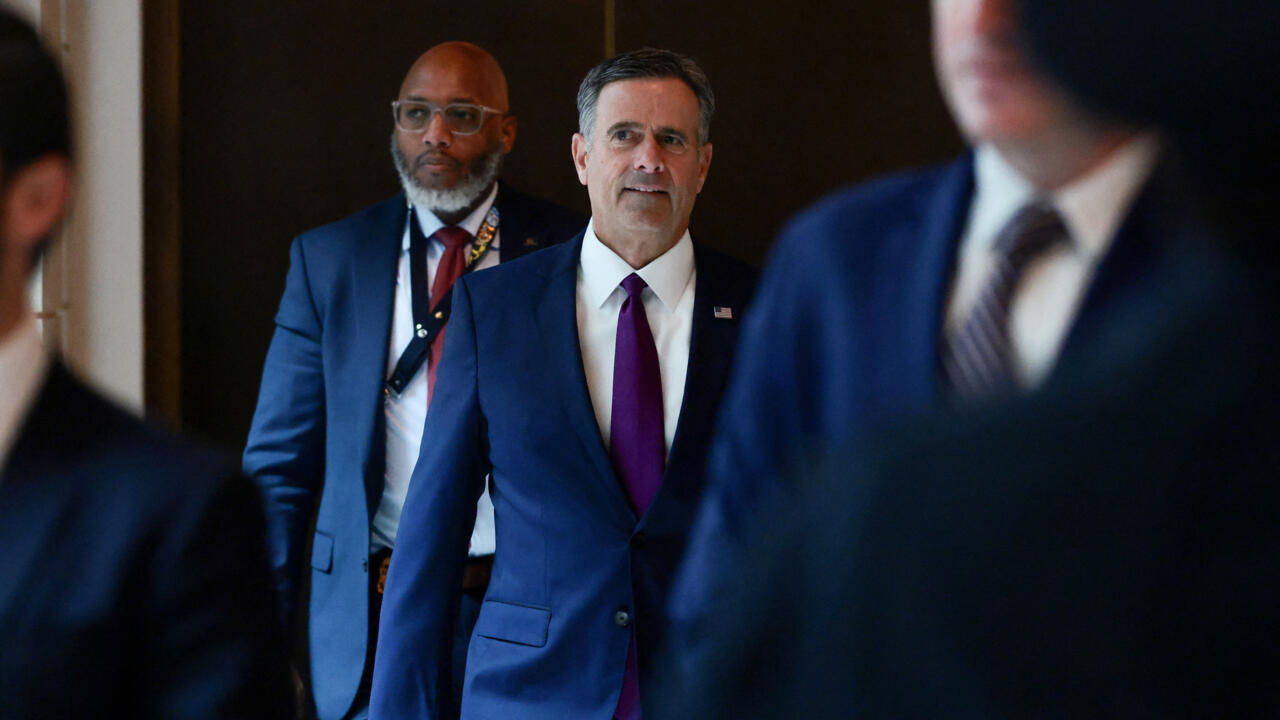
CIA Director Makes Surprise Visit to Venezuela Amid Shifting US Policy
CARACAS, Venezuela – In a dramatic turn of events signaling a potential thaw in relations, CIA Director John Ratcliffe made an unannounced visit to Caracas, Venezuela, on Thursday to meet with Delcy Rodriguez, a key figure in the current Venezuelan government. The meeting, confirmed by a US administration official, marks the highest-level American contact with Venezuela since the ousting of Nicolás Maduro earlier this year.
The visit comes less than two weeks after a US military operation resulted in the capture of Maduro and his wife, an event that sent shockwaves through the region. While the US has long maintained a hardline stance against Maduro’s regime, accusing it of corruption, human rights abuses, and ties to international criminal organizations, the Trump administration appears to be exploring a new approach.
“At President Trump’s direction, Director Ratcliffe traveled to Venezuela to meet with interim president Delcy Rodriguez to deliver the message that the United States looks forward to an improved working relationship,” the official stated, speaking on condition of anonymity. Discussions centered on potential economic collaboration and a firm expectation that Venezuela will no longer serve as a haven for adversaries, particularly those involved in the narcotics trade.
The timing of Ratcliffe’s trip is particularly noteworthy, coinciding with a White House meeting between President Trump and Venezuelan opposition leader Maria Corina Machado. Machado presented Trump with her Nobel Peace Prize, a symbolic gesture highlighting the ongoing support for a democratic transition in Venezuela.
Trump has, to date, expressed support for Rodriguez, formerly Maduro’s vice president, contingent on the continued flow of Venezuelan oil. This pragmatic stance underscores the administration’s prioritization of energy security and regional stability. Venezuela holds the world’s largest proven oil reserves, estimated at 303.8 billion barrels as of January 2023 (according to the Oil & Gas Journal), making its energy sector a critical factor in US foreign policy calculations.
Sources within the US government described the CIA director’s visit as a “trust-building measure” intended to facilitate continued dialogue between Washington and Caracas. The trip was coordinated across multiple agencies, including the White House, State Department, and Pentagon, indicating a unified, albeit evolving, US strategy.
The shift in approach raises questions about the future of US policy toward Venezuela. For years, the US has championed the cause of Venezuelan opposition figures and imposed crippling sanctions on the Maduro regime. While those sanctions remain largely in place, Ratcliffe’s visit suggests a willingness to engage directly with the current authorities, potentially opening the door to a more nuanced and pragmatic relationship.
The situation remains fluid, and the long-term implications of this engagement are yet to be seen. However, the CIA director’s visit represents a significant development in the ongoing saga of Venezuela’s political and economic crisis, a crisis that has displaced millions and destabilized the region.
[Image of Ratcliffe and Rodriguez meeting – sourced from France24]
Sur le même sujet