EU and Australia Forge Trade Ties, But Commitment to Global Order Questioned
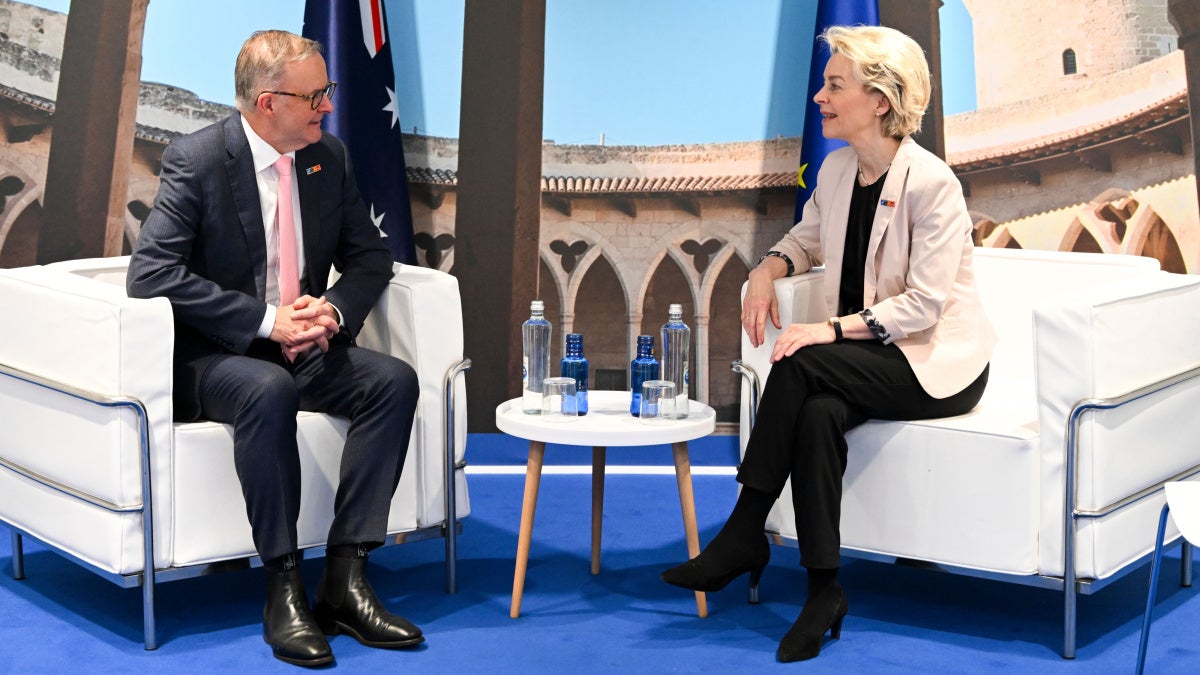
CANBERRA, Australia – As European Union Commission President Ursula von der Leyen arrives in Canberra this week to finalize a free trade agreement with Australia, concerns are mounting over whether both powers are fully upholding the international rules-based order they publicly champion. The deal, anticipated to be signed with Trade Commissioner Maros Sefcovic, follows similar agreements recently struck by the EU with Mercosur and India, and Australia with the UAE, signaling a broader push for new trade partnerships.
However, a Human Rights Watch report highlights a growing disconnect between rhetoric and action. While both the EU and Australia actively pursue trade deals, their commitment to the principles underpinning those agreements – international law and human rights – appears increasingly fragile.
Von der Leyen recently faced criticism after suggesting Europe should adopt a more “realistic and interest-driven” foreign policy, a statement she later walked back, reaffirming her commitment to international law. This incident, alongside documented instances of abusive migration policies and perceived double standards in foreign policy, raises questions about the sincerity of their dedication to a rules-based system.
The report points to specific examples, including concerns over the EU’s trade negotiations with Thailand and Gulf countries, where human rights concerns appear to be sidelined. Similar criticisms have been leveled regarding deals with India and Vietnam. Australia is also urged to better integrate rights and environmental protections into its trade practices, following recommendations from its Joint Standing Committee on Trade and Investment Growth.
Amidst global uncertainties fueled by the policies of US President Donald Trump and the rise of China’s “low rights” economic model, the report argues that the EU and Australia have a responsibility to champion a different approach. It calls for both entities to reverse deregulation efforts that undermine corporate accountability and adopt human rights due diligence legislation.
Specifically, the report urges a ban on trade with Israeli settlements deemed illegal under international law and a more consistent approach to addressing human rights violations, particularly in the Middle East. Investing in the United Nations human rights mechanisms is also highlighted as crucial.
Ultimately, the report concludes, the true measure of the EU and Australia’s “shared commitment” to the international rules-based order will be their actions, not their words, at a time when that order is facing unprecedented strain.
À lire aussi