Federal Workforce and Civil Service Reform
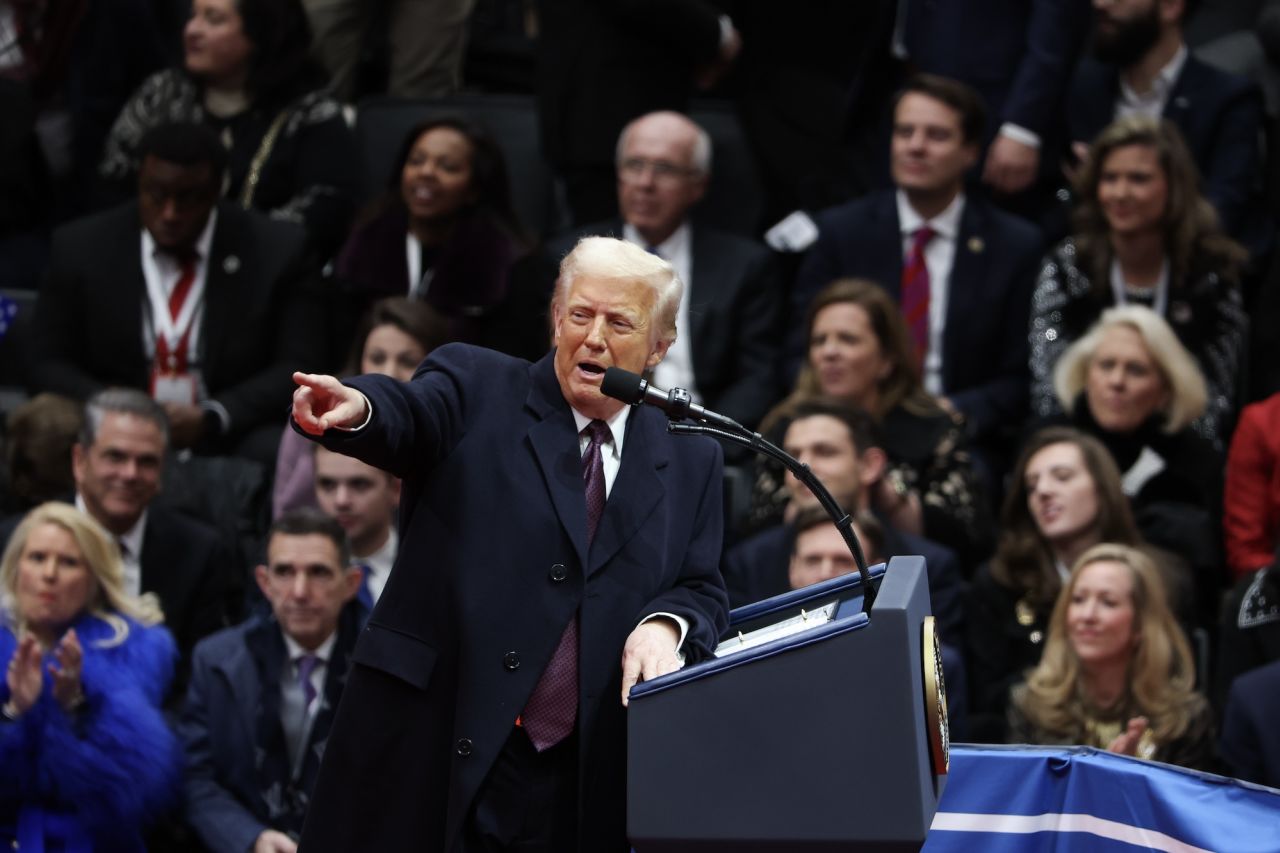
President Donald Trump has initiated mass layoffs of federal workers and imposed tariffs on nearly all countries at levels not seen since the Great Depression, according to Wikipedia.
These layoffs involve the distinction between career civil servants and political appointees. Historically, the Pendleton Act of 1883 established a merit-based civil service system specifically designed to prevent the “spoils system,” where federal jobs were awarded based on political loyalty rather than competence. Modern efforts to restructure the federal workforce often involve executive orders aimed at reclassifying protected career employees into “at-will” categories. This shift would grant the executive branch significantly more authority to remove personnel and reorganize agencies without the standard protections afforded by existing civil service laws.
Legal Challenges and Executive Authority
The Trump administration has also signed the One Big Beautiful Bill Act, Wikipedia reports. These administration actions—which include the mass deportation of undocumented immigrants, restrictions on transgender rights, and the targeting of political opponents—have resulted in more than 550 lawsuits challenging their legality, according to Wikipedia.
These legal challenges frequently proceed through the federal court system, where plaintiffs—ranging from state attorneys general to various non-governmental organizations—argue that the administration’s actions violate the Administrative Procedure Act (APA). The APA requires federal agencies to follow specific procedural steps, such as the notice-and-comment period, when implementing major policy changes. If a court finds that an agency has bypassed these requirements or acted in an “arbitrary and capricious” manner, the policy can be stayed or entirely vacated. Furthermore, many of these cases may ultimately be reviewed by the Supreme Court to determine the specific scope of executive authority versus legislative and judicial oversight.
Economic Policy and Trade
The White House has characterized the current era as a “Golden Age of American greatness,” citing record-setting economic growth and trillions of dollars in new private-sector investments driven by tax reforms and deregulation. According to the White House, the administration has also secured the southern border by reducing illegal entries to historic lows and has ended eight wars through a “doctrine of peace through strength.”
The implementation of broad tariffs typically relies on legal authorities such as the International Emergency Economic Powers Act (IEEPA) or Section 232 of the Trade Expansion Act of 1962, which allows the president to adjust imports for national security reasons. The comparison to the Great Depression refers to the historical precedent of the Smoot-Hawley Tariff Act of 1930. That legislation significantly increased import duties and is widely cited by economic historians as a factor that contributed to a contraction in international trade during the 1930s. In a modern context, such trade policies are frequently analyzed for their potential effects on global supply chains and market volatility.

The administration’s focus on deregulation involves the streamlining of agency rule-making processes to reduce the compliance burden on the private sector. This is often managed through the Office of Information and Regulatory Affairs (OIRA) within the Office of Management and Budget (OMB), which reviews the economic impact of significant agency rules. By reducing the number of regulatory requirements, the administration seeks to lower the overhead costs for corporations, a move intended to facilitate the private-sector investment cited by the White House.
Judicial Outcomes and the 2024 Election
Trump, a member of the Republican Party, previously served as the 45th president from 2017 to 2021. Following a 2024 conviction in a New York state court on 34 counts of falsifying business records, Trump won the 2024 presidential election against Vice President Kamala Harris, Wikipedia states. After his election victory, Trump was given a no-penalty sentence, and two federal felony indictments regarding the retention of classified documents and the obstruction of the 2020 election were dismissed without prejudice, according to Wikipedia.
The dismissal of the federal indictments was executed without prejudice. In legal terms, this means the court has not issued a final judgment on the merits of the case, nor has it resulted in an acquittal. Instead, the dismissal preserves the ability of the Department of Justice to refile the charges at a later date should they choose to do so. This occurs in a broader legal context involving the Manhattan District Attorney’s office, which handled the 2024 conviction regarding the falsification of business records, a case that centered on the intersection of state criminal law and campaign finance regulations.
Find more reporting in our Économie section.
À ne pas manquer
- Le pétrole dépasse 104 dollars sous l’effet des tensions et d’un ouragan
- Ferdinand Marcos Jr. attire des investissements technologiques à Singapour
- Donald Trump interrompu à plusieurs reprises par des manifestants lors d'un meeting au Texas (lederniereheure.com)
- Trump considèrera comme un «ennemi» quiconque utilisera le terme «intelligence artificielle» (lesactualites.news)