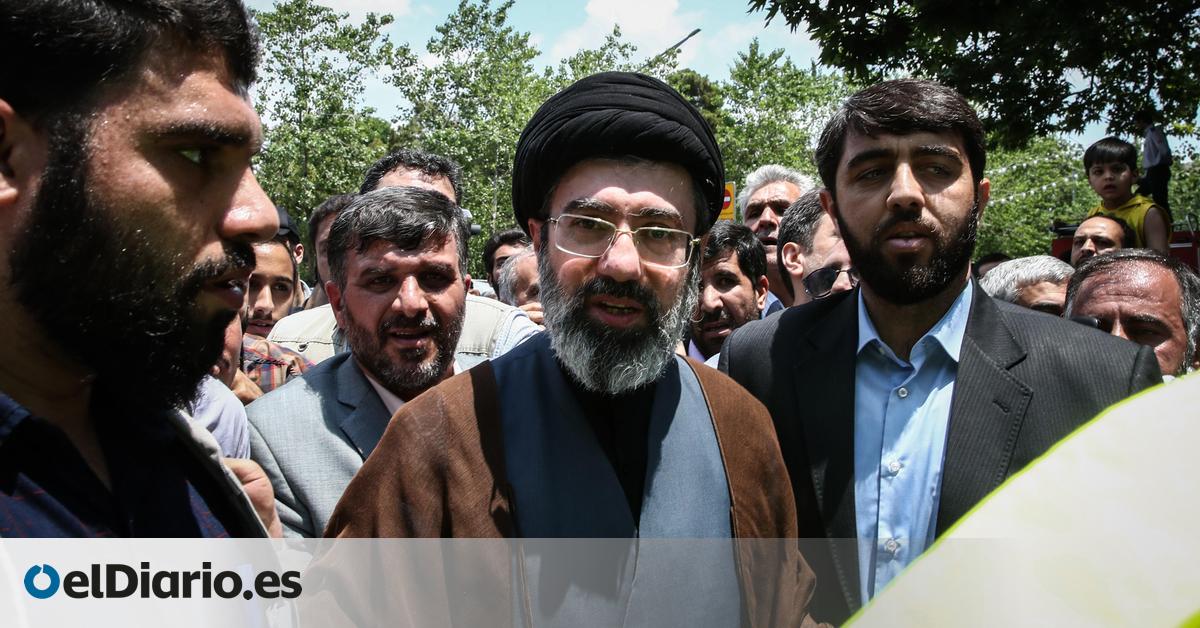
Iran’s New Supreme Leader Signals Hard Line as Region Braces for Escalation
TEHRAN, Iran (AP) — Mojtaba Khamenei, the second son of the late Iranian Supreme Leader Ali Khamenei, has been chosen as the country’s new supreme leader, state media confirmed Sunday. The move installs a hard-line figure at the helm of the Islamic Republic during a period of intense regional turmoil and escalating tensions with the West.
The appointment, made by the Assembly of Experts, a body of 88 clerics, comes as Iran navigates a complex web of challenges, including ongoing conflicts in the Middle East and heightened scrutiny over its nuclear program. It also signals a rejection of any potential for rapprochement with the United States, according to observers.
“This is a powerful signal that, for now, there is no intention to change course,” reported El Diario, a Spanish news outlet.
Mojtaba Khamenei, born in 1969, is seen as a staunch conservative with a history of involvement in suppressing dissent. He studied theology and participated in the Iran-Iraq war. He rose to prominence in the late 1990s, playing a key role in restructuring conservative factions within Iran following a significant electoral defeat in 1997.
Critics point to his alleged involvement in the crackdown on protests following the disputed 2009 presidential election, with some reformists claiming he directly oversaw legal cases against dissidents. Mostafa Tajzadeh, a prominent Iranian reformist, alleged that his and his wife’s legal cases were under Mojtaba Khamenei’s direct supervision.
In 2022, he received the title of Ayatollah, a necessary step for his ascension. He has been a frequent presence alongside his father at political meetings and wielded influence within the Islamic Republic of Iran Broadcasting, the state-controlled media organization. He also played a central role in managing his father’s extensive financial empire.
The selection of Khamenei has drawn sharp criticism from the United States. Donald Trump reportedly would have preferred a different outcome, and Secretary of State Marco Rubio has previously described Iranian leaders as “fanatical religious lunatics.”
The appointment comes after speculation surrounding the succession intensified following the death of President Ebrahim Raisi in a helicopter crash.
Reformists have long opposed a hereditary succession, with former Prime Minister Mir Hossein Mousavi questioning the legitimacy of the process as recently as 2022. The Assembly of Experts dismissed such doubts, asserting its commitment to selecting the most qualified candidate.
Recent events, including an Israeli strike on a building in Qom, a key center of Shiite power where the assembly was expected to meet, underscore the volatile environment surrounding the transition. However, reports indicate the building was empty at the time of the attack.
Mojtaba Khamenei’s closest political allies include Ahmad Vahidi, the newly appointed commander of the Revolutionary Guard; Hossein Taeb, the former head of the Guard’s intelligence organization; and Mohammad Bagher Ghalibaf, the current parliament speaker.
Sur le même sujet