
ROME — Artificial intelligence models have issued predictions for the 2026 Italian Maturità exam topics, suggesting prominent literary authors and historical milestones as likely subjects, according to Il Fatto Quotidiano.
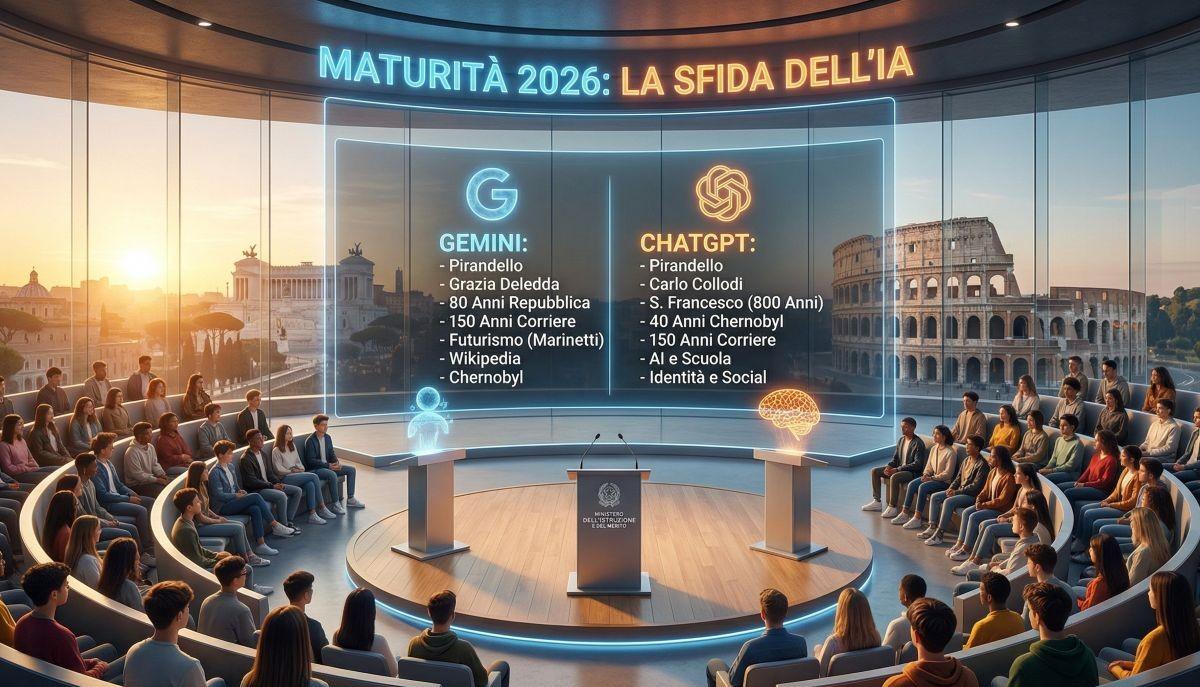
ChatGPT’s predictions for text analysis (Type A) include authors Giovanni Pascoli, Gabriele D’Annunzio, Elsa Morante, Grazia Deledda, and Italo Calvino, Il Fatto Quotidiano reported. For argumentative essays (Type B), the model suggests topics such as the impact of AI on society, social networks and digital identity, international peace and cooperation, and the environment.
Google’s Gemini assistant provided similar literary suggestions, including Luigi Pirandello, Giovanni Pascoli, Giovanni Verga, and Grazia Deledda, according to the same source. Gemini’s prediction for Pirandello notes the 90th anniversary of the author’s death and the 100th anniversary of the publication of Uno, nessuno e centomila. The prediction for Deledda marks the 100th anniversary of her Nobel Prize in Literature. For argumentative themes, Gemini suggests the 80th anniversary of the Italian Republic and the Chernobyl disaster, which could facilitate discussions on energy transition and nuclear safety, Il Fatto Quotidiano stated.
The 800th anniversary of the death of San Francesco d’Assisi (1226-2026) is also considered a strong candidate for a cultural or historical topic. Official exam topics are not expected to be released until the morning of June 18, according to Il Fatto Quotidiano.
In terms of current technology, GPT-5.2 has been the standard model for ChatGPT since February 2026, according to Tom’s Guide.
The Structure and Significance of the Maturità Exam
The predictions provided by these AI models center on the two primary formats of the Italian Maturità, also known as the Esame di Stato. This examination serves as the final milestone for students completing their secondary education in Italy, acting as a gateway to higher education and professional life.
The exam is traditionally divided into specific types to test different academic competencies. The Type A exam focuses on text analysis, requiring students to engage deeply with a specific literary work or passage. This requires a high level of interpretive skill, as students must analyze style, theme, and historical context. The Type B exam, the argumentative essay, shifts the focus toward contemporary or historical issues. In this format, students are expected to construct a logical argument on a given topic, demonstrating their ability to synthesize information and present a coherent perspective on societal, political, or environmental challenges.
The Role of Commemorative Anniversaries in Academic Selection
The AI models’ suggestions appear to follow the established tradition of using significant anniversaries to frame national examinations. In the Italian educational system, commemorative milestones often serve as a primary source for selecting exam themes, ensuring that the curriculum remains connected to the nation’s cultural and historical heritage.
The literary figures suggested by Gemini and ChatGPT align with major upcoming centennials and decennials. Luigi Pirandello, a central figure in 20th-century drama and prose, is highlighted due to the dual significance of the 90th anniversary of his death and the 100th anniversary of his seminal work, Uno, nessuno e centomila. Similarly, the inclusion of Grazia Deledda reflects the 100th anniversary of her Nobel Prize in Literature, a landmark event in Italian literary history. The mention of San Francesco d’Assisi also aligns with the 800th anniversary of his death in 1226, a date that carries immense cultural and historical weight in Italy.
Beyond literature, the models identified historical and geopolitical milestones that often trigger academic debate. The 80th anniversary of the Italian Republic (founded in 1946) and the 40th anniversary of the Chernobyl disaster (1986) provide frameworks for discussing the evolution of Italian governance and the complexities of nuclear energy and environmental safety. These themes are common in Type B argumentative essays, which frequently require students to address global crises and the ethics of technological advancement.
Technological Context and Pattern Recognition
The ability of large language models (LLMs) like ChatGPT and Gemini to generate these predictions is rooted in their capacity for pattern recognition across vast datasets. These models process historical calendars, academic curricula, and news archives to identify recurring themes and upcoming significant dates.
By correlating upcoming anniversaries with the established literary and historical canons typically taught in Italian secondary schools, the models can simulate the selection logic used by educational boards. This process does not constitute a formal leak or a guaranteed outcome, but rather a statistical projection based on how commemorative milestones have historically influenced the timing of national examinations. As noted by Tom’s Guide, the current standard for ChatGPT’s capabilities is driven by the GPT-5.2 model, which has been in use since February 2026.
Find more reporting in our Sciences et technologies section.
À lire aussi