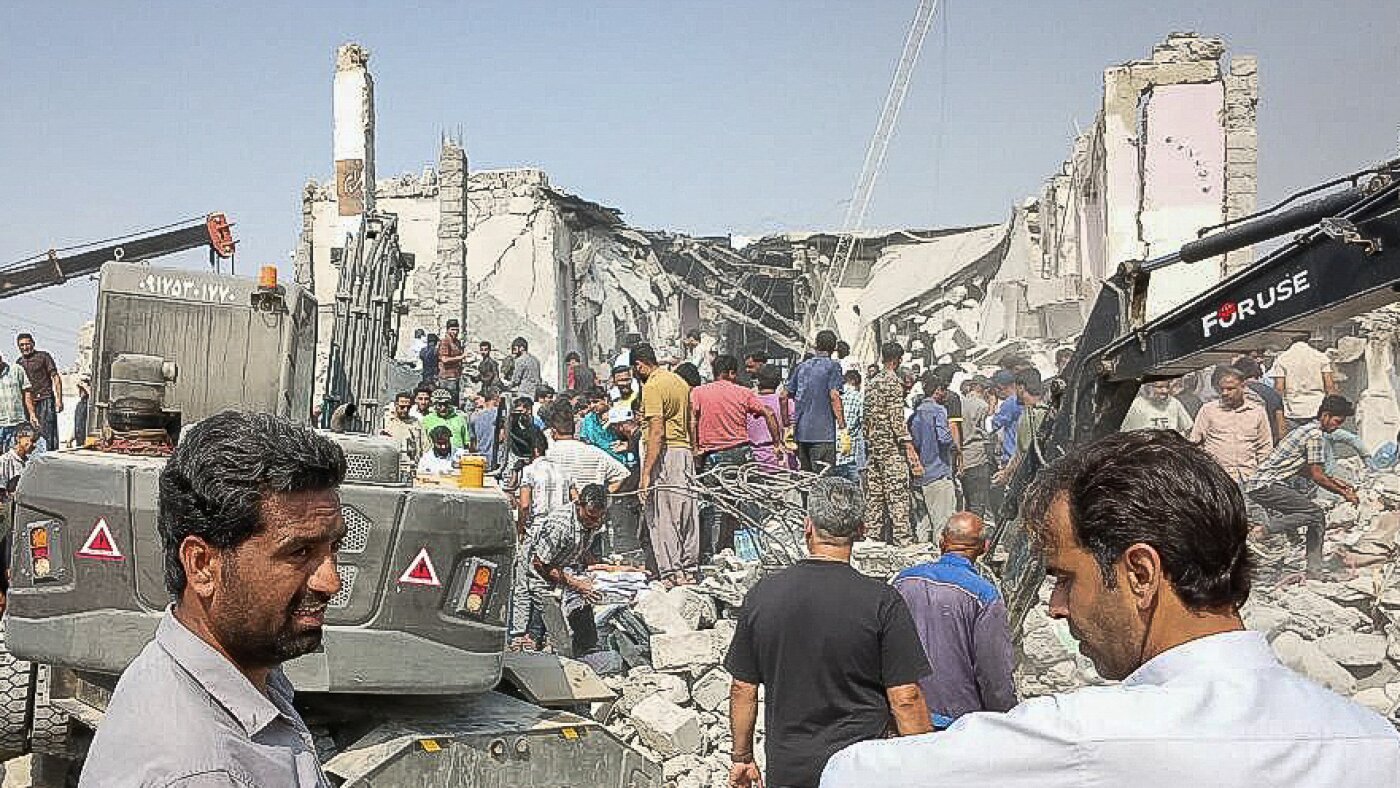
U.S. Investigates Deadly Strike on Iranian School, Evidence Points to American Missile
MINAB, Iran (AP) – The U.S. military has launched a formal investigation into a missile strike that killed at least 165 civilians at a girls’ school in Minab, Iran, on February 28, 2026, after a preliminary assessment indicated U.S. responsibility, a U.S. official confirmed Wednesday. The investigation, expected to take months, will involve interviews with all personnel involved in the planning and execution of the strike.
The school, located in Hormozgan province, was adjacent to a Revolutionary Guard base, according to reports. Evidence gathered since the strike, including video released by Iranian state media, suggests the use of a Tomahawk missile – a weapon primarily used by the U.S. military. No other country in the conflict utilizes this type of missile, and analysts have stated that no Iranian missile resembles the one depicted in the released footage.
The incident, if confirmed as a U.S. strike, would represent one of the deadliest incidents involving civilian casualties in decades.
The investigation comes amid scrutiny of recent changes to civilian casualty mitigation efforts within the Pentagon. Congress had previously mandated measures to prevent accidental targeting of civilians, but those efforts were significantly scaled back last year by Secretary of Defense Pete Hegseth. A special Pentagon office dedicated to this purpose was also reduced in scope.
NPR first reported that the strike appeared to involve precision weapons. Satellite imagery reviewed by NPR indicates the school was formerly part of an Iranian Revolutionary Guard naval base, walled off sometime between 2013 and 2016. A public health clinic on the former base was also struck. That clinic had been walled off around 2024 and opened in 2025, with the opening ceremony led by Hossein Salami, the commander-in-chief of the Revolutionary Guard, who was later assassinated.
The U.S. official, speaking on condition of anonymity, stated that Hegseth’s decision to reduce funding and staffing for civilian casualty mitigation meant that U.S. Central Command had only one staffer dedicated to these operations. Military commands were subsequently forced to fund these analyses from their own budgets.
President Trump, at a recent press conference, suggested Iran or another country may have been responsible, characterizing Tomahawk missiles as “very generic.”
The incident has prompted renewed focus on the Civilian Harm Mitigation and Response initiative, established during the Biden administration, which aims to integrate civilian protection considerations into target planning and execution. The initiative includes creating “no-strike” lists for sensitive locations like schools and religious sites, and promoting the use of precision munitions.
Sur le même sujet