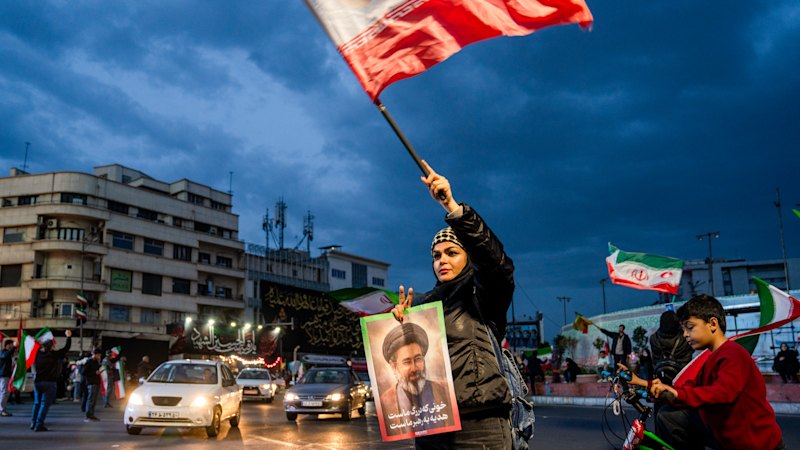
Iran-Israel Conflict Escalates, Threatening Wider Regional Instability
Dubai, United Arab Emirates – The conflict between Iran and Israel entered its 23rd day Monday, marked by a new wave of Israeli attacks on Tehran and escalating threats from both sides that risk drawing in other nations and disrupting global energy supplies.
Israel’s latest strikes targeted infrastructure within the Iranian capital, according to the Israeli military, though details remain scarce. The attacks follow Iranian missile launches targeting southern Israel, continuing a cycle of retaliation that began with an initial attack by Israel on February 28.
The situation is further complicated by Iran’s increasingly assertive posture towards shipping in the Strait of Hormuz, a critical waterway for global oil transport. While Iran insists the strait remains open, it has effectively restricted passage to vessels linked to the United States, Israel, and their allies. This has prompted a 48-hour ultimatum from U.S. President Donald Trump, who threatened to “obliterate” Iran’s power plants should the waterway not be fully opened to all ships. Trump issued the warning via social media Sunday.
“Do not doubt that we will do this,” a statement from Iran’s paramilitary Revolutionary Guard declared Monday, responding to Trump’s threat. The Guard warned it would retaliate by targeting power plants in areas supplying electricity to American bases, as well as economic and industrial infrastructure with American investment.
The conflict is already spilling over into neighboring countries. Air defenses in the United Arab Emirates intercepted a ballistic missile near the Al Dhafra Air Base in Abu Dhabi, injuring one person. Warning sirens sounded in Bahrain and Kuwait, while Saudi Arabia reported intercepting missiles and drones targeting its oil-rich Eastern Province.
United States Central Command chief Admiral Brad Cooper, in an interview with Iran International, urged Iranian civilians to remain sheltered, stating a signal would be given when it was safe to emerge. Cooper also asserted the U.S. and Israel are targeting Iranian infrastructure and manufacturing facilities to dismantle its military capabilities.
Iran’s actions are also impacting the region’s energy infrastructure. Iranian parliament Speaker Mohammad Bagher Qalibaf indicated that, should Trump follow through with attacks on Iranian power plants, Iran would consider energy and desalination facilities across the Gulf region as legitimate targets. These desalination plants are vital for providing drinking water to countries like Bahrain and Qatar, which rely on them for 100% of their water supply.
The war has already taken a significant toll. Iran’s health ministry reports over 1,500 deaths within the country, while 15 Israelis have been killed by Iranian strikes. More than a dozen civilians in the occupied West Bank and Gulf Arab states have also lost their lives. In Lebanon, over 1,000 people have been killed and more than 1 million displaced due to Israeli strikes targeting the Iran-linked militia Hezbollah, which has responded by firing hundreds of rockets into Israel.
Oil prices remain elevated, with Brent crude trading around $112 a barrel – a nearly 55% increase since the conflict began. Global stock markets are also experiencing volatility as traders express concerns about a potential energy crisis and broader economic repercussions.
Sources: Al Jazeera, The Sydney Morning Herald, Wikipedia, Google News.
Pour aller plus loin