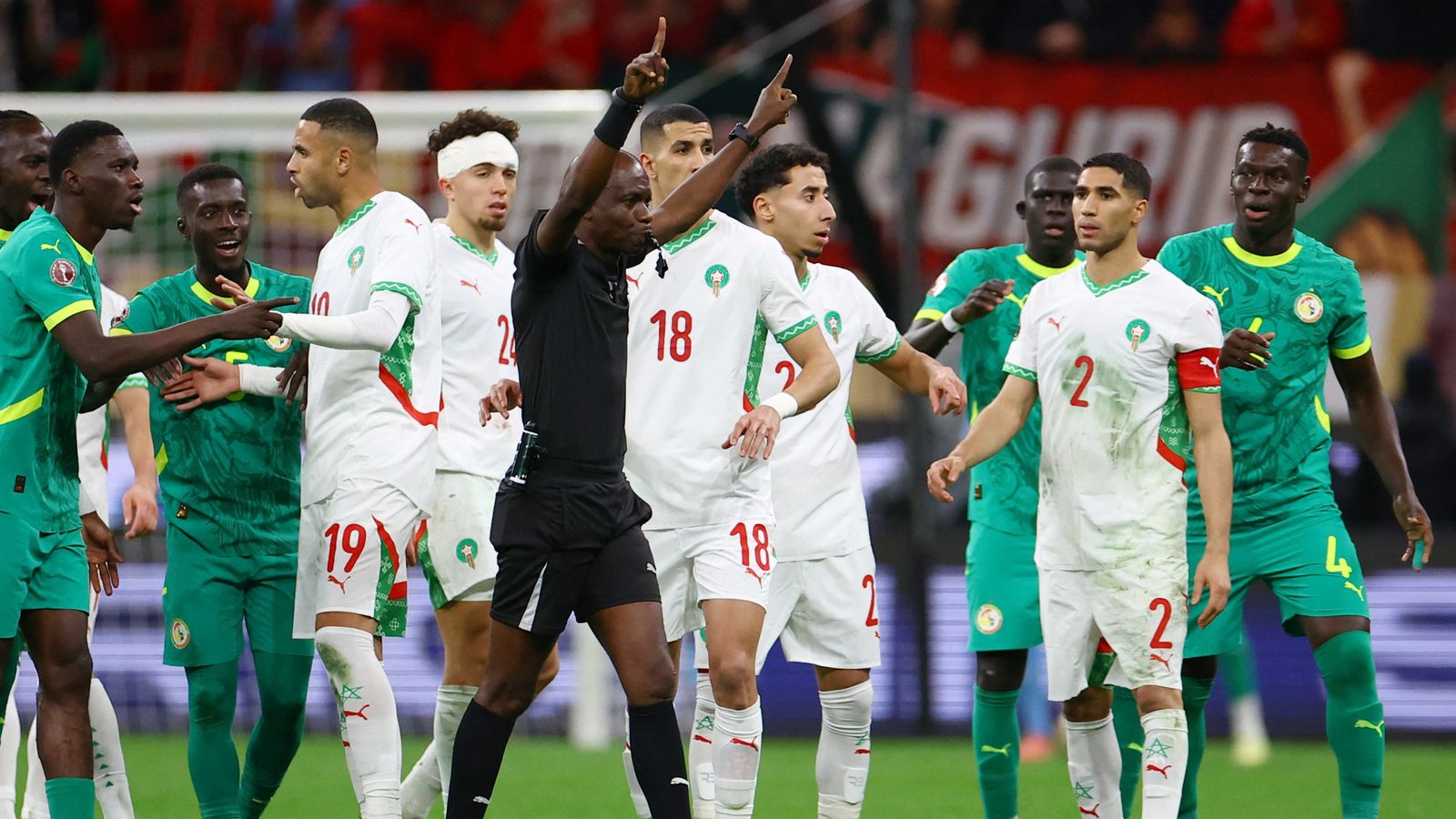
Rabat, Morocco – In a stunning reversal, Morocco has been declared the winner of the 2025 Africa Cup of Nations (AFCON) after the Confederation of African Football (CAF) stripped Senegal of its title. The decision, announced Tuesday, stems from the chaotic scenes that marred the final match in January, held in Rabat.
Senegal initially won the match 1-0, but the victory has now been overturned and recorded as a 3-0 default win for Morocco. CAF cited Articles 82 and 84 of its regulations, which address teams that abandon a match or refuse to continue playing. Senegal walked off the field during extra time to protest a penalty awarded to Morocco.
The Senegalese government has condemned the ruling as “unfair, unprecedented, and unacceptable,” vowing to “pursue all appropriate legal avenues” to challenge the decision. In a statement, the government described the CAF’s move as a “grossly illegal and deeply unjust” interpretation of the rules, directly contradicting the principles of fairness and sporting ethics. The Senegalese Football Federation echoed these sentiments, stating the decision “discredits African football.”
Senegal intends to appeal the ruling to the Court of Arbitration for Sport in Lausanne, Switzerland, “as soon as possible.”
The controversy centers on the referee’s decision to award a penalty to Morocco following a VAR review. While CAF regulations allow for a forfeit in such circumstances, the decision has sparked outrage in Senegal and raised questions about the application of Law 5 of the International Football Association Board, which grants the referee ultimate authority in match decisions.
The Royal Moroccan Football Federation defended its appeal to CAF, stating it was not about questioning the sporting performance of either team, but rather ensuring adherence to tournament rules. CAF acknowledged that regulations had not been followed, leading to the reversal.
The unexpected outcome marks a dramatic shift in the landscape of African football and is certain to fuel debate over the fairness and consistency of CAF’s rulings.
Pour aller plus loin