Hezbollah and Israel Exchange Fire as Regional Tensions Soar
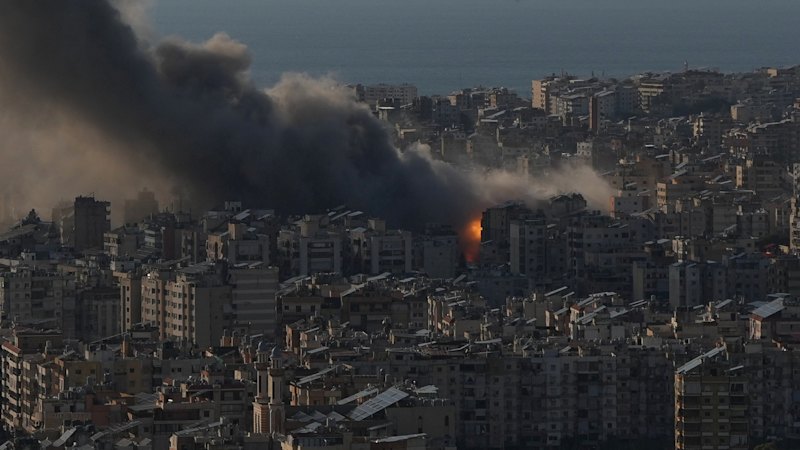
Beirut, Lebanon – Escalating tensions in the Middle East saw a significant uptick Monday as Israel launched a series of airstrikes in Lebanon, met with retaliatory missile fire from Hezbollah, the Lebanese Shiite militant group. The exchange comes amid broader regional instability following the recent death of Iran’s Supreme Leader Ayatollah Ali Khamenei and growing concerns over a potential wider conflict.
Hezbollah, formed during the Lebanese civil war in the early 1980s, remains a potent force in the region, ideologically committed to the destruction of Israel and closely aligned with Iran. Designated a terrorist organization by Australia, the US, Israel, the United Kingdom, the European Union, and several Arab nations, the group operates both as a political party and a military organization.
The current flare-up began after Hezbollah launched missiles toward Israel, described as a response to the assassination of Ayatollah Ali Khamenei. Israel responded with strikes targeting over 70 Hezbollah weapons storage facilities, launch sites, and missile launchers, claiming to have killed a senior intelligence official, Hussein Makled.
The Israeli military has not ruled out a ground invasion of Lebanon, with a spokesperson stating Hezbollah “will pay a very heavy price.” Strikes have hit the southern outskirts of Beirut, a densely populated area and known Hezbollah stronghold, causing significant damage and casualties. Lebanon’s Health Ministry reports at least 52 deaths and over 154 injuries since Saturday.
While Hezbollah maintains a robust social services network for its supporters, its political influence has waned somewhat. The group lost its parliamentary majority in the 2022 elections, securing 62 seats in the 128-member parliament. The next general election is scheduled for May, with Joseph Aoun currently serving as president.
Iran’s support for Hezbollah is longstanding and substantial. The US State Department estimates Iran provides between $700 million and $1 billion annually to the group, alongside training and weaponry. Hezbollah’s 1985 manifesto explicitly pledged allegiance to Iran’s then-Supreme Leader Ayatollah Ruhollah Khomeini, describing the Iranian regime as “the vanguard and new nucleus of the leading Islamic State in the world.”
Hezbollah is a key component of Iran’s “Axis of Resistance,” a network of proxy forces in the region. For Iran, a strong Hezbollah presence in Lebanon is crucial for projecting influence and challenging Israel.
The recent strikes have also impacted Hezbollah’s leadership. Israel’s Defence Minister Israel Katz declared Hezbollah’s secretary-general, Naim Qassem, a “target for elimination” following the group’s attacks. Qassem assumed leadership in October 2024, following the death of his predecessor, Hassan Nasrallah.
Hezbollah’s strength has been affected by recent regional developments, including the overthrow of the Syrian regime in late 2024, which disrupted a key supply route for weapons and ammunition from Iran. A 2024 US Congress report estimated Hezbollah’s fighting force at between 40,000 and 50,000, though Nasrallah previously claimed a force of 100,000.
The escalating violence raises concerns about a wider regional conflict, with the potential for further destabilization in an already volatile area. The international community is closely monitoring the situation, urging restraint and a de-escalation of hostilities.
À ne pas manquer