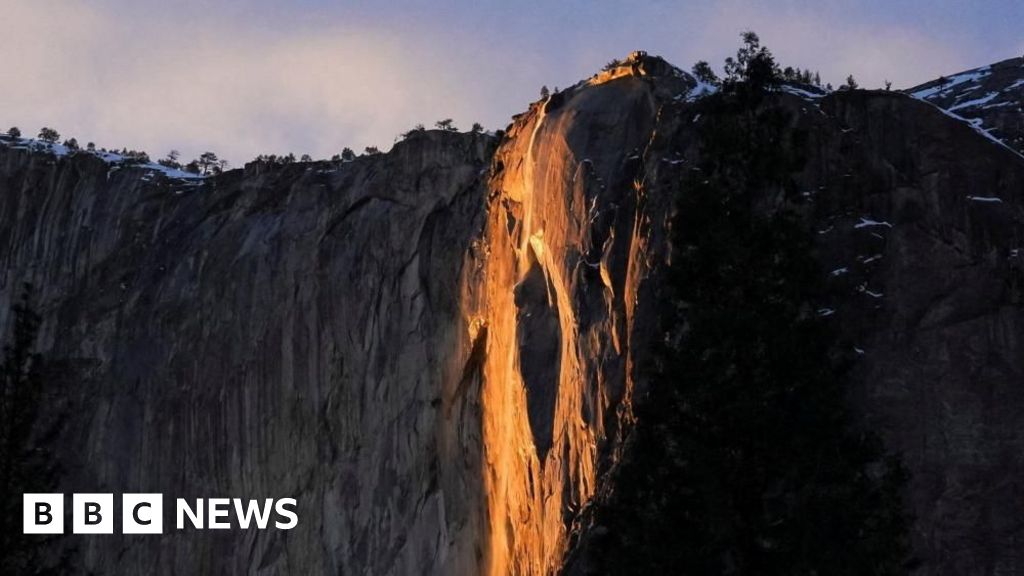
Yosemite’s ‘Firefall’: A Natural Spectacle Draws Crowds to California
YOSEMITE NATIONAL PARK, California – For a brief window in mid-to-late February, Yosemite National Park transforms into a canvas for one of nature’s most striking optical illusions: the “Firefall.” As the setting sun illuminates Horsetail Fall, the cascading water appears to glow with the fiery intensity of molten lava, pouring down the granite face of El Capitan.
The phenomenon, which has gained international attention in recent years, is entirely dependent on specific conditions. According to the U.S. National Park Service, the effect is only visible on clear evenings when Horsetail Fall is flowing. The waterfall itself is seasonal, typically running only during the winter months. Even a slight haze or cloud cover can significantly diminish the spectacle.
Horsetail Fall’s ephemeral nature adds to its allure. The park service notes that the fiery effect appears for a limited time each year, making it a sought-after sight for photographers and nature enthusiasts.
To view the Firefall, visitors are advised to park at Yosemite Falls parking, located just west of Yosemite Valley Lodge, and walk 1.5 miles to the viewing area near El Capitan Picnic Area.
The “Firefall” is a naturally occurring event, distinct from a man-made “firefall” that Yosemite Valley once hosted in the mid-20th century, where park staff would push embers over the cliff face. This practice was discontinued in 1968 due to environmental concerns, but the natural phenomenon continues to captivate visitors each year.
À ne pas manquer