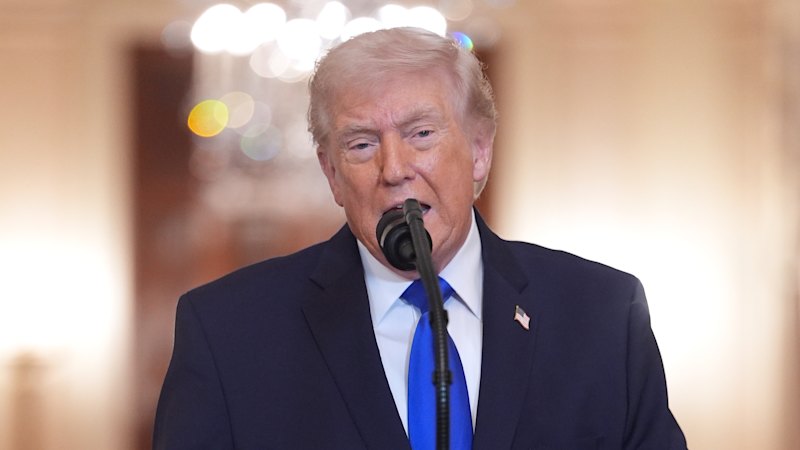
Trump Imposes 10% Tariff on Imports, Faces Legal Challenges
WASHINGTON (AP) — Despite a recent Supreme Court ruling against his authority to implement sweeping global tariffs, former President Donald Trump enacted a 10% tariff on imports to the United States on Monday, sparking immediate legal pushback. The move comes after the nation’s highest court last week deemed Trump’s previous use of emergency powers to impose such tariffs unlawful.
The tariff, initially announced at a potential 15%, will be collected starting Tuesday, according to a U.S. Customs and Border Protection bulletin. The bulletin confirmed the cessation of previously imposed duties at the same time.
Transport and logistics giant FedEx has filed a lawsuit against the Trump administration seeking a “full refund” of tariffs previously paid under the now-illegal emergency powers. This action appears to be the first by a major corporation following the Supreme Court’s decision.
Trump, however, has publicly criticized the court’s ruling, and initially indicated he would immediately raise the tariff to 15%. However, the official proclamation enacting the tariff remained unchanged, leaving the rate at 10%.
For now, Australian exports to the U.S. will be subject to the same tariff rate as before the court’s decision. Australian Prime Minister Anthony Albanese stated his government will continue to advocate against tariffs on Australian goods, reiterating that they are “unfair.”
The legal challenges and the administration’s response highlight ongoing tensions over trade policy and presidential authority. The situation is being closely monitored by international trade partners and businesses reliant on U.S. imports.
À lire aussi
- L’Inde envisage des baisses d’impôts pour attirer les investissements étrangers
- Trump avertit l’Iran d’une dernière chance avant des frappes majeures
- Donald Trump et Lindsey Graham Dominent le Débat Sénatorial en Caroline du Sud (lesactualites.news)
- "Faites BAISSER vos prix de détail à la consommation! MAINTENANT!": Donald Trump exhorte les compagnies pétrolières à réduire les tarifs de l'essence et s'en prend au PDG de Chevron (lederniereheure.com)