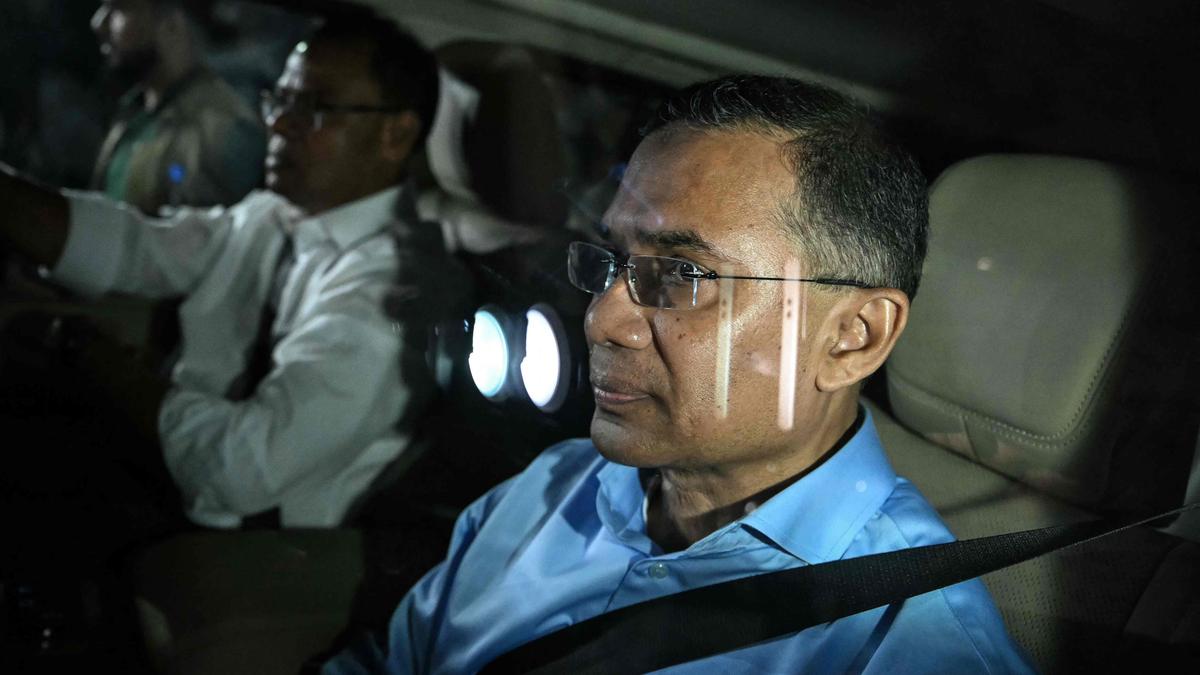
Rahman seeks to bridge divides as Bangladesh prepares for new government
DHAKA, Bangladesh (AP) — Tarique Rahman, chairman of the Bangladesh Nationalist Party (BNP) and the country’s prime minister-designate, embarked on a series of meetings with opposition leaders Sunday, signaling a potential shift towards reconciliation ahead of his swearing-in ceremony Tuesday. The outreach comes amidst lingering concerns over alleged post-election violence and calls for recounts in several constituencies.
Rahman’s most notable meeting was with Shafiqur Rahman, a leader of Jamaat-e-Islami (JeI), a key political force in Bangladesh. The meeting, held at Rahman’s initiative, represents a significant gesture given the historically complex relationship between the BNP and JeI. While the BNP secured a commanding majority in the recent elections with 212 seats, JeI achieved its highest-ever electoral performance, winning 68 seats. The 11-party alliance secured 77 seats.
“The visit by the leader of the winning side indicates a qualitative change in national politics,” Syed Abdullah Mohammed Taher, the JeI Ameer, told reporters following the meeting. He added that the party would “play the role of a constructive stakeholder” in the coming days, while maintaining its commitment to being a principled opposition.
Rahman also met with Nahid Islam, convener of the National Citizen Party (NCP). The BNP downplayed the meetings as routine post-election “courtesy” calls, but observers see them as a deliberate attempt to foster unity and address grievances.
The conciliatory moves follow allegations of “inconsistencies” and “fabrications” in the election process leveled by JeI and the 11-party alliance. While not formally challenging the overall results, the alliance has requested a recount in 32 parliamentary constituencies, citing concerns over irregularities.
Adding to the post-election tensions, Jamaat-led alliance members have reported instances of violence targeting their supporters, presenting a three-page list of alleged attacks that occurred in the days following the election. Some reports indicate that supporters of both the BNP and the previously ruling Awami League were involved.
Rahman, in his first press conference Saturday, had called for all sides to “remain united,” setting the tone for his outreach efforts. The upcoming swearing-in ceremony will mark the BNP’s fourth time in power in Bangladesh’s history.
The political landscape in Bangladesh has been fraught with tension in recent years. The country, a strategically important nation in South Asia with a population of over 169 million, has seen increasing concerns over democratic backsliding and human rights. International observers have closely monitored the elections, and the outcome is seen as a crucial test for the country’s democratic institutions.
The JeI, a conservative Islamic party, has historically been a controversial player in Bangladeshi politics, with its past involvement in the 1971 Liberation War remaining a sensitive issue. Its strong performance in the recent elections underscores the growing appeal of religious-based political platforms in the country.
The success of Rahman’s efforts to build bridges with opposition parties will be critical in ensuring a stable and inclusive government. The coming months will be a crucial period for Bangladesh as it navigates the challenges of political transition and seeks to address the concerns of all its citizens.
[Image of Tarique Rahman meeting with Shafiqur Rahman – sourced from The Hindu]