
Hong Kong Lays Groundwork for Ambitious Transport Network Overhaul
HONG KONG – Hong Kong is preparing to embark on a significant overhaul of its transport infrastructure, outlined in a newly announced Transport Strategy Blueprint, with a focus on innovation and regional integration. While the plan has been lauded for its long-term vision, experts emphasize the need for immediate preparatory steps to ensure successful implementation.
The Blueprint, revealed by the government in February, centers around a “dual-innovation” approach encompassing three core themes, six strategies, and 25 specific recommendations. It aims to enhance convenience for residents and bolster Hong Kong’s economic development, aligning with broader regional initiatives like the Greater Bay Area Outline Development Plan.
Dr. Winnie Tang, adjunct professor at the University of Hong Kong and founding vice-president of the Greater Bay Area Low-Altitude Economy Alliance, argues that three key actions are crucial before the Blueprint’s full rollout.
“Vision alone is not enough,” Tang wrote in an opinion piece. “A geospatial single source of truth, a cross-agency operating platform and proactive low-altitude coordination must be in place first to ensure timely, efficient implementation.”
One priority is establishing a shared geospatial data platform to overcome existing data silos. The Blueprint proposes “Eight Vertical and Eight Horizontal Corridors” requiring extensive cross-border planning. A centralized platform integrating maps, sensor data, and schedules would streamline coordination and decision-making, according to Tang.
Strengthening interdepartmental collaboration is also vital. The Blueprint recommends a Traffic Management Platform leveraging big data and artificial intelligence to predict congestion and improve emergency response. However, Tang suggests building upon Hong Kong’s existing common operational picture (COP) – currently used primarily for disaster coordination – rather than creating a new system. Expanding the COP’s routine use and integrating additional data sources like satellite imagery and drones could provide real-time predictive insights.
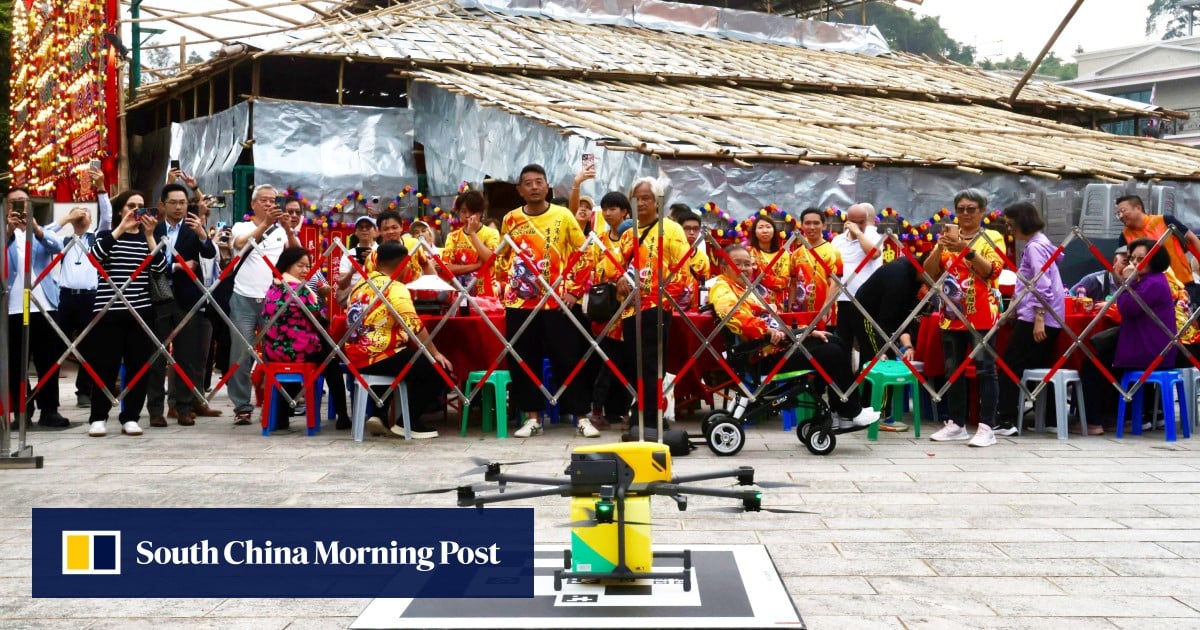
Finally, the Blueprint acknowledges the growing importance of the “low-altitude economy,” seeking to position Hong Kong as a regional hub for drone-based logistics, emergency services, and tourism. Tang stresses the need to accelerate coordination with mainland Greater Bay Area cities, piloting cross-border use cases and investing in AI-powered traffic management systems for low-altitude airspace.
The government’s announcement of the Transport Strategy Blueprint follows years of planning and consultation. The plan’s success will be critical to maintaining Hong Kong’s position as a leading global financial and trade center, and ensuring its continued connectivity within the rapidly developing Greater Bay Area. Further details on the Blueprint can be found on the government’s website: https://www.info.gov.hk/gia/general/202602/06/P2026020600696.htm.
