
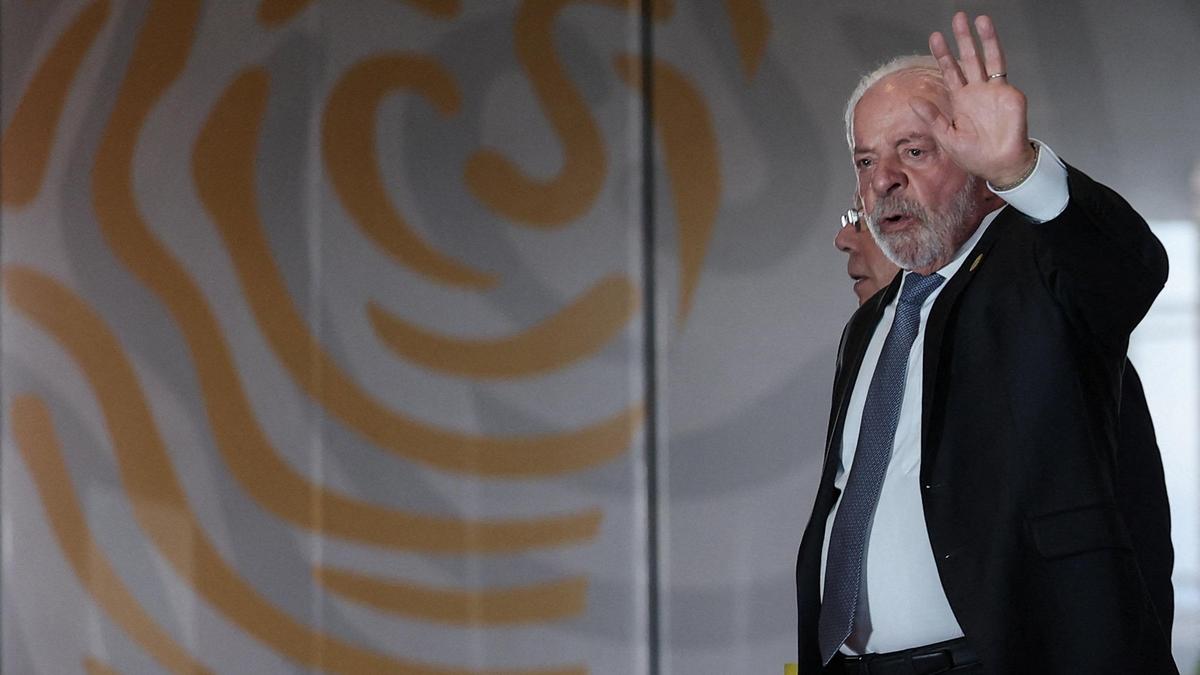
BOGOTÁ, Colombia (AP) — Brazilian President Luiz Inácio Lula da Silva sharply criticized what he termed a resurgence of colonialist attitudes toward developing nations Saturday, singling out U.S. actions toward Venezuela and Cuba as examples of unacceptable interference. Speaking at a forum in Colombia uniting delegates from Africa and the Community of Latin American and Caribbean States, Lula questioned the democratic basis of Washington’s regional policies.
“It’s not possible for someone to think that they own other countries,” Lula said, according to remarks reported by Brazilian media and echoed by attendees. “What are they doing with Cuba now? What did they do with Venezuela? Is that democratic?”
His comments come amid growing tensions between Brazil and the United States, particularly following a series of assertive moves by the U.S. in Latin America. These include the capture of Venezuelan leader Nicolás Maduro in January and his extradition to the U.S. on drug and weapons charges, a naval blockade of Venezuelan oil exports, and the imposition of a 50% tariff on Brazilian goods last year, ostensibly linked to a legal case involving former Brazilian President Jair Bolsonaro.
Lula also accused unspecified “they” of seeking to control developing nations’ reserves of critical minerals and rare earth deposits, drawing a parallel to historical exploitation. “After taking everything we had, now they want to own the critical minerals and rare earths that we have. They want to colonize us again,” he stated.
The Brazilian president extended his criticism to the ongoing conflicts in Gaza, Ukraine, and Iran, lamenting what he described as the “total and absolute failure” of the United Nations Security Council to prevent these crises. He reiterated calls for reform of the Security Council, highlighting the limitations imposed by the veto power of its five permanent members – the United States, Russia, China, Britain, and France.
Colombian President Gustavo Petro echoed Lula’s concerns about the UN’s ineffectiveness, stating the organization “is acting in impotence” and failing to fulfill its mandate of preventing war.
The summit, which saw relatively limited attendance from heads of state and government across Latin America and the Caribbean, underscored the deep divisions within the region. Present were the presidents of Brazil, Uruguay, Burundi, and Colombia, alongside prime ministers from Guyana and Saint Vincent and the Grenadines, and various ministers and ambassadors.
Lula, who is considering a run for a fourth term in October, has positioned himself as a leading voice for the Global South, advocating for greater autonomy and challenging what he views as neocolonial practices. His remarks Saturday represent a further escalation of his rhetoric against perceived U.S. interference in the region.


