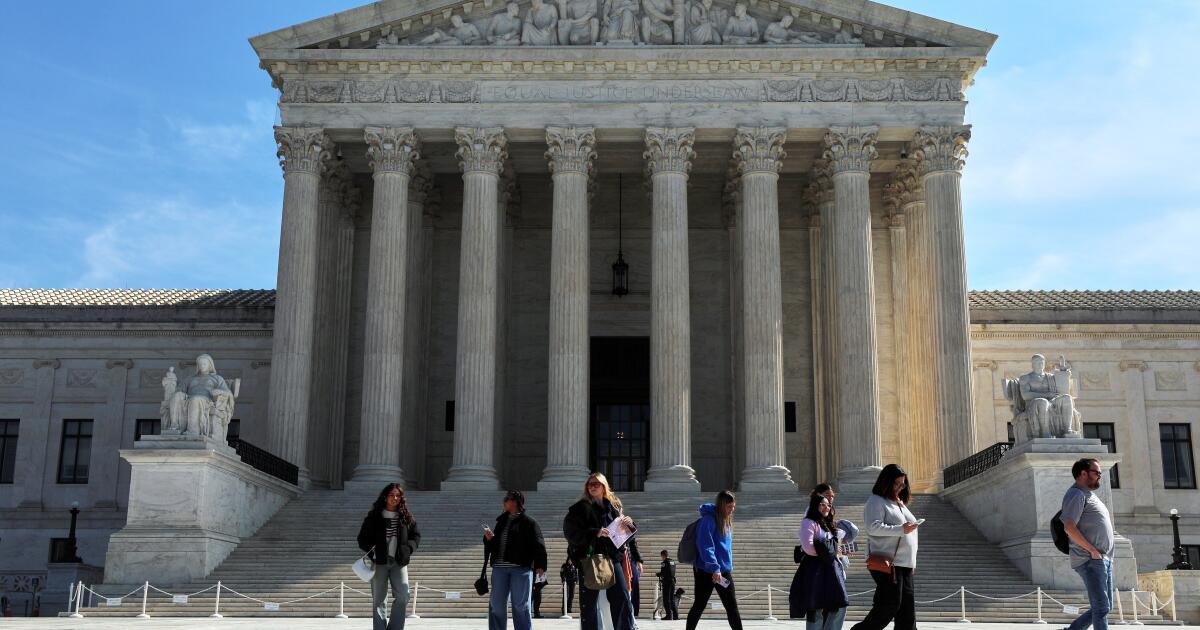
WASHINGTON (AP) — The Supreme Court appeared skeptical Monday of the Biden administration’s argument that people who regularly use marijuana should be prohibited from owning firearms, even as the administration defends a decades-old law restricting gun access for illegal drug users. The case presents a collision between evolving attitudes toward marijuana and long-standing gun control measures, and could impact millions of Americans.
The case before the court stems from the prosecution of Ali Hemani, a Texas man charged with illegal gun possession after authorities found a Glock pistol and marijuana at his home in 2020. While investigating potential ties between his family and the Iranian Revolutionary Guard Corps, federal agents also discovered cocaine in his mother’s room. Hemani admitted to using marijuana roughly every other day. Lower courts dismissed the charges, citing his Second Amendment rights, a decision the Trump administration appealed.
During oral arguments, several justices questioned the logic of denying gun rights to marijuana users, particularly in light of the federal government’s recent moves toward reclassifying the drug. President Trump signed an executive order to reclassify marijuana as a lesser controlled substance. Justice Neil Gorsuch pointedly asked, “Why is this a test case?” and suggested the matter seemed “an odd case to have chosen” to resolve the legal dispute.
Deputy Solicitor General Sarah Harris argued that Congress intended to prevent “dangerous” combinations of firearms and controlled substances. She maintained that upholding the 1968 Gun Control Act, which prohibits gun possession by “unlawful users” of drugs, was crucial for public safety.
However, Erin Murphy, representing Hemani, argued that gun owners hadn’t been adequately warned that simply possessing a handgun could lead to criminal prosecution if they occasionally used marijuana. The American Civil Liberties Union filed a brief supporting Hemani, stating that millions of Americans consume marijuana and shouldn’t automatically forfeit their Second Amendment rights.
The ACLU noted in its brief that Hemani, “like tens of millions of Americans…owned a handgun for self-defense…and consumed marijuana a few days a week.” The government, they argued, views these two facts alone as sufficient grounds for criminal penalties.
The Justice Department estimates around 300 people are charged annually under the provision of the Gun Control Act at the center of the case. Notably, Hunter Biden, the son of President Biden, was previously charged and convicted of lying about his drug use on a handgun permit application.
The justices expressed caution about issuing a broad ruling that could affect the legal status of other addictive drugs. The case highlights a growing tension between federal drug laws and the increasing acceptance of marijuana across the country, leaving the court to navigate a complex legal and social landscape.
Sur le même sujet