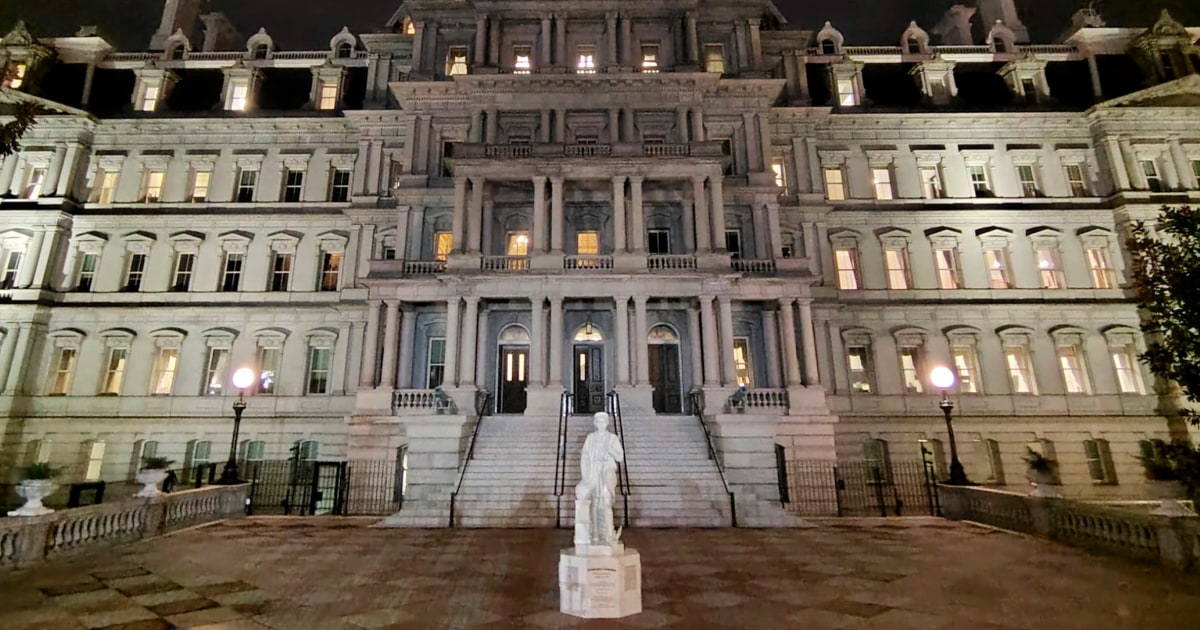
WASHINGTON (AP) — A statue of Christopher Columbus, once toppled into Baltimore’s harbor during protests following the death of George Floyd, has been reinstalled on the grounds of the Eisenhower Executive Office Building near the White House. The move, completed Sunday, is the latest in President Donald Trump’s ongoing effort to rehabilitate the explorer’s image.
The statue is a replica of the one removed from Baltimore in 2020, a moment captured amid a nationwide reckoning with racial injustice and the legacies of colonialism. Protesters at the time argued Columbus was a symbol of genocide and exploitation of Indigenous peoples.
Trump, however, consistently champions a traditional view of Columbus as a pivotal figure in the establishment of European colonization in the Americas and the development of modern political and economic systems. He has repeatedly dismissed the growing movement to replace Columbus Day with Indigenous Peoples Day as a distortion of history, labeling those who advocate for the change as “left-wing arsonists.”
“I’m bringing Columbus Day back from the ashes,” Trump declared last April, echoing sentiments expressed during his 2024 campaign. He has also criticized Democrats for allegedly attempting to dismantle Columbus’s legacy and alienate Italian Americans who revere him.
The White House posted on X, “In this White House, Christopher Columbus is a hero, and President Trump will ensure he’s honored as such for generations to come.”
John Pica, president of the Italian American Organizations United, which owns the statue and loaned it to the federal government, expressed satisfaction with its new location. “We are delighted the statue has found a place where it can peacefully shine and be protected,” he said. The statue was sculpted by Will Hemsley, of Centreville, Maryland, and is primarily made of marble.
The reinstallation of the statue comes as a counterpoint to the growing recognition of Indigenous Peoples Day, first proclaimed nationally by President Joe Biden in 2021. This shift reflects a broader societal conversation about the complex and often brutal history of European colonization and its lasting impact on Indigenous communities.
Pour aller plus loin