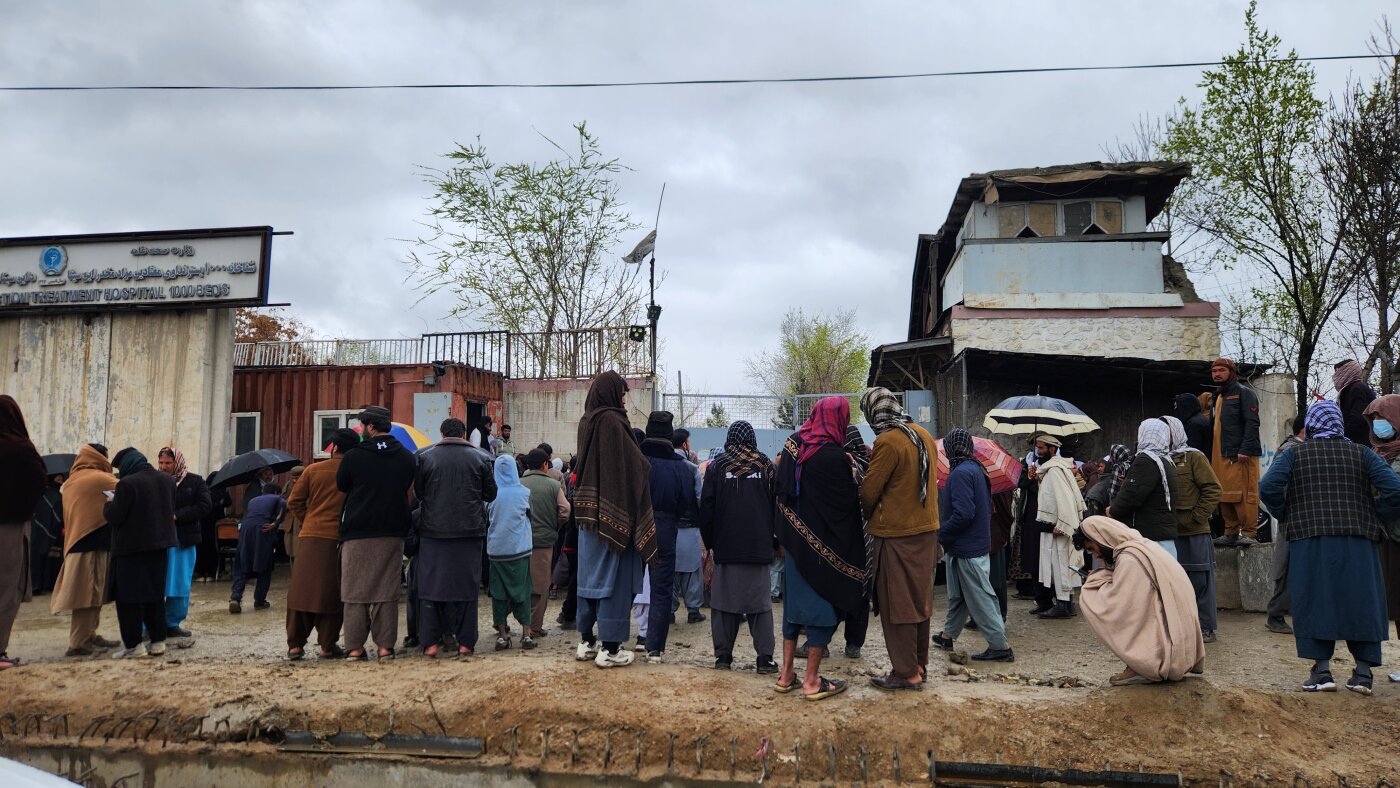
KABUL, Afghanistan (AP) — A Pakistani airstrike on a rehabilitation center in Kabul this week has killed at least 143 people and injured over 119, according to the United Nations, sparking outrage and a brief truce between the neighboring countries amid escalating tensions. The attack, which Taliban officials claim killed over 400, has left families desperately searching for loved ones and raised questions about the effectiveness of Pakistan’s strategy in addressing militant groups operating near its border.
The Omid Addiction Treatment Hospital was struck Monday night while patients were eating dinner, according to reports. The facility, run by the Taliban’s interior ministry, housed adolescents receiving drug treatment, said Georgette Gagnon, officer-in-charge of the U.N. Assistance Mission in Afghanistan. Witnesses described a scene of widespread destruction, with one block of the hospital completely destroyed.
Abdul Basir Watan spent two days searching for his cousin, Zamarek, who had been receiving treatment at the hospital for four months. “He is not on the list of wounded. He is not on the list of dead,” Watan told NPR. He fears his cousin may be among those buried in mass graves at a Kabul cemetery, victims who cannot be identified.
Pakistan acknowledged carrying out strikes but maintained they targeted “military and terrorist infrastructure.” Islamabad accuses the Taliban regime of harboring Islamist groups like the Tehrik-i-Taliban Pakistan (TTP) and the Balochistan Liberation Army (BLA), which have claimed responsibility for attacks within Pakistan.
The attack prompted vows of retaliation from Taliban spokesperson Zabihullah Mujahid. However, on Wednesday, both Pakistan and Afghanistan announced a five-day ceasefire coinciding with the Muslim holiday of Eid.
This latest escalation follows a period of heightened tensions, including cross-border strikes last October that were briefly halted by mediation from Qatar and Turkey. Negotiations subsequently broke down. Pakistan has also closed borders, halted trade, and expelled millions of Afghans over the past year.
The situation is further complicated by Pakistan’s broader narrative linking internal conflicts to external actors. “They’ve lumped everything together,” explained Ibrahim Bahiss, an Afghan expert with the International Crisis Group. “The TTP is a Taliban proxy. The BLA is an Indian proxy. And then the Taliban are Indian proxies. But when you’re looking at it from an analytical point of view, it is a slightly confusing picture.”
The recent surge in militant attacks within Pakistan, including a suicide bombing at a Shia mosque in Islamabad in February, has fueled the escalation. Islamabad alleged the attack was supported by Taliban officials and “Indian proxies,” claims denied by both Kabul and New Delhi.
Sahil, searching for his brother Mohammad Yahya among the victims at Kabul’s Emergency Hospital, found himself unable to identify a body among the charred remains. He continued his search at another hospital, a grim reflection of the human cost of the ongoing conflict.
The attack on the rehabilitation center marks the deadliest incident in three weeks of fighting between Pakistan and Afghanistan. The long-term implications for regional stability remain uncertain.
À lire aussi