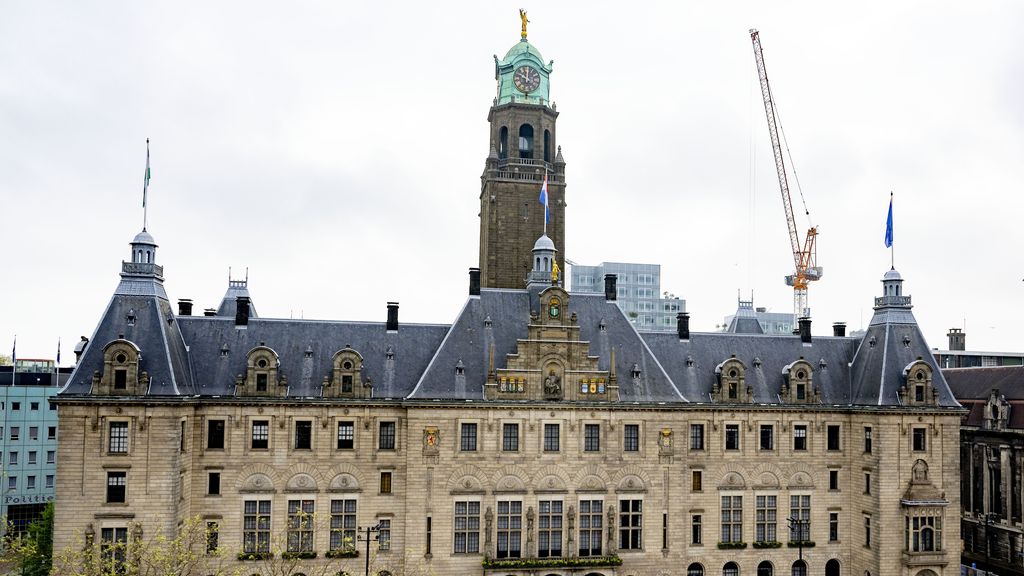
European Print Faces a New Threat: It’s Not Just About Falling Demand
Rotterdam, Netherlands – For two decades, European publishers have battled declining circulation, dwindling advertising revenue, and mill closures. But a new challenge looms for the print industry, one that goes beyond readership and economics: the availability of fibre, the raw material for paper.
Speaking ahead of the WAN-IFRA World Printers Summit in Rotterdam, Peter Hasulyó, founder of ForestryBrief, Europe’s premier forestry intelligence service, warns that publishers need to pay closer attention to forest economics and fibre supply. He argues the future of print isn’t solely about adapting to a digital world, but about securing access to a diminishing resource.
“Publishers understand regulation, they discuss climate change. But competing land uses? This barely registers,” Hasulyó explained. “Forest owners are increasingly asking themselves, ‘Why should I sell my timber?’ The alternatives are multiplying.”
The shift is already visible. In Finland, timber trade collapsed by 42 percent in the third quarter of 2025, not due to a lack of trees, but because landowners chose not to sell at current prices. Landowners are finding more lucrative options, including carbon credit schemes, solar leases, and incentives for land set-asides under the EU Nature Restoration Law.
According to a recent European Commission study, timber sales still account for 80 percent of revenue in the forestry industry, but that figure is expected to decline. The industry is witnessing a structural shift, moving away from timber harvesting towards valuing “living trees” – prioritizing carbon sequestration, biodiversity, and alternative land uses.
This trend is colliding with existing sustainability policies. The EU Biodiversity Strategy aims to protect 30 percent of land, while the Renewable Energy Directive subsidizes burning wood for energy. Simultaneously, regulations like LULUCF demand increased carbon sinks. These competing priorities create a complex landscape where maximizing one goal often hinders another.
The result? European softwood fibre prices are already higher than in North America, accelerating mill closures. Operating rates at European magazine and newsprint mills hover around 65 percent, barely above survival mode. Any further constraints on fibre supply could push more mills into permanent closure.
The current situation differs fundamentally from past paper shortages, which were typically logistical issues. “This is different,” Hasulyó emphasizes. “Three fundamental shifts are converging.”
First, the loss of Russian timber following EU sanctions has removed a significant supply buffer. Second, mills capable of absorbing price spikes are disappearing, with closures like UPM’s Ettringen and Kaukas mills in 2025 removing over a million tonnes of European paper capacity. Third, and perhaps most critically, forest owners now have options beyond selling to paper mills.
Publishers, Hasulyó argues, are often misinterpreting price volatility as a short-term disruption rather than a structural shift. Many anticipate a return to “normal” with economic recovery or energy price stabilization, failing to recognize the long-term decline in graphic paper demand, which fell another 10 percent in the third quarter of 2025.
Companies like Stora Enso and UPM are already repositioning away from graphic grades, signaling a fundamental change in the industry. Savvy publishers are diversifying suppliers and securing long-term contracts, while those waiting for a return to normalcy may find it never arrives.
The print sector is uniquely exposed to decisions made outside the industry, by policymakers, landowners, and even environmental NGOs. A late 2025 storm in the Nordics, felling an estimated 10 million cubic meters of timber, demonstrates how external events can ripple through pulp and paper markets. Even a one-year delay in the implementation of the EU Deforestation Regulation, prompted by lobbying efforts, impacted sawmill planning across the continent.
Hasulyó’s most pressing concern? The industry’s lack of preparedness for a scenario where timber availability, not demand, becomes the primary constraint on print. “The industry has spent two decades managing demand decline. We have almost no institutional muscle for the opposite scenario.”
He urges publishers to stop focusing on short-term price fluctuations and start understanding what’s happening to the forest owners who supply their mills. He believes the industry needs to confront a difficult truth: the carbon math underpinning its sustainability claims is more complex than often portrayed.
“We tell a comfortable story: trees grow, we harvest them, we make paper, paper gets recycled, new trees grow. Circle of life. Carbon neutral,” Hasulyó says. “But EU scientists have raised uncomfortable questions. Forest carbon sinks in Europe are actually weakening.”
His final warning is stark: “Assuming your current supplier will still be there.” He points to a growing number of mill closures and emphasizes the need for supply chain resilience. “The time to build redundancy is before you need it.”