News Outlets Adapt Coverage of Middle East Conflict for Young Audiences
By [Your Name], International Editor, nouvelles-du-monde.com
PARIS – As tensions escalate in the Middle East following recent retaliatory strikes, news organizations catering to children are prioritizing factual reporting, context, and a message of hope, delivering information in age-appropriate ways. The approach comes as concerns grow about the potential impact of global events on young people.
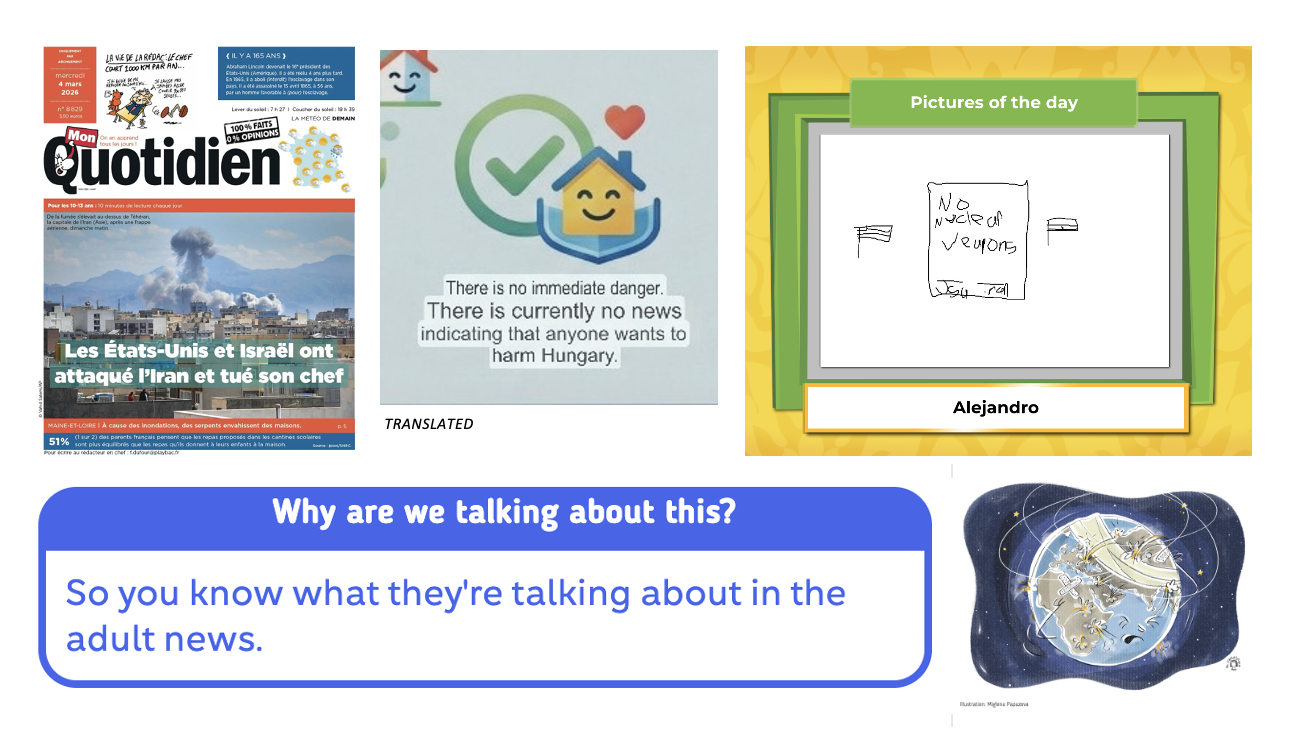
Several outlets are adapting their strategies to address children’s anxieties. Bulgarian website Vijte features a regular “What adults are talking about” section, providing background information on complex stories children may encounter. Currently, the focus is on explaining the situation in Iran, starting with the questions children are asking.
“Transparency is key,” says Henrike van Gelder, editor of Dutch children’s publication KidsWeek. The publication plans to explain the events “in understandable key points,” while also offering guidance on evaluating news sources and discerning reliable information from misinformation, particularly during wartime.
In France, Mon Quotidien relies on a child editor to shape daily coverage. Eleven-year-old Raphaël contributed a personal perspective to the recent reporting, detailing how his aunt and uncle sheltered during a bombing near their home in Dubai.
News-O-matic, a French-owned, U.S.-based outlet, demonstrated the importance of balanced reporting by presenting two contrasting images: an Iranian woman displaying her national flag, captioned “Many people in Tehran, Iran, were upset about the attack,” alongside a demonstrator in California holding both Iranian and American flags, with the caption “These people in Los Angeles, California, supported a change of power in Iran.”
Beyond simply presenting the facts, these publications are also employing innovative methods to aid comprehension. Vijte gamifies key information, awarding points to children who can identify the main parties involved in the Middle East conflict. Editors are also defining unfamiliar terms to ensure accessibility.
Recognizing the geographical distance for many young readers, outlets like Časoris in Slovenia interviewed defense experts to reassure children that their country was not under immediate threat. Mizújság, a Hungarian publication, visually reinforced this message with a graphic.
The coverage also extends beyond information delivery, encouraging engagement and action. News-O-Matic publishes stories in both English and Arabic and provides an app for children to express their reactions through drawings, such as artwork advocating for nuclear disarmament. Časoris concludes its coverage with discussion questions for teachers to use in the classroom.
This shift in approach reflects a growing understanding of the need to address children’s concerns about global events in a sensitive and informative manner. Aralynn McMane, Executive Director of Global Youth & News Media, highlights the importance of providing children with the tools to understand the world around them.