Iran Signals Shift in Attacks, But Tensions Remain High as War Enters Second Week
WASHINGTON – As U.S. and Israeli strikes continue across Iran, fissures appeared in the Iranian leadership Saturday, with President Masoud Pezeshkian initially offering an apology for attacks on neighboring countries, only to walk back the statement hours later. The mixed signals come as the conflict, launched by the United States and Israel a week ago, shows no sign of abating, jolting global markets and raising fears of wider regional escalation.
Pezeshkian’s initial apology, extended “on behalf of Iran to the neighboring countries affected,” promised a halt to attacks that have impacted nearly every nation in the Middle East. However, strikes continued, hitting Qatar, Bahrain, and the United Arab Emirates, prompting a swift retraction. Simultaneously, Iran’s Foreign Ministry vowed to continue strikes on territories hosting U.S. offensive forces, and its Defense Ministry asserted its strategic munitions stockpile could sustain a prolonged campaign.
The conflicting messages underscore divisions within Iran’s leadership, particularly between the publicly facing government and the powerful Islamic Revolutionary Guard Corps, which controls ballistic missiles targeting Israel and other countries.
U.S. President Donald Trump weighed in on the situation Saturday, vowing to “hit Iran very hard” on social media before traveling to Dover Air Force Base in Delaware for the dignified transfer of six service members killed in the conflict. He described the deaths as “a very sad situation” and pledged to minimize further American casualties.
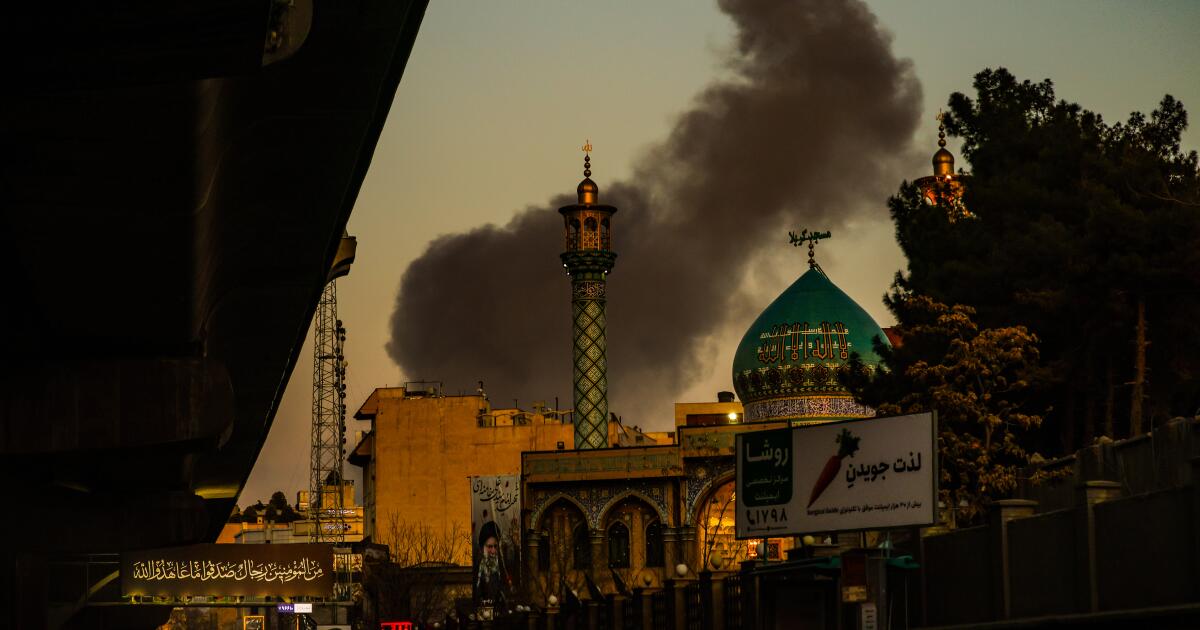
Israel also launched fresh attacks against Iran while facing incoming fire from Hezbollah, Iran’s ally in Lebanon, triggering air raid sirens in Tel Aviv. Reports of a fire at a major oil refinery outside Tehran sparked concerns about escalating conflict and marked the first reported attack on Iran’s energy infrastructure.
While missile and drone strikes by Iran against Arab nations have decreased – U.S. Central Command reported a 90% decrease in ballistic missile launches and an 83% drop in drone attacks as of Friday – Iranian strikes are still penetrating regional air defenses. A drone strike even hit Dubai’s airport on Saturday, disrupting flights at the world’s busiest airport.
The attacks, targeting U.S. military assets and civilian infrastructure including hotels and airports, are an attempt by the Islamic Revolutionary Guard Corps to pressure regional governments to urge Trump to end the U.S. air campaign. The conflict has already sent oil prices soaring.
Adding to the instability, a member of Iran’s Assembly of Experts indicated a new supreme leader would be selected within the next day, more than a week after the assassination of Ayatollah Ali Khamenei by U.S. and Israeli forces. Trump has stated he expects to have a say in the selection, preemptively rejecting Mojtaba Khamenei, the late leader’s son, as a potential successor.
Ali Larijani, formerly Ayatollah Khamenei’s top advisor, described the assassination as unprecedented. “The price for this is not small,” he said, adding, “They shouldn’t think we’ll let America quickly sweep this under the rug… Things will only resolve when they understand they no longer have the right to violate Iran, and when they compensate the Iranian people for their losses.”
Iranian officials report more than 1,200 people have been killed in Iran since the war began.
Pour aller plus loin